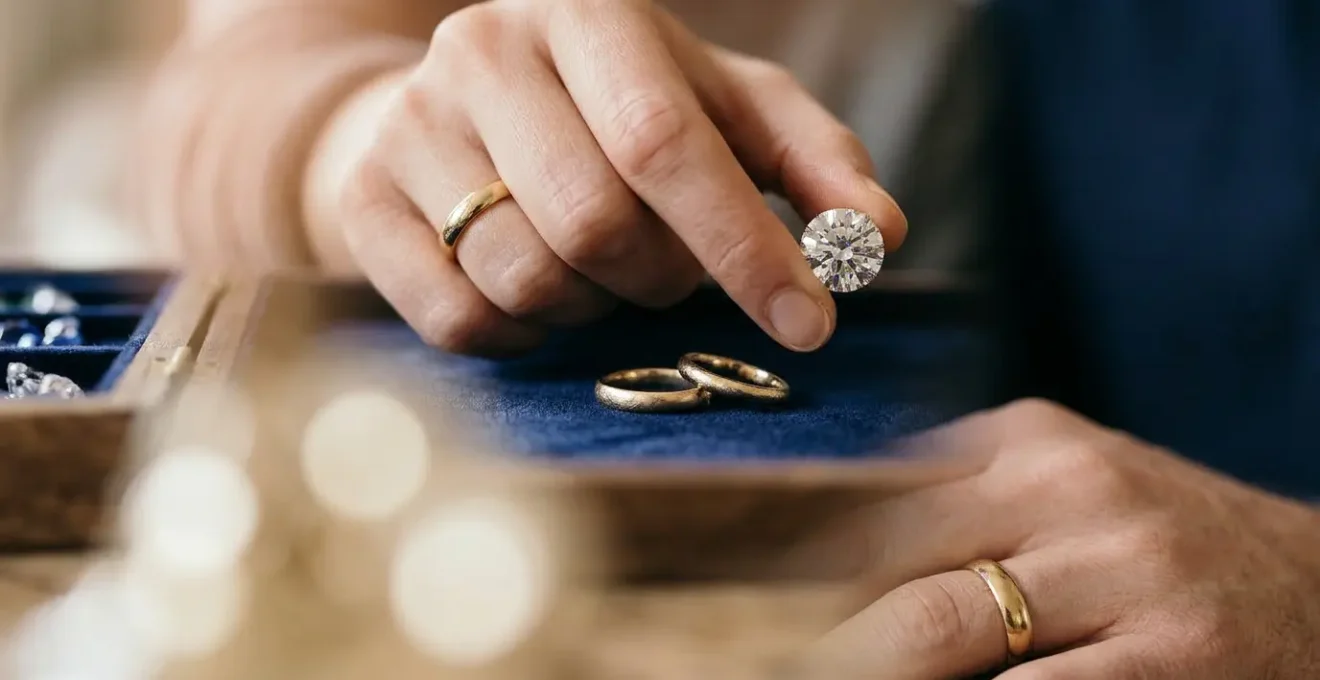
The 10th anniversary is your pivotal moment to transition from sentimental gifts to building an appreciating jewelry portfolio.
- The modern 10th-anniversary gift, the diamond, is the perfect foundation for a lifetime of strategic upgrades and value growth.
- Leveraging jeweler trade-in policies and considering smart alternatives allows for maximizing visual impact and financial worth over time.
Recommendation: Approach your 10th-anniversary gift not as a single purchase, but as the first deliberate step in curating a collection of valuable, portable assets that celebrate your journey together.
Reaching a decade of marriage is a significant milestone, one that calls for a celebration that reflects its importance. Traditionally, the modern gift for this occasion is the diamond, a symbol of enduring strength and love. However, many approach this moment with a limited perspective, seeing it as just another isolated gift-giving event. They focus on finding a single, beautiful piece, often overlooking the immense potential that this anniversary holds.
The common advice revolves around choosing a diamond necklace or earrings, perhaps touching on the basic ‘4 Cs’. While well-intentioned, this view misses the bigger picture. The true art of marking this milestone lies not in the purchase itself, but in the strategy behind it. What if the key to a truly memorable 10th-anniversary gift wasn’t just about buying a diamond, but about investing in one? What if this moment was the perfect opportunity to begin curating a meaningful, and valuable, family legacy?
This guide reframes the 10th-anniversary gift. We will move beyond the simple act of purchasing and explore a more sophisticated approach: treating your anniversary jewelry as a growing portfolio. You will learn not just what to buy, but how to think strategically about value, upgrades, and long-term planning. By viewing each significant anniversary as a chance to build upon the last, you transform sentimental gestures into a tangible, appreciating collection that tells the story of your life together.
In the sections that follow, we will explore the practical steps to building this jewelry portfolio, from understanding the role of early gifts to making savvy financial decisions for the decades to come. This is your masterclass in celebrating your love with wisdom and foresight.
Summary: Beyond Tradition: Choosing the Right Gemstone for Your 10th Anniversary and Beyond
- Why Is the Diamond Eternity Ring Traditionally Given on the First Anniversary?
- How to Upgrade a 0.50ct Diamond to 1.00ct Using a Trade-In Policy?
- Ruby (40th) or Gold (50th): Which Milestone Justifies a Higher Budget?
- The Risk of Guessing Her Ring Size After 20 Years of Marriage (Fingers Change)
- Do You Need a Separate Policy for a £5,000 Anniversary Necklace?
- How to Swap a Diamond (April) for White Sapphire to Save £2,000?
- Auction House or Private Treaty: Where to Sell a £100k Necklace?
- Why Is High Jewellery Considered a Portable Asset Class for the Ultra-Rich?
Why Is the Diamond Eternity Ring Traditionally Given on the First Anniversary?
The first anniversary often sets the tone for a lifetime of celebrations. While the traditional gift is paper, the modern choice often leans towards a diamond eternity ring. This isn’t merely a lavish gesture; it’s a deeply symbolic one. The circle of an eternity band, with its unbroken line of diamonds, represents a promise of unending love and commitment. It’s the foundational piece in what can become a lifelong collection. However, its significance evolves. A first-anniversary gift is about the promise of the future.
As the years progress, this initial promise transforms into proven strength. According to a comprehensive guide to anniversary gemstones, the diamond reappears for the 10th and 30th anniversaries. This is no coincidence. The 10th anniversary, in particular, marks a decade of resilience and shared history. It signifies that the initial promise has been kept, justifying a more substantial investment. This is the moment to build upon that first symbolic piece, either by adding a coordinating item or, more strategically, by upgrading it.
Thinking of even the first gift as an opening investment is a modern, savvy approach. The initial eternity band isn’t just a sentimental item; it’s the first entry in your shared jewelry portfolio. Its value is not static. It can serve as the starting point for a future trade-in, allowing you to build towards a more significant piece that reflects the growth of your relationship and financial stability. This mindset transforms a simple tradition into a strategic plan for celebrating future milestones.
How to Upgrade a 0.50ct Diamond to 1.00ct Using a Trade-In Policy?
The concept of upgrading a diamond is one of the smartest strategies in building a jewelry portfolio. You’re not replacing a memory; you’re enhancing it. Moving from a 0.50-carat diamond to a 1.00-carat stone represents a significant leap in presence and value, a physical manifestation of a decade of growth. Many leading jewelers understand this desire and have structured policies to facilitate it, known as diamond trade-in or upgrade programs.
These programs allow you to apply the full original purchase price of your diamond towards a new, more valuable one. The visual difference is striking, turning a beautiful piece into a breathtaking one. The key is understanding the terms, which vary by retailer. Generally, the new purchase must be of a higher value, often double the original price, but this investment effectively doubles the impact of your initial spend.
As you can see, the jump in size and brilliance is substantial. To navigate this process, you must familiarize yourself with the policies of major retailers. Some are more flexible than others, with varying requirements for the minimum value increase or the types of diamonds they accept. Researching these policies is the first step in unlocking the stored value of your existing jewelry.
The table below, based on industry analysis, outlines the typical trade-in policies of several major jewelers. It provides a clear roadmap for how you can leverage your first-anniversary gift to acquire a stunning 10th-anniversary centerpiece.
| Retailer | Trade-In Value | Minimum Purchase Requirement | Key Restrictions |
|---|---|---|---|
| Kay Jewelers | 100% of original price | 2x original value | In-store only, no damaged stones |
| James Allen | 100% credit | 2x original value | Natural diamonds only |
| Tiffany & Co. | Original purchase price | 2x original value | Engagement rings only |
| Shane Co. | 100% credit | $1 more minimum | Most flexible policy |
| White Flash | 100% credit | Equal or greater value | No minimum increase required |
Ruby (40th) or Gold (50th): Which Milestone Justifies a Higher Budget?
Viewing anniversary gifts as a portfolio requires long-term vision. The 10th anniversary is a crucial benchmark, but it’s part of a much longer journey. The question isn’t just about what to spend now, but how to allocate resources for future milestones that carry even greater symbolic weight, such as the 40th (Ruby) and 50th (Golden) anniversaries. Each of these represents a different chapter and, from a portfolio perspective, a different investment level.
The strategy of trading up is common; research reveals that about 30% of people sell existing diamonds to finance the purchase of more expensive jewelry. This confirms that many intuitively understand the concept of a growing portfolio. The 10th anniversary sets the baseline. Subsequent major anniversaries should see a significant step-up in budget. For the 25th (Silver Jubilee), a budget 2-3 times that of the 10th is typical. The 40th, celebrating the deep, passionate love symbolized by ruby, commands a budget that reflects four decades of compounded emotional and financial value.
The 50th or Golden Anniversary stands at the apex of this journey. It is traditionally the milestone that justifies the highest budget. This gift is often the capstone of a collection, frequently featuring both significant gold work and substantial diamonds, perhaps even incorporating or complementing pieces acquired over the previous decades. Planning for this allows you to make strategic choices today. By understanding the long-term roadmap, your 10th-anniversary choice becomes more informed, serving as a powerful building block for the masterpieces to come.
Your Action Plan: Auditing Your Growing Jewellery Collection
- Inventory Pieces: List all significant items in your current collection (e.g., engagement ring, first-anniversary band, milestone gifts).
- Gather Documentation: Collect and organize all existing paperwork for each piece, including original receipts, GIA certificates, and branded boxes.
- Assess Cohesion: Evaluate how the pieces work together stylistically. Identify any aesthetic gaps or opportunities for a future upgrade that would unify the collection.
- Review Value: Distinguish between pieces with high sentimental value and those with strong investment potential. This helps prioritize future decisions.
- Create a Plan: Based on your audit, create a prioritized plan for your next acquisition—deciding whether an upgrade, a coordinating piece, or a new ‘hero’ item best serves your long-term portfolio goals.
The Risk of Guessing Her Ring Size After 20 Years of Marriage (Fingers Change)
As you build a jewelry portfolio over the years, a very practical challenge emerges: ring size. It is a common mistake to assume that the ring size from an engagement or wedding band remains constant. Over ten or twenty years, factors like weight changes, pregnancy, and aging can alter finger size significantly. Guessing the size for a surprise anniversary ring is a high-risk gamble. A ring that doesn’t fit can spoil the surprise and lead to the difficult—and sometimes impossible—process of resizing.
To avoid this, you need a discreet strategy. One classic method is to “borrow” a ring she currently wears on the correct finger. You can trace its inner circumference on paper or press it into a bar of soap to create an impression for a jeweler. Modern solutions include digital ring-sizing apps that use your phone’s camera to measure an existing ring. If you must buy a ring, choose a style that is easily resizable. Simple solitaires with a plain shank can typically be adjusted up or down two sizes. However, you should avoid full eternity bands or rings with intricate pavé settings, as resizing them is often impossible without damaging the design.
Perhaps the most strategic solution to the sizing dilemma is to diversify the jewelry portfolio itself. If the element of surprise is paramount, consider gifting a piece that requires no sizing at all. A stunning diamond necklace, a classic tennis bracelet, or elegant earrings eliminate the risk entirely while still delivering a powerful, celebratory statement. This approach broadens the collection beyond rings, adding versatility and ensuring the celebratory moment is flawless.
Choosing an alternative to a ring isn’t a compromise; it’s a savvy decision that prioritizes the experience while continuing to build a cohesive and valuable collection. These pieces become cherished, wearable assets without the logistical headache of sizing.
Do You Need a Separate Policy for a £5,000 Anniversary Necklace?
As your jewelry portfolio grows in value, so does the need to protect it. A common and costly assumption is that a standard homeowner’s insurance policy will cover valuable jewelry. In reality, most policies have a surprisingly low single-item limit for valuables. Industry data shows that standard homeowners policies often cap coverage at a mere £1,500-£2,000 per item. This means a £5,000 anniversary necklace would be significantly underinsured from the moment you bring it home, leaving you exposed to major financial loss in the event of theft, damage, or loss.
To properly protect a significant acquisition, you almost always need a separate, specialized jewelry insurance policy or a specific “floater” or “rider” added to your existing home insurance. These policies provide comprehensive coverage based on the piece’s appraised value, not a generic category limit. This is a non-negotiable step in responsible asset management.
The first step in securing this protection is obtaining a formal valuation from a certified appraiser. This document provides the proof of value your insurer will require. As one UK insurance expert explains, the cost of this vital service is quite reasonable when compared to the potential loss.
Typically, you can expect to pay between £50-150 per item for valuation, or 1-2% of the item’s total value.
– Ripe Insurance UK, Guide to Jewellery Valuation for Insurance
Think of insurance not as an expense, but as an essential component of your investment. It safeguards the financial and sentimental worth of your growing portfolio, ensuring that the symbols of your milestones are protected for a lifetime. Without it, you are not just holding a valuable asset; you are holding an unmanaged risk.
How to Swap a Diamond (April) for White Sapphire to Save £2,000?
While the diamond is the modern stone for the 10th anniversary, a strategic investor knows that tradition is a guide, not a rule. An “insider’s choice” for achieving maximum visual impact on a controlled budget is the white sapphire. This beautiful and durable gemstone offers a look remarkably similar to a diamond but at a fraction of the cost. This isn’t about being cheap; it’s about being smart. It’s about allocating your resources where they will have the greatest effect.
For a budget of around £5,000, a buyer might acquire a high-quality 0.90-carat diamond. For the same investment, you could instead purchase a flawless white sapphire of 2.50 carats or more. The visual difference is immense. This strategy allows you to prioritize size and presence, creating a truly show-stopping piece. The funds saved can then be reinvested into a more intricate, higher-quality setting from a premium designer, or even used to purchase a second coordinating piece, like earrings.
Some may worry about durability, but this concern is largely unfounded. Diamond ranks a perfect 10 on the Mohs scale of hardness, making it the hardest natural substance. White sapphire, however, ranks a 9. This makes it exceptionally durable and perfectly suited for daily wear in any piece of jewelry, including a ring. The slight trade-off in hardness is negligible for everyday use, but the gain in size-for-budget is exponential.
The following table provides a clear comparison, demonstrating how a strategic swap can deliver superior value without compromising on beauty or longevity.
| Characteristic | Diamond (1.00ct) | White Sapphire (2.50ct) |
|---|---|---|
| Mohs Hardness | 10 | 9 |
| Typical Cost (Good Quality) | £5,000 | £3,000 |
| Brilliance/Fire | Exceptional | Very Good |
| Size for Budget | 0.90ct G/SI1 | 2.50ct Flawless |
| Daily Wear Durability | Excellent | Excellent |
Key Takeaways
- The 10th anniversary is the ideal time to shift your mindset from one-off gifts to building a strategic, long-term jewelry portfolio.
- Leverage jeweler trade-in policies to upgrade earlier pieces, ensuring your collection’s value and significance grow with your relationship.
- Protect your growing assets with dedicated jewelry insurance, as standard home policies offer inadequate coverage for valuable items.
Auction House or Private Treaty: Where to Sell a £100k Necklace?
As a jewelry portfolio matures and appreciates, it can evolve into a collection of significant assets. At this level, understanding the principles of liquidation becomes as important as acquisition. When a piece reaches a value of £100,000 or more, the question of where to sell it—at an auction house like Sotheby’s or Christie’s, or through a private treaty sale—is a critical strategic decision. The answer depends entirely on the nature of the piece itself.
Auction houses are the premier venue for pieces that have a compelling story to tell. They thrive on what is known as “narrative value.” This value is built from several key factors, which a strategic collector should cultivate from the very first purchase. As top industry analysis points out, certain characteristics make a piece truly “auction-worthy.”
Signed pieces from Cartier or Bulgari with exceptional gem quality and documented provenance make pieces ‘auction-worthy’ and can retain significant value decades later.
– Industry Analysis, High-Value Jewelry Resale Market Report
A private treaty sale, arranged discreetly through a high-end dealer, is often better for pieces whose value is primarily intrinsic (based on the weight and quality of the metal and stones) but lack the strong brand name or provenance that fuels auction excitement. For a truly remarkable piece, however, the competitive environment of an auction can achieve a far higher price. Building a piece’s auction potential is a long-term game that begins with the choices you make today.
To maximize the future value and optionality of your collection, focus on acquiring pieces with the characteristics that auction houses and top collectors prize. The following steps provide a roadmap for building an auction-worthy collection over time.
- Choose Signed Pieces: Prioritize jewelry from recognized luxury houses like Cartier, Van Cleef & Arpels, or Bulgari.
- Demand Top Quality: Focus on exceptional gem quality, always accompanied by certificates from reputable labs like the GIA.
- Preserve Everything: Maintain all original documentation, including receipts, certificates of authenticity, and even the original branded boxes.
- Document Provenance: Keep a record of the piece’s story—when it was acquired and for what occasion. This adds to its narrative value.
- Seek Uniqueness: Consider pieces with unique design elements or those produced in limited editions, as scarcity drives value.
- Update Valuations: Ensure you have the jewelry professionally re-appraised for insurance every 3-5 years to track its appreciation.
Why Is High Jewellery Considered a Portable Asset Class for the Ultra-Rich?
At its highest level, jewelry transcends adornment and becomes something else entirely: a highly efficient form of portable wealth. For the ultra-rich, high jewellery—pieces defined by their exceptional craftsmanship, rarity of materials, and significant brand provenance—functions as a distinct portable asset class. Unlike real estate or fine art, a multi-million-dollar necklace can be discreetly transported anywhere in the world, carrying immense value in a small, personal package.
The value of high jewellery is built on three pillars. The first is its intrinsic value: the base worth of its platinum, gold, and the market price of its flawless diamonds or rare colored gemstones. The second, and more significant, is its craftsmanship value. This is the premium added by the skill and artistry of the maker, especially a renowned house like Van Cleef & Arpels or Cartier. Their signature on a piece is a guarantee of quality and design excellence that commands a higher price.
The final, and often most powerful, pillar is narrative value. This includes the piece’s history, its previous owners, and its brand story. A piece with documented provenance from a famous collection can be worth many multiples of its intrinsic value. As detailed in case studies of collectors, a journey can begin with a simple 1-carat engagement ring and, through strategic anniversary upgrades and acquisitions, culminate in a portfolio of high jewellery. The key is a consistent focus on pieces from recognized houses with exceptional stones and fully documented histories. These items become transferable wealth that transcends currencies and borders, a legacy passed down through generations.
This is the ultimate expression of the “jewelry as a portfolio” mindset. It’s a strategy that begins with the thoughtful, informed choices you make for your 10th anniversary, planting the seeds for what could become a significant and enduring family asset.
By viewing your 10th anniversary not as an endpoint but as a strategic starting line, you can begin to build a collection that is not only a beautiful testament to your love but also a wise and appreciating family asset. The next step is to apply this long-term vision to your very next celebratory purchase.