Jeweller’s craft
The jeweller’s craft represents thousands of years of accumulated knowledge, refined techniques and artistic expression condensed into objects small enough to wear on your finger. Yet for most buyers, the workshop remains a mysterious black box—pieces go in for repair and emerge transformed, custom orders materialise from sketches, and the difference between a £500 ring and a £5,000 one often seems invisible to the untrained eye.
Understanding even the fundamentals of this craft transforms how you evaluate, purchase and care for jewellery. You begin to notice details that previously escaped attention: the quality of a finish, the security of a setting, the density of the metal. This knowledge protects your investment and helps you communicate effectively with craftspeople when commissioning or repairing pieces.
Whether you’re considering a bespoke engagement ring, inheriting family heirlooms, or simply want to understand why your sterling silver tarnishes while your friend’s stays bright, the principles explored here will serve as your foundation for deeper exploration.
How does the bespoke jewellery process actually work?
Commissioning a custom piece feels daunting for first-time buyers, largely because the process differs fundamentally from retail shopping. Rather than selecting from finished inventory, you’re collaborating on a creative project with defined stages, timelines and decision points.
The typical timeline and why it matters
Most bespoke pieces require six to eight weeks from initial consultation to final delivery. This timeline accounts for design development, material sourcing, fabrication and finishing. Rushing this process typically compromises quality—metalwork needs time to be executed properly, and stone setting cannot be hurried without increasing the risk of damage.
Planning ahead becomes essential for deadline-driven purchases. Wedding rings, anniversary gifts and Christmas commissions all require booking workshop time well in advance. Many established jewellers fill their order books months ahead during peak seasons.
Design communication techniques
The gap between what you envision and what your jeweller understands represents the greatest risk in bespoke work. Effective communication bridges this gap through:
- Mood boards combining images, colour swatches and reference pieces
- Hand sketches that capture proportions and style preferences
- 3D renderings that show the piece from multiple angles before fabrication
- Wax models for trying physical prototypes
Each method carries different costs and benefits. Hand sketches cost less but require imagination to interpret. 3D renderings provide photorealistic previews but add to the project budget. The right approach depends on the complexity of your design and your comfort with abstract visualisation.
What separates platinum from gold for fine jewellery?
Metal selection influences everything from durability to skin compatibility, yet buyers often choose based solely on colour preference. Understanding the practical differences helps you make decisions aligned with your lifestyle and priorities.
Platinum’s unique characteristics
Platinum’s density exceeds gold by approximately 60%, creating a substantial feel that many associate with quality. This density also means platinum holds stones more securely—the metal deforms rather than wearing away when stressed. For sensitive skin, platinum’s hypoallergenic properties make it the safest choice, as it contains no nickel or other common allergens.
The characteristic matte patina that develops on platinum over time actually demonstrates the metal’s integrity. Unlike gold alloys that lose material through wear, platinum merely displaces, developing a soft lustre that many collectors prefer to high polish.
Understanding gold alloys and their trade-offs
Pure gold proves too soft for practical jewellery, necessitating alloys that balance workability with durability. The 18-carat standard (75% gold) offers superior colour richness and tarnish resistance compared to 9-carat alternatives, making it preferable for heirloom pieces intended to last generations.
However, higher gold content paradoxically means softer metal. An 18-carat ring scratches more readily than its 9-carat counterpart—a trade-off between precious metal content and surface durability. Rose gold variants contain additional copper, making them slightly harder than yellow gold of equivalent carat weight.
Why do silver and vermeil require different care approaches?
Sterling silver and gold vermeil occupy the accessible end of the precious metal spectrum, yet their maintenance requirements differ significantly from solid gold or platinum pieces.
The chemistry behind silver tarnish
Sterling silver’s composition—92.5% silver with 7.5% copper and other metals—creates its susceptibility to tarnishing. The copper content reacts with sulphur compounds in the air, producing the characteristic darkening that frustrates many owners. British winters accelerate this process due to increased indoor heating and reduced ventilation.
Body chemistry affects tarnishing rates dramatically. The acidity of your skin, medications you take and even your diet influence how quickly silver darkens against your body. This explains why identical pieces behave differently on different wearers.
Gold vermeil standards and longevity
True vermeil must meet specific criteria under UK trading standards: a sterling silver base with gold plating of at least 2.5 microns thickness. This distinguishes it from simple gold plating, which may use base metal substrates and thinner gold layers.
Plating thickness directly determines lifespan. A 2.5-micron vermeil layer endures years of moderate wear, whilst 0.5-micron coatings may show silver breakthrough within weeks. Understanding these measurements helps you evaluate whether vermeil pieces offer genuine value.
How do different stone settings affect security and maintenance?
Setting styles do far more than create visual appeal—they fundamentally determine how securely stones remain in place and how much maintenance your piece requires over its lifetime.
Pavé and micro-pavé considerations
Pavé settings create fields of small stones held by tiny metal beads, producing a surface that appears encrusted with gems. This beauty comes with practical considerations: more stones mean more potential failure points. Each bead securing a stone can wear flat over years of contact, eventually releasing the gem it protected.
Ultrasonic cleaning, whilst effective for many jewellery types, poses particular risks for pavé pieces. The vibrations can loosen already-weakened settings, causing stones to fall out during cleaning rather than on your finger where you’d notice.
Bezel, tension and prong settings compared
Prong settings expose maximum stone surface to light but rely on small metal points for security. The three-prong martini setting, whilst elegant, offers less security than four-prong alternatives—losing a single prong means losing the stone.
Bezel settings wrap metal completely around the stone’s edge, providing excellent security at the cost of some light exposure. For active lifestyles, this trade-off often favours the bezel.
True tension settings suspend stones using only metal pressure, requiring extremely precise engineering. These settings typically cannot be resized after creation without compromising their structural integrity—a critical consideration for engagement rings where finger size may change over decades.
What markers distinguish quality craftsmanship?
Mass-produced jewellery and bench-made pieces may look similar in photographs, but physical examination reveals telling differences that affect both aesthetics and durability.
Interior finish and casting evidence
Quality craftsmanship extends to surfaces you never see whilst wearing a piece. The interior of a well-made ring should feel as smooth and refined as its visible surfaces. Rough interior finishing indicates corners cut during production—if a maker neglects hidden surfaces, what else might they have compromised?
Casting lines—visible seams where molten metal met mould surfaces—reveal mass-production origins. Hand-finished pieces either eliminate these entirely or incorporate them into the design intentionally. Running your finger along a ring’s interior and examining it under magnification reveals much about its origins.
Hand-set versus cast-in-place stones
Stones set by hand after casting typically sit more securely than those cast directly into their settings. The cast-in-place method, whilst faster and cheaper, creates stress around stones during cooling and offers less precise positioning. Over time, cast-in-place stones demonstrate higher failure rates than their hand-set counterparts.
How should you approach inherited and antique pieces?
Family jewellery carries emotional weight beyond its material value, making decisions about restoration, modification or sale particularly complex.
Restoration versus preservation
Antique pieces often hold value specifically because of their age and original condition. Heavy-handed restoration can destroy this value whilst attempting to improve appearance. Signed pieces from notable makers—identifiable by hallmarks and maker’s marks—may lose significant value if melted down for their metal content alone.
Before any work begins, seek valuations that distinguish between probate value (what the piece would fetch at auction) and insurance replacement value (what recreating it would cost). These figures often differ substantially.
Evaluating stones for reuse
Diamonds and coloured stones in inherited pieces may prove worth incorporating into new settings, but condition assessment requires professional evaluation. Chips, inclusions and outdated cuts affect both value and structural integrity. Sometimes, recutting old stones improves their appearance; other times, the weight loss makes this impractical.
What ethical considerations matter in contemporary jewellery?
Conscious consumers increasingly seek assurance that their jewellery purchases align with their values, yet marketing claims often obscure rather than clarify supply chain realities.
Recycled gold, whilst environmentally preferable to newly mined material, does not actively support mining communities or fund improved practices. Traceability programmes like CanadaMark provide documented chain of custody from mine to market, offering genuine transparency.
Lab-grown diamonds present their own complexity. Whilst avoiding mining impacts, their carbon footprint depends entirely on the energy sources powering their production facilities—a variable rarely disclosed. The most ethical choice ultimately depends on which impacts you prioritise reducing.
Understanding the jeweller’s craft empowers you to ask better questions, recognise quality and make decisions you’ll remain satisfied with for years to come. Each topic introduced here opens into deeper technical and practical considerations that reward further exploration.
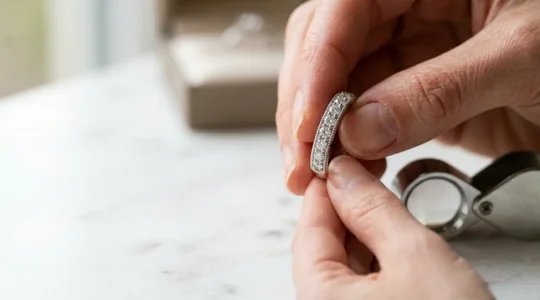
A Bench Jeweller’s Guide: How to Proactively Check Your Pavé Setting for Loose Stones
The fear of losing a tiny diamond from your pavé ring isn’t just paranoia; it’s a valid concern rooted in metal fatigue, not just bad luck. Home inspection is a diagnostic skill focused on spotting metal wear and structural weakness,…
Lire la suite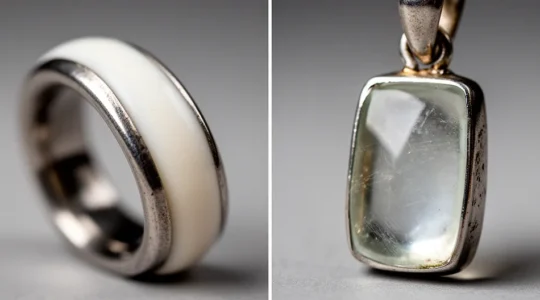
Cold Enamel vs Hot Enamel: Which is More Durable for Daily Wear?
The durability of an enamel piece isn’t about its glossy finish; it’s about a fundamental difference in creation: true vitreous fusion versus a simple surface coating. Hot Enamel (Vitreous Enamel) is powdered glass fused to metal at over 800°C, creating…
Lire la suite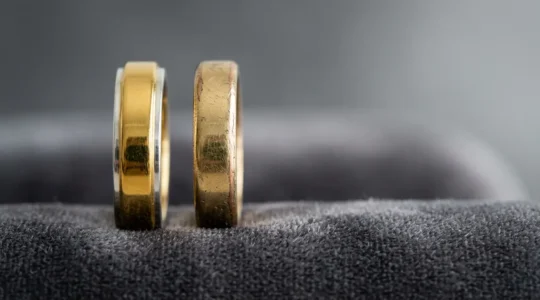
What is the Legal Difference Between « Gold Plated » and « Gold Vermeil » in the UK?
The key legal difference is that « Gold Vermeil » is a legally protected term in the UK requiring a thick gold layer over solid sterling silver, while « Gold Plated » has no such legal minimums. True Gold Vermeil must have a sterling…
Lire la suite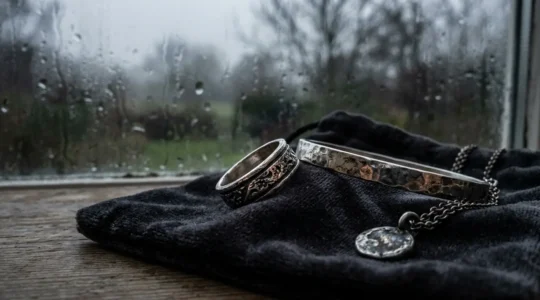
Why Does Sterling Silver Tarnish Faster in the UK Winter?
If you’ve noticed your sterling silver jewellery turning black with alarming speed during a British winter, you’re not just imagining it. The problem isn’t merely the damp air; it’s a perfect storm of atmospheric chemistry unique to this season. The…
Lire la suite
How to Identify Truly Ethical Jewellery Beyond the « Recycled » Label?
Most ‘ethical’ jewellery labels like « recycled » and « eco-friendly » are marketing shortcuts that hide critical information about a product’s true impact. « Recycled gold » often obscures its origin and fails to support mining communities that depend on fair trade. « Lab-grown » is not…
Lire la suite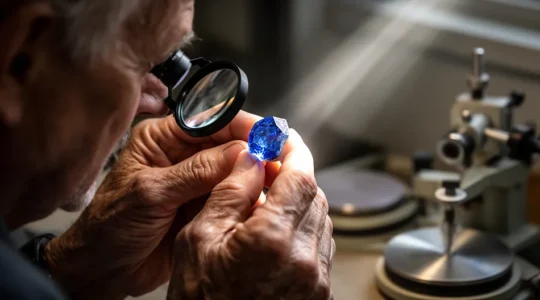
Recutting a Chipped Sapphire: A Lapidary’s Guide to Saving Your Stone
Deciding to recut a damaged gemstone is not a gamble, but a calculated analysis of risk versus reward. Weight loss is inevitable, but its extent depends entirely on the damage’s location and depth. Recutting offers the opportunity to dramatically improve…
Lire la suite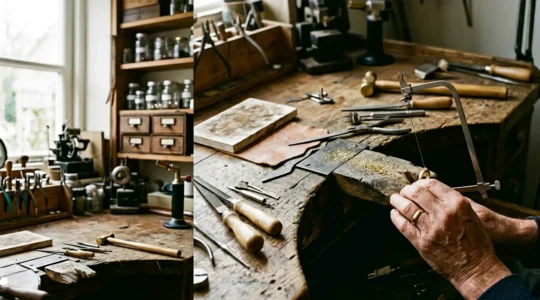
The True Cost of Craft: Why UK Workshop Manufacturing is a Worthwhile Investment
The higher price of UK-made jewellery reflects a legally-mandated ecosystem of accountability, material integrity, and consumer protection that most imported items simply bypass. True « handmade » involves creation from raw materials, not just assembling imported parts—a crucial legal distinction impacting value….
Lire la suite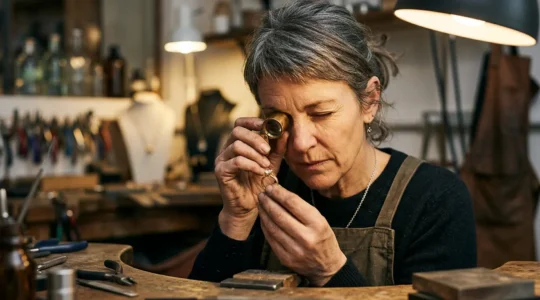
How to Spot Poor Finishing on a Ring Before You Buy It?
The true value of a ring lies in microscopic finishing details that separate artisan quality from mass-production shortcuts. Tiny pin-holes (porosity) on the surface are not decorative; they are a direct sign of rushed, low-quality casting. A hallmark of quality…
Lire la suite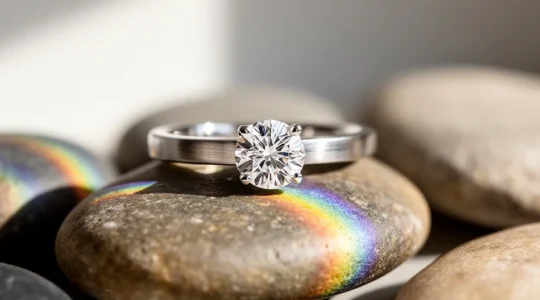
How to Choose a Minimalist Setting That Won’t Drop the Diamond?
The security of a minimalist ring isn’t about the amount of metal you see, but the invisible engineering principles—compressive force, material density, and structural design—that hold the diamond in place. True tension settings rely on thousands of pounds of pressure,…
Lire la suite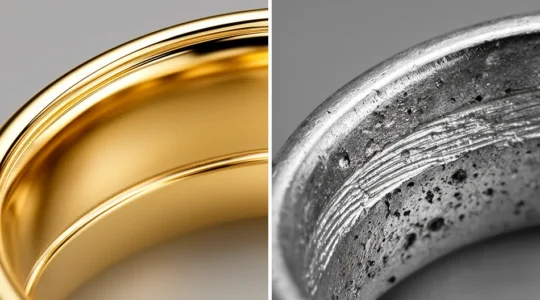
How to Spot the Difference Between Hand-Finished and Mass-Cast Jewellery?
The true sign of a jewellery piece’s quality isn’t its surface shine, but its hidden structural integrity and finishing details. Mass-cast jewellery often conceals flaws like porosity and rough surfaces in hard-to-see areas, compromising long-term durability. Hand-finished pieces feature denser,…
Lire la suite