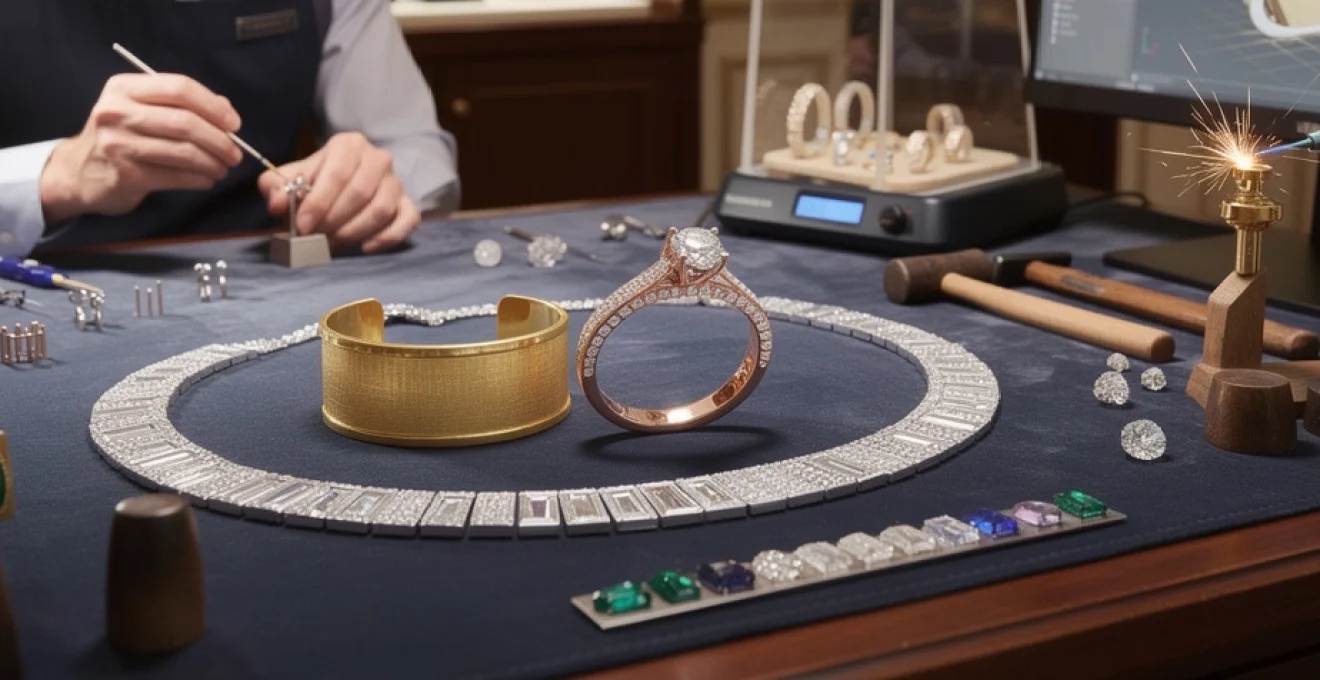
Throughout centuries of human civilisation, few materials have captured the imagination quite like gold. From ancient Egyptian pharaohs to contemporary luxury brands, this precious metal continues to symbolise wealth, beauty, and enduring value. Among the various gold purities available today, 18-carat gold stands as the quintessential choice for discerning jewellery enthusiasts and luxury houses alike. With its optimal balance of 75% pure gold and 25% complementary alloys, 18-carat gold delivers exceptional durability without compromising the rich, warm lustre that makes gold so coveted. This sophisticated alloy represents far more than mere ornamentation—it embodies centuries of metallurgical expertise, artisanal craftsmanship, and technological innovation that continue to define the pinnacle of fine jewellery creation.
Metallurgical composition and karat classification systems in 18-carat gold alloys
The science behind 18-carat gold extends far beyond its surface beauty, encompassing complex metallurgical principles that determine both aesthetic and functional properties. The 750/1000 designation indicates that 750 parts out of every 1000 are pure gold, with the remaining 250 parts comprising carefully selected alloy metals. This precise ratio has been refined over centuries to achieve the optimal balance between workability, durability, and visual appeal that characterises premium jewellery.
Pure 24-carat gold, while undeniably beautiful, presents significant challenges for jewellers due to its inherent softness and malleability. When working with pure gold, artisans encounter difficulties in maintaining structural integrity, particularly when creating intricate designs or setting precious stones. The addition of specific alloy metals transforms this soft, pure gold into a robust material capable of withstanding daily wear while preserving its lustrous appearance. The choice of alloy metals directly influences not only the mechanical properties but also the colour variations that have become synonymous with luxury jewellery.
The karat system itself originated from the carob seed, historically used as a standard unit of measurement due to its consistent weight. This ancient system has evolved into today’s precise classifications, with 18-carat representing three-quarters purity—a standard that emerged as the preferred choice for high-end jewellery houses worldwide. The mathematical precision required in achieving consistent 18-carat alloys demands sophisticated metallurgical processes, including controlled atmosphere melting and precise temperature management throughout the alloying process.
White gold alloy formulations using palladium and platinum additions
White gold represents one of the most sophisticated applications of 18-carat alloy technology, requiring careful selection of whitening metals to achieve the desired silvery appearance. Traditional white gold formulations historically relied on nickel additions, but contemporary luxury jewellers increasingly favour palladium and platinum additions due to their hypoallergenic properties and superior colour stability. Palladium-based white gold alloys typically contain 10-15% palladium, with the remainder comprising silver and small quantities of zinc or copper for enhanced workability.
Platinum additions, while more expensive, create exceptionally durable white gold alloys with remarkable tarnish resistance. These premium formulations often incorporate 8-12% platinum alongside palladium, resulting in alloys that maintain their bright white appearance without requiring rhodium plating. The metallurgical complexity of these alloys demands precise temperature control during melting and casting, as the different melting points of constituent metals can lead to segregation if not properly managed.
Rose gold copper integration and patina development characteristics
Rose gold’s distinctive warm hue results from copper integration within the 18-carat matrix, typically comprising 20-25% copper content alongside smaller amounts of silver. The copper not only imparts the characteristic pinkish tone but also enhances the alloy’s strength and workability. However, copper’s presence introduces unique considerations regarding patina development and long-term colour stability that jewellers must carefully manage through controlled alloying processes.
The patina characteristics of rose gold evolve subtly over time, with copper oxidation potentially creating slight colour variations that many collectors find desirable. This natural aging process can be controlled through surface treatments and protective coatings, allowing jewellers to maintain consistent appearance throughout the piece’s lifetime. Advanced rose gold alloys may incorporate small quantities
of palladium or silver to stabilise the colour and reduce excessive reddening. By fine-tuning these ratios, master alloy producers can deliver 18-carat rose gold that retains its romantic blush tone across decades, even in pieces subjected to daily wear. For clients seeking 18-carat gold jewellery with a distinctive yet timeless personality, rose gold offers an especially compelling balance of warmth, durability, and individuality.
Yellow gold traditional alloy ratios with silver and copper content
Classic 18-carat yellow gold remains the reference point against which all other gold alloys are judged. To achieve that archetypal buttery yellow associated with high jewellery, refiners typically blend pure gold with carefully balanced proportions of silver and copper. A common formulation might include approximately 12.5% silver and 12.5% copper, though minor adjustments are often made to fine-tune the hue for specific markets and design aesthetics.
Silver tends to lighten and cool the alloy, producing a slightly paler, lemony yellow, while copper deepens and warms the tone. Luxury maisons frequently develop proprietary alloy recipes to maintain a signature colour that clients can recognise at a glance. This explains why two 18-carat yellow gold rings can appear subtly different in shade despite identical purity: the underlying alloy chemistry has been tailored to the brand’s visual identity.
From a practical perspective, these silver–copper ratios also influence hardness, ductility, and response to surface finishing. A slightly higher copper content, for example, will usually yield a marginally harder alloy, beneficial for rings and bracelets that experience more abrasion. Conversely, alloys with more silver may exhibit enhanced malleability, making them ideal for intricate filigree work or hand-engraved 18-carat gold jewellery where fine detail is paramount.
Hallmarking standards across european assay offices and british standards
Given the premium associated with 18-carat gold, robust hallmarking systems are essential to protect consumers and uphold confidence in the luxury jewellery market. Across Europe, assay offices apply official marks that certify both the fineness of the metal and, in many cases, the identity of the maker. The 750 fineness mark is the most widely recognised indicator of 18-carat gold, confirming the 75% pure gold content in a given piece.
In the United Kingdom, hallmarking is governed by legislation dating back several centuries and administered by four principal assay offices: London, Birmingham, Sheffield, and Edinburgh. A typical British hallmark on an 18-carat gold ring will include the sponsor’s (or maker’s) mark, the fineness mark 750 (sometimes expressed as 18 followed by ct or 18K), and the assay office symbol. Optional date letters may also be present, providing valuable information for collectors and valuation experts.
On the continent, countries such as France, Italy, and Switzerland operate parallel systems with their own distinctive symbols. France, for instance, uses the iconic eagle’s head to indicate 18-carat gold, while Italy often combines the 750 mark with a numeric code identifying the manufacturer and province. For clients building a portfolio of high-end 18-carat gold jewellery, learning to read these hallmarks is akin to understanding the “passport” of each piece—offering assurance of authenticity and, in some cases, revealing a fascinating trace of its origin and history.
Advanced manufacturing techniques for 18-carat gold jewellery construction
The journey from refined 18-carat gold alloy to finished piece of fine jewellery involves an intricate combination of traditional craftsmanship and cutting-edge technology. While the romance of hand tools and artisan benches remains central, modern ateliers increasingly integrate digital processes and precision machinery to achieve levels of accuracy and repeatability that were once impossible. This synergy enables designers to fully exploit the material advantages of 18-carat gold across both classic and avant-garde collections.
Manufacturing choices—whether casting, forging, or additive fabrication—directly affect not only the aesthetics of 18-carat gold jewellery but also its structural performance and long-term wear characteristics. Understanding these techniques helps you appreciate why two pieces of similar visual design may feel and age quite differently. It also provides useful context when evaluating pricing, as labour-intensive methods or low-tolerance finishing inevitably command a premium.
Lost-wax casting precision methods for complex geometries
Lost-wax casting remains the cornerstone technique for producing complex 18-carat gold designs, particularly those incorporating intricate under-galleries, pierced patterns, or organic forms. The process begins with a master model—now often generated via 3D printing—which is used to create a high-fidelity wax replica. These wax components are assembled into “trees” and encased in a refractory investment material that hardens to form a negative mould.
Once the wax is burned out in a controlled furnace cycle, molten 18-carat gold is introduced under vacuum or centrifugal force, ensuring that the alloy flows into even the finest recesses of the mould. Modern casting houses employ precise temperature curves and de-gassing protocols to minimise porosity, shrinkage defects, and inclusions. For high-end 18-carat gold jewellery, these quality controls are critical: internal flaws can compromise durability and complicate later processes such as setting or resizing.
After casting, individual pieces are cut from the tree, cleaned, and inspected under magnification. Expert casters will often leave a deliberate excess of material in certain zones—such as prong tips or structural cross-sections—so that setters and polishers have sufficient gold to work with. When executed correctly, lost-wax casting allows maisons to produce 18-carat gold creations that would be impractical, if not impossible, to realise by forging alone.
Hand-forging artisanal techniques in florentine and milanese workshops
Alongside casting, hand-forging occupies a revered place in the tradition of 18-carat gold jewellery making, especially in historic centres such as Florence and Milan. In these workshops, goldsmiths begin with rolled sheet or wire and shape the metal through successive stages of hammering, annealing, and forming. Each blow of the hammer subtly compresses and elongates the crystal structure of the alloy, increasing its strength in a way that cast metal alone cannot match.
Florentine hand-engraving, characterised by its signature cross-hatched, shimmering surfaces, is often applied to forged 18-carat gold to create a play of light that rivals pavé diamonds. Milanese artisans, by contrast, are renowned for sleek, architectural silhouettes and meticulously engineered hinges and clasps. In both traditions, the tactile sense of the maker—knowing exactly how far 18-carat gold can be pushed, bent, or drawn before it work-hardens—is akin to a musician’s instinct with an instrument.
For the wearer, the practical benefit of forged 18-carat gold jewellery lies in its exceptional resilience. Bangles are less prone to deformation, links articulate more smoothly, and ring shanks can better withstand decades of daily wear. While such pieces tend to be more expensive due to the intensive labour involved, they represent an enduring investment where the artisanal value is literally hammered into the metal itself.
Cad-driven prototyping and 3D printing applications
Computer-aided design (CAD) has revolutionised how luxury houses conceive and develop 18-carat gold jewellery. Designers can now model highly complex forms in three dimensions, test different stone layouts, and simulate wearability before a single gram of gold is melted. This digital environment allows for rapid iteration and precise control of dimensions, tolerances, and ergonomics.
Once a design is approved, 3D printing comes into play—usually via high-resolution wax or resin printers. These machines can reproduce minute details, from micro-pavé seats to openwork lattice structures, with astonishing accuracy. The printed models then feed directly into the lost-wax casting process, effectively bridging the gap between virtual concept and physical 18-carat gold piece.
For clients, the advantage of CAD and 3D printing lies in the possibility of customisation and preview. It is now common for bespoke 18-carat gold jewellery commissions to include digital renders or even printed mock-ups that you can try on before final production. This not only reduces the risk of miscommunication but also ensures that the finished piece aligns perfectly with your expectations in terms of scale, comfort, and aesthetic impact.
Laser welding and micro-soldering joint integrity protocols
As 18-carat gold jewellery designs have become more intricate—particularly in settings with ultra-fine prongs or articulated elements—traditional torch soldering has been supplemented by laser welding and micro-soldering technologies. Laser welders concentrate intense energy into a tiny focal point, allowing goldsmiths to join components with minimal heat spread to surrounding areas. This is especially valuable when working near heat-sensitive gemstones or detailed engravings.
Micro-soldering, often performed under high magnification, uses ultra-fine solder wires and precision tips to create consistent, low-profile joints. Protocols in high-end workshops typically include specific solder grades for different tasks, carefully sequenced so that earlier joins are not disturbed by subsequent heating. In 18-carat gold, where colour matching between base metal and solder is critical, premium solder alloys are formulated to maintain visual continuity after polishing.
From a durability standpoint, robust joint integrity is essential. Weak or poorly executed joins can lead to failures in chains, clasps, and settings long before the metal itself shows wear. By combining advanced joining technologies with rigorous testing—such as pull tests on chains or flex tests on hinges—luxury maisons ensure that their 18-carat gold jewellery performs reliably under the demands of everyday use.
Gemstone setting methodologies in 18-carat gold matrices
The way gemstones are integrated into 18-carat gold jewellery is as important as the quality of the stones themselves. Setting techniques must respect the mechanical properties of both the metal and the gem, while achieving the desired aesthetic—whether that is a minimalist solitaire or a fully pavé surface that appears almost liquid with light. Because 18-carat gold combines relative softness with excellent malleability, it is particularly well suited to fine setting work, allowing setters to manipulate claws and beads with great precision.
For the wearer, the choice of setting has tangible implications: it affects how prominently a stone is displayed, how much light it receives, and how securely it is held in place over time. Understanding the main setting methodologies can help you make informed decisions when commissioning or purchasing 18-carat gold jewellery, especially for high-value stones such as diamonds, sapphires, and emeralds.
Prong setting calibration for diamond retention in tiffany-style mountings
Prong settings—often associated with the classic Tiffany-style solitaire—remain one of the most popular ways to showcase a diamond in 18-carat gold. Here, the stone is held in place by a series of claws that rise from the ring’s gallery and gently curve over the girdle. The apparent simplicity of this design belies the precision required: each prong must be calibrated in height, thickness, and angle to secure the diamond without obscuring its brilliance.
In 18-carat gold, prongs are typically drawn down and tapered using fine files and gravers before being polished. Setters carefully seat the diamond into a precisely cut bearing, ensuring even contact around the girdle. The prongs are then bent and burnished over the stone, with special attention paid to symmetry when viewed from multiple angles. Well-executed 18-carat gold prongs strike a critical balance—robust enough to resist snagging or deformation, yet delicate enough to create the illusion of a floating gemstone.
For engagement rings or high-wear pieces, some ateliers reinforce prongs with subtle cross-supports or six-prong configurations, further enhancing security. Periodic inspections—every 12 to 18 months—are recommended to confirm that claws have not worn thin or lifted, a simple preventive measure that greatly extends the safe lifespan of prong-set diamonds in 18-carat gold.
Pavé diamond placement using grain-setting micro-tools
Pavé setting transforms 18-carat gold surfaces into continuous fields of sparkle by closely positioning numerous small diamonds and holding them in place with tiny metal beads, or “grains.” Achieving a seamless pavé effect demands exceptional control, as each stone must sit at an identical height and angle to create uniform light return. Setters typically begin by laying out a precise grid of pilot holes, often guided by CAD-generated templates.
Using micro-tools under a binocular microscope, the setter drills and cuts seats for each diamond, then displaces minuscule amounts of 18-carat gold around the stones to form grains. These grains are subsequently shaped and polished to a high lustre, creating the impression that the diamonds are emerging organically from the metal. Different pavé styles—such as French pavé or scallop pavé—vary in how much gold is visible between stones, subtly altering the visual rhythm of the piece.
Pavé work in 18-carat gold requires careful consideration of alloy hardness. Alloys that are too soft may deform over time, loosening stones, while excessively hard alloys can be difficult to grain without fracturing tools or chipping stones. High-end maisons therefore collaborate closely with alloy suppliers and setters to ensure that pavé-intensive designs maintain both aesthetic refinement and long-term structural integrity.
Bezel setting applications for cabochon emeralds and sapphires
Bezel settings, in which the stone is entirely encircled by a rim of metal, offer both a sleek contemporary look and excellent protection—particularly beneficial for softer gems such as emeralds or cabochon-cut stones with exposed domes. In 18-carat gold, bezels can be crafted as either full or partial surrounds, with wall thickness carefully calibrated to hold the gem securely without appearing heavy.
For cabochon emeralds and sapphires, the setter shapes an internal seat that follows the curve of the stone, ensuring intimate contact and even pressure distribution. The upper edge of the bezel is then gradually pushed over the stone’s shoulder using polished burnishers, a process that requires patience and a delicate touch to avoid cracking the gemstone. Because 18-carat gold is more malleable than higher-karat alloys, it lends itself particularly well to this controlled deformation.
From an aesthetic standpoint, bezels can emphasise the outline of a gem, creating a strong graphic element that contrasts beautifully with the stone’s internal play of colour. For everyday 18-carat gold jewellery—such as signet rings, medallions, or charm pendants—bezel settings are often recommended when you want maximum security and a streamlined profile that is less prone to catching on clothing.
Channel setting precision for baguette-cut stone sequences
Channel settings are the technique of choice when arranging baguette-cut or princess-cut stones in linear sequences, such as in eternity bands or the shoulders of engagement rings. Here, parallel walls of 18-carat gold form a track into which the stones are tightly fitted, with no metal separating them along their sides. This creates a sleek, continuous ribbon of brilliance that aligns perfectly with the clean geometry of modern design.
Precision is paramount: the channel width must match the combined dimensions of the stones to within fractions of a millimetre. Setters typically trim and adjust each stone individually, then slide them into place and gently compress the channel walls using specialised tools. The top edges of the channels are finally burnished to lock the stones, with corners and joints carefully inspected for any micro-gaps that could compromise stability.
Because channel-set stones share walls rather than independent prongs, the technique offers good protection for vulnerable corners while maintaining a low, snag-resistant profile. For 18-carat gold jewellery subjected to frequent hand movement—such as full-eternity rings—channel setting strikes an attractive balance between visual impact and durability, provided that the underlying gold alloy has sufficient hardness to resist spreading over time.
Surface finishing techniques and protective coating applications
The final appearance of 18-carat gold jewellery owes as much to surface finishing as it does to alloy composition or design. After casting, forging, and setting, pieces undergo a sequence of abrasives, brushes, and polishing compounds that refine the metal from a raw state to a mirror sheen or intentionally textured finish. Each step removes microscopic scratches and tool marks, gradually compressing the surface layer of the gold and enhancing its reflectivity.
Common finishes include high polish, satin or brushed textures, and more specialised treatments such as sandblasting, ice finishing, or Florentine engraving. High-polish 18-carat gold maximises light return and dramatic contrast with gemstones, but it also tends to reveal hairline scratches more readily. Satin finishes, by comparison, diffuse reflections and can be more forgiving in daily wear, making them a popular choice for modern 18-carat gold wedding bands and cuffs.
In the case of white gold, surface finishing often includes a final rhodium plating step to intensify the bright, cool tone and mask any underlying warmth from the base alloy. This ultra-thin coating—typically between 0.1 and 0.3 microns—provides additional scratch resistance and an almost chrome-like lustre. Over time, especially on rings and bracelets, rhodium can wear away, revealing the natural colour of the 18-carat white gold beneath. Periodic replating by a professional jeweller restores the original appearance and is considered a normal part of maintenance.
Some luxury ateliers also apply clear protective lacquers or nano-coatings to selected 18-carat gold surfaces, particularly on pieces with elaborate engraving or mixed finishes. While these treatments can delay the onset of micro-scratching and oxidation (notably in high-copper rose gold alloys), they are not permanent. As with any high-value object, thoughtful care—avoiding harsh chemicals, storing pieces individually, and scheduling occasional professional polishing—remains the most effective way to preserve the enduring luxury of 18-carat gold jewellery.
Market positioning strategies of luxury maisons utilising 18-carat gold
On the global luxury stage, 18-carat gold is more than a material specification; it is a strategic signal of quality, heritage, and brand promise. Most high-end maisons have standardised on 18-carat gold for their core fine jewellery lines, reserving higher purities such as 22- or 24-carat gold for niche collections where cultural or investment narratives take precedence over everyday practicality. By doing so, they align their offering with customer expectations of durability and prestige in a single, recognisable benchmark.
Market positioning often hinges on how brands articulate the story behind their 18-carat gold. Some emphasise proprietary alloys with signature hues, using them almost like a trademark colour. Others foreground responsible sourcing—such as recycled gold or RJC-certified supply chains—to appeal to clients who view ethical considerations as integral to luxury. In both cases, 18-carat gold jewellery becomes a vehicle not only for adornment but also for communicating values and lifestyle aspirations.
Pricing strategies reflect this layered positioning. While the intrinsic gold content sets a baseline cost, maisons add significant value through design exclusivity, artisanal craftsmanship, and brand equity. Limited editions, capsule collaborations, and archival reissues in 18-carat gold create scarcity and desirability, often supported by curated storytelling in boutiques and digital channels. For collectors, these narratives help justify premiums over generic 18-carat gold jewellery that may match on weight but not on emotional or cultural resonance.
Geographically, preferences in 18-carat gold jewellery also influence how brands approach product development. In parts of Europe and North America, white and rose gold dominate bridal and everyday categories, while in the Middle East and parts of Asia, classic yellow and high-purity gold retain strong cultural significance. Savvy maisons adapt alloy colours, design language, and even hallmark visibility to suit these regional nuances, all while maintaining the core promise of 18-carat quality across their global network.
Authentication protocols and forgery detection in high-end gold jewellery markets
As the value of 18-carat gold jewellery has risen in line with global gold prices and brand premiums, so too has the sophistication of counterfeits. Authenticating high-end pieces now requires a combination of traditional expertise and scientific analysis. At the most basic level, professionals begin with visual inspection: verifying hallmarks, assessing craftsmanship quality, and checking for inconsistencies in colour or finishing that may indicate substandard alloys or plating.
Beyond the naked eye, assay offices and forensic laboratories deploy a range of analytical techniques. X-ray fluorescence (XRF) spectrometry, for example, allows non-destructive measurement of alloy composition, confirming whether a piece marketed as 18-carat gold truly contains 75% pure gold throughout. Density tests, using precise weighing and volume displacement, can detect hollow constructions or base-metal cores concealed beneath thick plating—common tactics in counterfeit or misrepresented jewellery.
For high-stakes transactions, such as auction sales of signed vintage 18-carat gold jewellery, provenance documentation and brand archives play an increasingly important role. Many luxury maisons maintain detailed records of serial numbers, design references, and production periods, enabling them to verify whether a piece claiming their name aligns with documented specifications. Micro-engraved logos, laser-inscribed serials, and even covert security features—visible only under specific wavelengths of light—are now integrated into some collections as additional layers of protection.
For private clients, a few simple practices can dramatically reduce the risk of acquiring inauthentic 18-carat gold jewellery. Purchasing from authorised retailers or reputable secondary-market dealers, requesting written descriptions that specify gold fineness and hallmark details, and insisting on independent appraisals for high-value pieces all contribute to safer acquisitions. In an era where the line between genuine and imitation can be as fine as a prong tip, these authentication protocols help ensure that the enduring luxury you invest in is precisely what it claims to be: true 18-carat gold, crafted to the highest standards of the jewellery art.