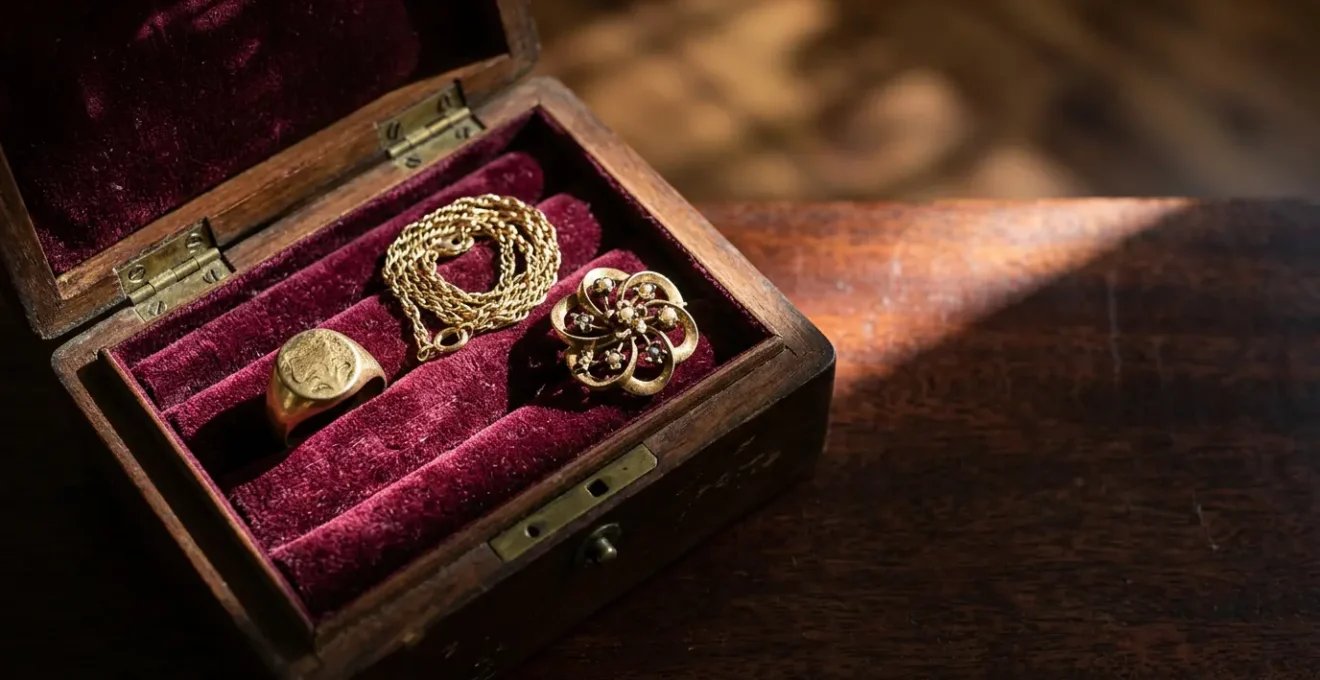
The common belief that 9ct gold’s hardness makes it more durable is a misunderstanding for heirloom-quality jewellery.
- 18ct gold ages gracefully, developing a desirable patina, and its composition makes it far more repairable by a skilled jeweller.
- Though harder, 9ct gold is more brittle, making it more prone to cracking or snapping under stress, often resulting in permanent damage.
Recommendation: For a piece intended to last generations, always choose solid 18ct gold for its superior long-term integrity, reparability, and intrinsic value.
When choosing a piece of jewellery intended to become a family heirloom, the debate between 9-carat and 18-carat gold is a common point of confusion, especially for UK buyers where 9ct is a familiar standard. The conventional wisdom suggests that 9ct, being a harder alloy, is more durable and thus better suited for everyday wear. This logic, while seemingly sound, overlooks a crucial distinction: the difference between hardness and long-term resilience. For a piece designed to transcend a single lifetime, the conversation must shift from mere scratch resistance to the very soul of the metal.
The true measure of an heirloom’s worth is not its ability to resist every minor knock, but its capacity to be worn, loved, and ultimately restored. This is where the narrative flips. What if the perceived “softness” of 18-carat gold was not a weakness, but its greatest strength? The higher gold content endows it with a unique character—a malleable toughness and an ability to age gracefully, qualities that are essential for a legacy piece. This article will deconstruct the common myths and delve into the technical and legal distinctions that elevate 18-carat gold as the definitive choice for jewellery with a future.
To fully understand this choice, we will explore the science behind the alloys, the tell-tale signs of quality, and the legal standards that protect a buyer. This guide provides the essential knowledge to invest not just in a beautiful object, but in a piece of lasting value.
Summary: Investing in Heirloom Quality: The Case for 18-Carat Gold
- Why Does 18-Carat Gold Scratch Faster Than Cheaper Alloys?
- How to Spot the Difference Between “18k Gold Plated” and Solid Gold?
- Rose or Yellow 18k Gold: Which Alloy Contains More Copper?
- The Damage Chlorine Pools Cause to the Alloys in 18k Gold Rings
- When is the Right Time to Scrap 18k Gold Jewellery for Maximum Cash?
- The Risk of Buying Hollow Signet Rings for Daily Wear
- Why Must True Vermeil Have a Sterling Silver Base?
- What is the Legal Difference Between “Gold Plated” and “Gold Vermeil” in the UK?
Why Does 18-Carat Gold Scratch Faster Than Cheaper Alloys?
The very reason 18-carat gold is more precious is the reason for its surface softness: its high purity. An 18ct piece is composed of 75% pure gold, a naturally soft and malleable metal. In contrast, 9ct gold contains only 37.5% gold, with the remaining 62.5% made up of harder, less precious metals. This higher proportion of hardening alloys in 9ct gold gives it greater resistance to surface scratches from daily activities. However, this is a trade-off. This apparent “weakness” of 18ct gold is precisely what allows for its graceful aging. Over years of wear, these tiny scratches blend into a soft, lustrous finish known as a patina, which is highly prized by connoisseurs as a sign of a well-loved piece.
More importantly, the softness of 18ct gold translates to superior reparability. A skilled jeweller can easily polish away a patina to restore a mirror finish, a process that is much more difficult with harder, less forgiving alloys. This property, which we can call malleable toughness, means that while 18ct gold may show surface wear more readily, it is far less likely to crack or snap under impact. It has the ability to bend where a more brittle 9ct piece might break. Research confirms the superior quality of this alloy, noting that its 75% pure gold content provides excellent resistance to tarnishing, ensuring its rich colour remains true over decades.
Ultimately, for an heirloom, the ability to be restored to its original glory generation after generation is far more valuable than short-term resistance to superficial scratches.
How to Spot the Difference Between “18k Gold Plated” and Solid Gold?
Distinguishing solid 18-carat gold from a plated piece is crucial for any discerning buyer. While a plated item might mimic the look of solid gold initially, it lacks the intrinsic value, durability, and heirloom potential. The most definitive method is to inspect the item for a hallmark. Solid 18ct gold is legally required in the UK to be hallmarked, and it will be stamped with “750” (representing 750 parts per thousand of pure gold) or “18K”. Plated items may be stamped with “GP” (Gold Plated) or “HGE” (Hard Gold Electroplate), or have no mark at all.
Beyond the hallmark, there are physical clues. Solid 18ct gold is a dense metal, giving it a satisfying and substantial heft in the hand. A plated piece, often with a brass or copper core, will feel noticeably lighter for its size. Furthermore, as a plated item wears, especially at the edges and contact points, the thin layer of gold will rub away, revealing the duller, differently coloured base metal beneath. A solid gold piece, when scratched, simply reveals more gold. This difference in wear pattern is a tell-tale sign of a piece’s true nature.
The table below summarises the key distinctions to look for when assessing a piece of gold jewellery.
| Property | Solid 18k Gold | Gold Plated |
|---|---|---|
| Density | 15.2-15.9 g/cm³ | ~8.7 g/cm³ (brass base) |
| Wear Pattern | Reveals more gold underneath | Shows base metal at edges |
| Hallmark | 750 or 18K stamped | HGE or GP marking |
| Weight Feel | Substantial heft | Lighter feel |
By training your eye to spot these markers of quality, you protect your investment and ensure you are acquiring a genuine piece of lasting value.
Rose or Yellow 18k Gold: Which Alloy Contains More Copper?
The beautiful spectrum of colours available in 18-carat gold—from the classic sun-like yellow to the warm, romantic blush of rose gold—is achieved by varying the other 25% of metals in the alloy. All 18ct gold contains 75% pure gold; it is the composition of the remaining metals (primarily copper, silver, zinc, and sometimes palladium) that dictates the final hue and, to a small extent, its physical properties.
To answer the question directly: 18ct rose gold contains significantly more copper than 18ct yellow gold. In a typical yellow gold alloy, the 25% is a balanced mix of silver and copper to maintain a colour close to that of pure gold. In rose gold, the proportion of copper is dramatically increased, and the silver content is reduced or eliminated, imparting the distinct reddish tint. This higher copper content has a secondary effect beyond colour.
Rose Gold’s Copper Content and Durability Benefits
Rose gold contains significantly more copper than yellow gold, with the copper acting as a strong hardening agent. This makes 18k rose gold marginally harder and more durable than 18k yellow gold, positioning it as excellent for those wanting 18k prestige with a slight durability advantage for daily wear.
It’s also worth noting that most modern, high-quality 18ct alloys are nickel-free, making them an excellent hypoallergenic choice. This is an important consideration, as up to 17% of women and 3% of men are allergic to nickel, a common component in cheaper alloys and plated jewellery.
Whether you prefer the classic warmth of yellow gold or the contemporary blush of rose gold, choosing an 18-carat piece ensures you receive the highest standard of purity and quality.
The Damage Chlorine Pools Cause to the Alloys in 18k Gold Rings
While 18-carat gold is a resilient material, it is not invincible, and one of its most potent enemies is chlorine. The chlorine found in swimming pools and hot tubs poses a significant risk to the integrity of gold jewellery, particularly to the alloy metals that constitute 25% of an 18ct piece. Pure gold itself is largely inert, but chlorine aggressively attacks the copper, zinc, and nickel mixed in to provide colour and strength. This process, known as leaching, can slowly eat away at the alloys, weakening the structure of the ring over time.
The damage is most pronounced at points of stress, such as the prongs holding a gemstone or at the sizing joint at the base of the shank. Repeated exposure can lead to a dangerous condition called stress corrosion cracking, where the metal becomes brittle and can fail suddenly, potentially leading to the loss of a precious stone. Because 9ct gold contains a much higher percentage of vulnerable alloy metals (62.5%), it is significantly more susceptible to chlorine damage than 18ct gold.
The table below clearly illustrates the difference in vulnerability between the two common alloys.
| Gold Type | Pure Gold Content | Alloy Metal Content | Chlorine Vulnerability |
|---|---|---|---|
| 18k Gold | 75% | 25% | Lower – less alloy to attack |
| 9k Gold | 37.5% | 62.5% | Much Higher – more vulnerable metals |
Your Action Plan: Protecting Gold Jewellery From Chlorine
- Points of Contact: Identify all sources of chlorine exposure in your routine, including swimming pools, hot tubs, and even harsh cleaning chemicals.
- Collecte: Make it a habit to remove all gold jewellery before entering these environments. Store it in a safe, designated place like a pouch in your swim bag.
- Cohérence: Check for early signs of damage, such as discoloration or weakness at solder points, especially on prongs and sizing joints.
- Mémorabilité/émotion: Remember that the risk of losing a stone or causing irreparable damage far outweighs the inconvenience of removing the piece.
- Plan d’intégration: After swimming, if you forgot to remove your jewellery, rinse it thoroughly with clean water and dry it with a soft cloth to remove any chlorine residue.
Adopting the simple habit of removing your jewellery before swimming is the most effective way to safeguard your precious investment.
When is the Right Time to Scrap 18k Gold Jewellery for Maximum Cash?
The decision to scrap a piece of 18-carat gold jewellery is often fraught with emotion, pitting sentimental value against monetary worth. While 18ct gold holds significant intrinsic value due to its high purity, the “right” time to sell it for scrap is rarely about market timing and more about the piece’s condition and personal significance. The scrap value is determined solely by the weight of the pure gold it contains. It’s a simple calculation: 18k gold contains 75% pure gold vs 37.5% in 9k gold, meaning its scrap value will be precisely double that of a 9ct piece of the same weight.
However, scrapping should always be the last resort, typically reserved for pieces that are broken beyond repair or have lost all personal meaning. An intact, well-made piece of 18ct jewellery, especially from a reputable maker, will almost always have a higher resale value as a finished item than its simple melt value. The craftsmanship, design, and provenance add a layer of value that is completely lost when it is melted down. The best “investment” in an heirloom is not in its potential scrap price, but in its ability to be passed down.
You should only consider scrapping a piece if it is severely damaged (e.g., heavily crushed, multiple irreparable breaks) or if it’s a collection of mismatched, broken fragments. If you have a wearable, complete piece, exploring options like consignment, private sale, or auction will yield a much better return. The time to scrap is when the piece has ceased to be “jewellery” and has become simple “gold.”
Before making a final choice, always get a valuation from a trusted jeweller who can advise whether the piece has more value intact or as raw material.
The Risk of Buying Hollow Signet Rings for Daily Wear
In the quest for affordable luxury, some manufacturers produce jewellery, particularly large items like signet rings, with a hollow construction. While this makes the piece lighter and less expensive by using less gold, it introduces significant risks that undermine the very purpose of an heirloom piece. A hollow ring is essentially a thin shell of gold, and it is far more susceptible to damage that is often permanent.
The most common issue is denting. Unlike a solid ring, which can withstand considerable impact and whose shape can often be restored by a jeweller, a dent in a hollow ring is usually unrepairable. Attempting to hammer out the dent will distort or even break the fragile shell. Furthermore, these hollow spaces can trap moisture, soap, and lotions from daily wear, creating a perfect environment for internal corrosion that can eat away at the metal from the inside out. This can lead to discoloration and structural weakness over time.
Hollow vs Solid Gold Ring Durability Analysis
Experts emphasize that solid gold pieces maintain their intended weight and ‘heft’ that signifies genuine luxury. Their solid construction allows for reshaping after damage, while hollow pieces with significant dents cannot be hammered out without distorting the thin shell, making damage permanent.
Ultimately, a hollow ring creates a false perception of value. While it may look substantial, it lacks the intrinsic worth and satisfying heft of a smaller, solid 18-carat piece. For a signet ring, which is traditionally worn daily and subjected to more wear and tear, choosing a solid construction is not a luxury, but a necessity for longevity.
When selecting a piece for life, always insist on solid 18-carat gold. The added investment guarantees the durability and integrity required of a true family heirloom.
Why Must True Vermeil Have a Sterling Silver Base?
The term “vermeil” (pronounced ver-may) signifies a specific and high-quality type of gold-plated jewellery. For a piece to be legally classified as gold vermeil, especially under strict standards like those in the US and followed by reputable UK jewellers, it must meet two critical criteria: a thick layer of gold (at least 2.5 microns) plated over a base of solid sterling silver. This requirement for a sterling silver base is not arbitrary; it is fundamental to the quality and longevity of the piece.
The primary reason is chemical compatibility. Sterling silver provides a superior surface for gold to bond with during the electroplating process compared to common base metals like brass or copper. This stronger bond means the gold layer is significantly less likely to flake, peel, or wear away quickly. It creates a more durable and lasting finish that can withstand years of wear with proper care. This ensures that the beauty of the gold is not just a fleeting surface treatment.
Vermeil Quality Standards and Bonding Properties
True vermeil requires a sterling silver base because silver bonds with gold more effectively during plating than base metals. This superior bond means the gold layer is less likely to flake or peel, extending piece life. Additionally, if the gold layer wears thin after years, the revealed sterling silver underneath remains beautiful and non-reactive, unlike a brass or copper base which would tarnish and potentially stain the skin.
Secondly, the sterling silver base ensures the piece remains valuable and hypoallergenic even if the gold layer eventually wears. Experts confirm that sterling silver (which is 92.5% pure silver) is hypoallergenic for most people, preventing the skin reactions that can occur when a base metal like nickel or brass is exposed.
When you choose gold vermeil, you are investing in a piece crafted from two precious metals, guaranteeing a higher standard of quality from its core to its surface.
Key Takeaways
- 18ct is Superior for Heirlooms: Its softness allows for graceful aging and reparability, making it tougher and less brittle than 9ct gold in the long run.
- Hallmarks are Non-Negotiable: Look for the “750” stamp as proof of solid 18ct gold, a legal requirement that separates it from plated items.
- Solid over Hollow, Always: For a piece to last generations, it must be solid. Hollow jewellery is prone to unrepairable dents and internal corrosion.
What is the Legal Difference Between “Gold Plated” and “Gold Vermeil” in the UK?
In the UK jewellery market, understanding the terminology is key to making an informed purchase, and there is a crucial legal and material difference between “gold plated” and “gold vermeil.” The term “gold plated” is a broad, non-regulated description. It simply means that an item has a thin layer of gold applied over a base metal, which can be anything from brass and copper to zinc or nickel. There are no legal minimums for the thickness of the gold layer or the purity of the gold used.
In stark contrast, the term “vermeil” is protected and carries specific legal requirements under the UK Hallmarking Act 1973. For an item to be legally sold as gold vermeil, it must adhere to strict standards that guarantee a higher level of quality and value. This legal framework provides a crucial layer of protection for the consumer.
As the UK Hallmarking Act 1973 dictates, the standards for precious metals are clear. This is powerfully summarised by a legal requirement that defines true quality:
For an item to be sold as ‘vermeil’ in the UK, it must be sterling silver plated with at least 2.5 microns of gold of at least 10k purity.
– UK Hallmarking Act 1973, Legal requirements for precious metal standards
The following table breaks down the fundamental differences enforced by UK law, highlighting why vermeil is a category of its own, far superior to standard plating.
| Aspect | Gold Vermeil (UK) | Gold Plated |
|---|---|---|
| Legal Definition | Regulated by UK Hallmarking Act 1973 | Non-regulated term |
| Base Metal | Must be sterling silver | Can be any metal |
| Gold Thickness | Minimum 2.5 microns | Can be as thin as 0.5 microns |
| Gold Purity | At least 10k gold required | No minimum requirement |
Ultimately, when you purchase a piece described as “gold vermeil” from a reputable UK dealer, you are buying a product with a guaranteed standard of precious metal content. When you buy “gold plated,” you are taking a chance on an undefined and unregulated item.