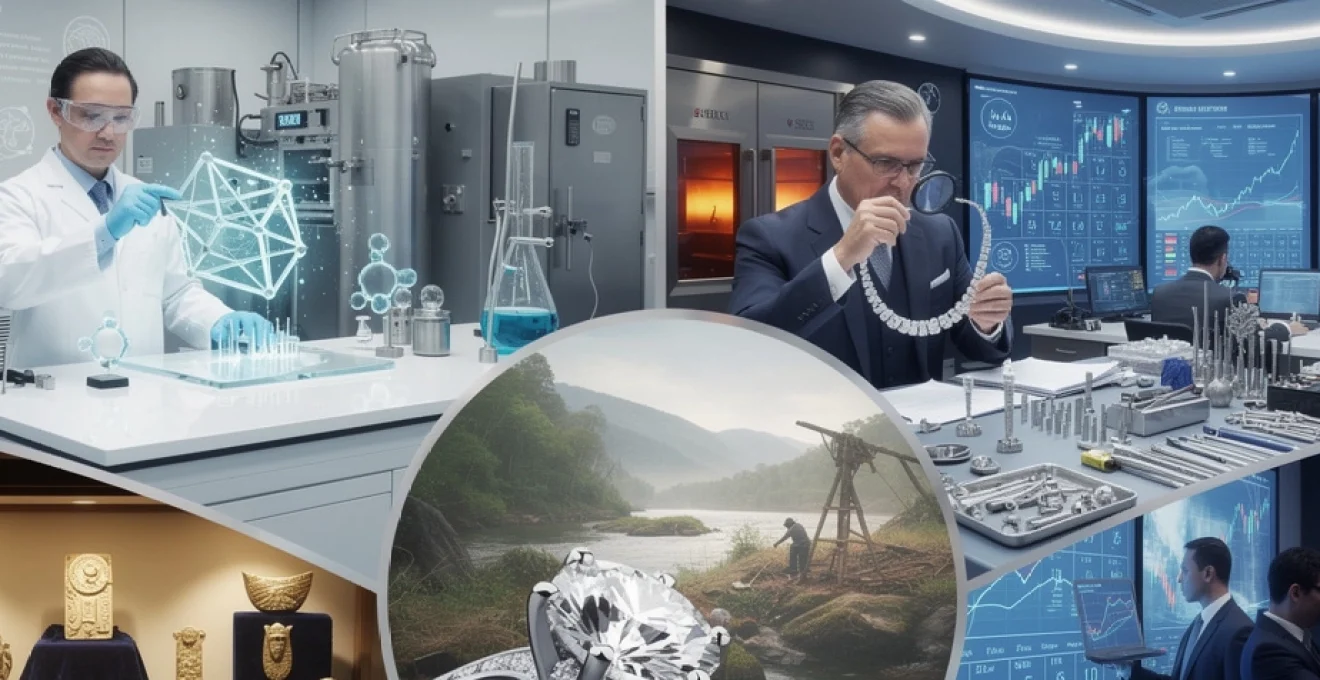
In the realm of precious metals, platinum commands unparalleled respect as the ultimate symbol of durability and prestige. This extraordinary metal, born from cosmic forces and forged in the Earth’s depths, represents the pinnacle of luxury whilst delivering unmatched performance characteristics that distinguish it from all other precious metals. Its unique combination of rarity, strength, and beauty has captivated civilisations for millennia, establishing platinum as the preferred choice for the most significant moments in life.
From the moment you hold a piece of platinum jewellery, its substantial weight and brilliant white lustre immediately communicate its exceptional quality. This naturally white metal requires no artificial enhancement to maintain its stunning appearance, making it the perfect canvas for showcasing precious gemstones. The extraordinary properties that make platinum so desirable stem from its atomic structure and chemical composition, which create a metal that is virtually indestructible under normal circumstances.
Platinum’s atomic structure and chemical properties defining exceptional durability
The remarkable durability of platinum originates from its unique atomic arrangement and chemical properties, which create a metal that withstands extreme conditions whilst maintaining structural integrity. Understanding these fundamental characteristics reveals why platinum has become synonymous with permanence and reliability across numerous industries and applications.
Face-centred cubic crystal lattice configuration in platinum metal
Platinum’s exceptional strength derives from its face-centred cubic (FCC) crystal lattice structure, where atoms arrange themselves in a highly efficient geometric pattern. This configuration creates multiple slip planes that allow the metal to deform plastically without breaking, explaining why platinum jewellery can withstand decades of daily wear without losing its structural integrity. The FCC arrangement also contributes to platinum’s remarkable ductility, enabling craftsmen to work the metal into intricate designs that would be impossible with less malleable materials.
The atomic spacing within this crystal structure creates strong metallic bonds that resist deformation under stress. When platinum experiences mechanical forces, its atoms can slide past one another along predetermined planes without severing the metallic bonds entirely. This unique property means that scratches on platinum surfaces merely displace material rather than removing it, allowing pieces to maintain their original mass throughout their lifetime.
Chemical inertness and corrosion resistance at molecular level
At the molecular level, platinum demonstrates extraordinary chemical inertness, remaining virtually unchanged when exposed to acids, bases, and other corrosive substances. This resistance stems from platinum’s electron configuration, which creates a stable outer shell that resists chemical reactions. Unlike iron, which readily oxidises in the presence of oxygen and moisture, platinum maintains its pristine appearance indefinitely under normal environmental conditions.
The metal’s resistance to tarnishing and corrosion makes it particularly valuable for applications requiring long-term stability. In laboratory settings, platinum crucibles can withstand repeated heating cycles and exposure to aggressive chemicals without degradation. This same property ensures that your platinum engagement ring will look as brilliant on your 50th anniversary as it did on your wedding day, requiring minimal maintenance to preserve its appearance.
High melting point of 1768°C and thermal stability characteristics
Platinum’s melting point of 1768°C places it among the most thermally stable elements, demonstrating exceptional resistance to heat-induced structural changes. This high melting temperature reflects the strength of the metallic bonds within the crystal lattice, which require enormous energy to break. The thermal stability of platinum extends beyond simple melting point considerations, as the metal maintains its mechanical properties across a wide temperature range without experiencing significant thermal expansion or contraction.
In practical applications, this thermal stability proves invaluable for both industrial processes and jewellery manufacturing. Platinum components in automotive catalytic converters operate at temperatures exceeding 800°C without degradation, whilst jewellery pieces can undergo multiple sizing and repair operations without compromising their structural integrity. The metal’s ability to withstand thermal cycling without fatigue ensures that platinum products maintain their performance characteristics throughout extended service lives.
Platinum’s position in the periodic table and noble metal classification
Platinum belongs to the platinum group metals (PGMs), occupying a unique position in the periodic table that grants it noble metal status alongside gold and silver. This classification indicates platinum’s resistance to oxidation and corrosion in moist air, distinguishing it
continues to outperform most other metals in both jewellery and industrial environments. Situated in group 10 and period 6, platinum sits among elements with filled d-orbitals, which contributes to its chemical nobility and reluctance to participate in oxidation-reduction reactions. As a result, platinum retains its surface characteristics over decades, reinforcing its reputation as a symbol of permanence.
This noble metal classification also underpins platinum’s role as a reference standard in electrochemistry and its use in critical laboratory instrumentation. When you see platinum specified for high-precision equipment or fine jewellery, you are effectively seeing its periodic-table status translated into everyday performance. The same electron configuration that keeps it stable in harsh chemical environments is what allows a platinum wedding band or high-end timepiece to withstand daily exposure to sweat, cosmetics, and changing climates without losing its refined appearance.
Historical significance and cultural symbolism of platinum across civilisations
Platinum’s journey from obscure curiosity to global symbol of durability and prestige spans thousands of years and multiple cultures. Long before it became the standard for high-end engagement rings and luxury watches, this rare metal held ritual, artistic, and political significance. Tracing platinum’s historical use helps explain why we instinctively associate it today with status, commitment, and enduring value.
Ancient egyptian and Pre-Columbian platinum artefacts discovery
Archaeological evidence suggests that ancient Egyptians encountered platinum as early as 1200 BCE, often in naturally occurring alloys with gold known as electrum. Small inclusions of platinum have been identified in funeral and ceremonial objects, where its bright, silvery-white appearance complemented gold’s warm glow. Although the Egyptians lacked the technology to refine platinum independently, their use of these alloys hinted at an intuitive appreciation for the metal’s unique character.
In Pre-Columbian South America, particularly among cultures in present-day Colombia and Ecuador, metallurgists took platinum use several steps further. As early as the first millennium CE, craftsmen in the La Tolita and Esmeraldas regions were sintering tiny platinum grains together with gold to create intricate ornaments, masks, and ceremonial artefacts. These objects were reserved for elites and religious leaders, reinforcing platinum’s early association with authority, spirituality, and social prestige.
Spanish colonial period platinum mining in chocó region colombia
When Spanish colonisers arrived in the 16th century, they encountered platinum in the alluvial deposits of the Chocó region of Colombia. Initially, this unfamiliar, heavy, silver-coloured metal was dismissed as an impurity that interfered with gold refining. Historical records from the 1700s refer to platinum as “platina”, or “little silver”, and some officials even labelled it “unfit for coinage” because it could not be easily melted or alloyed with existing techniques.
Over time, scientific curiosity replaced scepticism. By the late 18th century, chemists such as Antonio de Ulloa and William Lewis began studying platinum’s properties in detail, recognising its exceptional resistance to corrosion and high melting point. The Chocó deposits became some of the earliest systematic sources of platinum ore, and the metal’s reputation shifted from troublesome nuisance to strategic resource. This transition marked the beginning of platinum’s ascent from obscure colonial by-product to one of the most valuable and respected metals in global trade.
Cartier’s introduction of platinum in high jewellery during belle époque
Platinum’s modern identity as the ultimate luxury metal was cemented in the late 19th and early 20th centuries, particularly during the Belle Époque in Europe. Maison Cartier was among the first major jewellers to embrace platinum for high jewellery, exploiting its strength and finesse to create airy, lace-like settings that were impossible to achieve with gold alone. Platinum’s face-centred cubic structure allowed extremely fine prongs and minimal metal around diamonds, amplifying light return and creating the illusion of “floating” gemstones.
These technical advantages aligned perfectly with the refined tastes of European aristocracy and industrial magnates, who sought jewellery that was both structurally secure and visually delicate. Royal commissions, tiaras, and elaborate necklaces from this era frequently feature platinum, signalling sophistication and modernity. When you picture an intricate Edwardian or Belle Époque jewel shimmering with diamonds, there is a strong chance platinum is the invisible framework holding that brilliance in place.
Tiffany & co.’s platinum engagement ring revolution in early 20th century
In the United States, Tiffany & Co. played a pivotal role in popularising platinum engagement rings in the early 20th century. Building on its already influential Tiffany® Setting introduced in 1886, the company began offering this iconic six-prong design in platinum, rather than gold, to maximise the diamond’s fire and brilliance. The naturally white metal acted like a neutral stage light, amplifying the stone’s sparkle without adding any yellow tint.
This shift helped redefine cultural expectations around bridal jewellery. A platinum engagement ring came to represent not only romantic commitment, but also financial stability, taste, and an appreciation for enduring quality. By the mid-1900s, platinum had firmly established itself as the aspirational choice for engagement and wedding jewellery across Europe, North America, and later, emerging luxury markets worldwide.
Mechanical properties and metallurgical characteristics
Beyond its historical prestige, platinum’s mechanical properties underpin its reputation for durability in both jewellery and demanding industrial applications. When we describe platinum as strong and enduring, we are referring to a specific set of metallurgical characteristics that determine how the metal behaves under real-world stresses. Understanding these properties can help you make more informed choices, whether you are selecting a platinum wedding band or specifying materials for a high-performance component.
Platinum exhibits a unique combination of high tensile strength, excellent ductility, and impressive toughness. Its density, around 21.45 g/cm³, gives platinum jewellery a satisfying, substantial feel on the hand or wrist, while its capacity for plastic deformation allows jewellers to draw it into fine wires, thin sheets, and delicate prongs without cracking. Unlike more brittle metals, platinum can absorb and redistribute impact energy, which is one reason prongs in platinum settings are less likely to snap under accidental knocks.
From a metallurgical perspective, platinum work-hardens under deformation, meaning its surface becomes slightly harder as it is shaped, engraved, or worn. This is why a platinum ring may show a soft patina over time rather than deep gouges; the surface is continually being subtly compressed and reconfigured instead of chipping away. For critical applications such as securing large diamonds or creating long-lasting heirloom jewellery, this balance of ductility and work-hardening makes platinum a particularly reliable choice.
Platinum is also highly amenable to alloying with small amounts of other metals such as iridium, ruthenium, or cobalt to fine-tune its hardness and manufacturing characteristics. For example, a 950 platinum–ruthenium alloy offers greater hardness and scratch resistance, ideal for engagement rings and wedding bands worn daily. Meanwhile, platinum–iridium alloys deliver exceptional form stability and are often preferred for fine detailing or precision components. In all cases, the platinum content remains extremely high, preserving the metal’s hallmark density, colour, and corrosion resistance.
Industrial applications demonstrating platinum’s superior performance
While most of us encounter platinum first in the form of jewellery, its technical value in industry is just as significant. In fact, a large share of annual platinum demand comes from sectors where reliability and performance literally cannot be compromised. When you see platinum deployed in catalytic converters, medical devices, or aerospace systems, you are seeing a powerful endorsement of its mechanical and chemical resilience.
One of the most visible industrial uses of platinum is in automotive catalytic converters, where it acts as a catalyst to convert harmful exhaust gases into less damaging emissions. Operating in environments that routinely exceed 800°C and are laden with corrosive compounds, these components rely on platinum’s high melting point, chemical inertness, and stable catalytic activity. The same attributes make platinum indispensable in chemical processing plants for catalysts used in nitric acid, silicone, and fertiliser production.
In the medical field, platinum’s biocompatibility and hypoallergenic nature are key reasons it is chosen for pacemaker leads, stents, neuromodulation electrodes, and specialised surgical instruments. Unlike many base metals, platinum does not corrode in bodily fluids, nor does it leach reactive ions that could trigger adverse immune responses. For patients, this translates into safer, longer-lasting implants and devices that can remain in the body for years.
Platinum’s conductivity and stability have also made it a mainstay in advanced electronics and aerospace technology. Thermocouples using platinum–rhodium alloys provide accurate temperature measurements in jet engines and industrial furnaces, while platinum-based thick-film pastes are used in sensors and high-reliability electronic circuits. In each of these applications, the cost of failure would be extremely high, so engineers repeatedly turn to platinum when they need a material that will not degrade under heat, stress, or time.
Platinum grading standards and hallmarking systems worldwide
Given platinum’s premium status and the high expectations that surround it, robust grading standards and hallmarking systems are essential to protect consumers. When you purchase a platinum ring, pendant, or investment bar, you are not just buying a beautiful object, you are buying a guaranteed level of purity and performance. International standards help ensure that platinum on a label truly means platinum, rather than a low-grade alloy.
British hallmarking council 950 platinum purity requirements
In the United Kingdom, the hallmarking of precious metals is overseen by the British Hallmarking Council and carried out by Assay Offices such as London, Birmingham, Sheffield, and Edinburgh. For an item to be described as “platinum” in the UK, it must meet strict minimum fineness standards, the most common being 950 parts per thousand, or 95% pure platinum. Lower fineness levels, such as 900 or 850, are also recognised, but must be clearly marked.
A typical UK platinum hallmark includes four key components: the sponsor’s or maker’s mark, the Assay Office mark, the fineness mark, and, optionally, a date letter. For platinum, the fineness mark often appears as 950 within an oval-shaped surround, representing its high purity. When you see this hallmark inside a ring shank or on the clasp of a bracelet, you can be confident that the piece has been independently tested and verified, not merely claimed by the manufacturer.
Platinum guild international quality certification protocols
Platinum Guild International (PGI), a global marketing and standards body for platinum jewellery, has developed quality assurance protocols to support both consumers and retailers. PGI works closely with manufacturers and brands to ensure that platinum pieces consistently meet or exceed recognised national standards, whether in the United States, Europe, India, Japan, or China. Their guidelines cover not only purity levels, but also recommended alloy systems, manufacturing best practices, and labelling clarity.
For you as a buyer, PGI-backed quality marks act as an extra layer of reassurance that a “platinum engagement ring” is exactly what it claims to be. PGI also promotes education around platinum grades such as 950Pt or 900Pt, helping consumers understand why higher purity often translates into better hypoallergenic performance and more substantial weight in the hand. In markets where standards may vary, adherence to PGI protocols signals a brand’s commitment to authenticity and long-term customer trust.
Japanese industrial standards JIS H 6309 for platinum alloys
Japan, one of the most sophisticated jewellery and technology markets, maintains its own rigorous framework for platinum through the Japanese Industrial Standards (JIS). Standard JIS H 6309 defines the chemical composition and performance requirements for various platinum alloys used in jewellery and industrial components. Common Japanese grades include Pt950, Pt900, and Pt850, each specifying not only minimum platinum content but also allowable alloying elements.
These standards ensure that a platinum wedding band bought in Tokyo or Osaka delivers the same fundamental purity and durability as one purchased in London or New York. Jewellers who comply with JIS H 6309 can mark their pieces accordingly, giving clients confidence in both the authenticity and reliability of their purchase. For global brands operating in Japan, alignment with JIS requirements is also a way of demonstrating respect for one of the world’s most discerning consumer bases.
Investment portfolio integration and precious metals market analysis
Beyond its beauty and engineering value, platinum is increasingly recognised as a strategic component within diversified investment portfolios. For investors seeking tangible assets that combine scarcity, industrial demand, and long-term store-of-value characteristics, platinum offers a compelling proposition. How does this “white gold of industry” behave in financial markets, and what should you consider if you are thinking of adding platinum to your investment mix?
London platinum and palladium market price mechanisms
The London Platinum and Palladium Market (LPPM) is the principal wholesale over-the-counter market for platinum trading. Twice each business day, participating members contribute buying and selling interest to establish benchmark prices for platinum, known as the AM and PM “platinum prices”. These reference prices are widely used by refiners, jewellers, and financial institutions to price contracts, physical bars, and even some retail jewellery items.
Unlike gold, whose price is driven heavily by monetary and investment factors, platinum prices are strongly influenced by industrial demand, especially from the automotive and chemical sectors. This means platinum can be more cyclical, rising when manufacturing and vehicle production are strong and softening during economic slowdowns. For you as an investor, understanding this dual nature—precious metal and industrial commodity—is key to making informed timing and allocation decisions.
NYMEX platinum futures trading strategies for portfolio diversification
In the United States, the New York Mercantile Exchange (NYMEX), part of CME Group, offers platinum futures contracts that allow investors and industrial users to hedge or speculate on price movements. Each standard contract represents 50 troy ounces of platinum and is quoted in US dollars per ounce. By using futures, portfolio managers can gain exposure to platinum without taking physical delivery, or they can lock in prices for future industrial needs.
For individual investors, futures are a sophisticated tool that require careful risk management, but they can provide strategic benefits when used correctly. For example, an investor heavily weighted in equities and bonds might use a modest platinum futures position to introduce non-correlated exposure tied to industrial and precious metals markets. As always, margin requirements, potential volatility, and rollover costs must be evaluated before incorporating futures into a long-term diversification strategy.
Physical platinum bullion storage solutions and security protocols
Many investors prefer the tangibility of physical platinum bullion—bars and coins that can be held, audited, and stored as part of a broader precious metals allocation. Because platinum is denser and often more valuable per unit volume than gold, even a small quantity represents a significant store of wealth. This makes secure storage a critical consideration. Options range from reputable third-party vaults and bank safe deposit boxes to specialised custodial services for self-directed retirement accounts.
Professional vaulting facilities typically offer fully allocated storage, where specific bars or coins are held in your name, along with insurance against theft or damage. Robust security protocols include multi-layer access controls, surveillance, and regular independent audits. For investors, the peace of mind that comes from knowing your platinum is safely stored, insured, and verifiable is often worth the modest annual storage fee. When evaluating storage providers, it is wise to review their insurance coverage, audit frequency, and track record in handling other high-value precious metals.
Platinum ETF performance analysis against traditional asset classes
For those who prefer liquidity and ease of trading, exchange-traded funds (ETFs) backed by physical platinum provide a convenient entry point. These funds typically hold vaulted bullion and issue shares that trade on stock exchanges, allowing you to buy or sell platinum exposure through a standard brokerage account. In recent years, platinum ETFs have grown in both size and popularity, reflecting renewed interest in the metal as an alternative asset.
When compared with traditional asset classes such as equities, bonds, and real estate, platinum ETFs tend to exhibit low to moderate correlation, particularly over multi-year horizons. This means adding a measured allocation of platinum can potentially reduce overall portfolio volatility while preserving return potential. However, performance can be more volatile year-to-year than gold, given platinum’s industrial demand profile. As with any investment, it is prudent to consider your time horizon, risk tolerance, and broader asset mix before deciding how much platinum exposure is right for you.