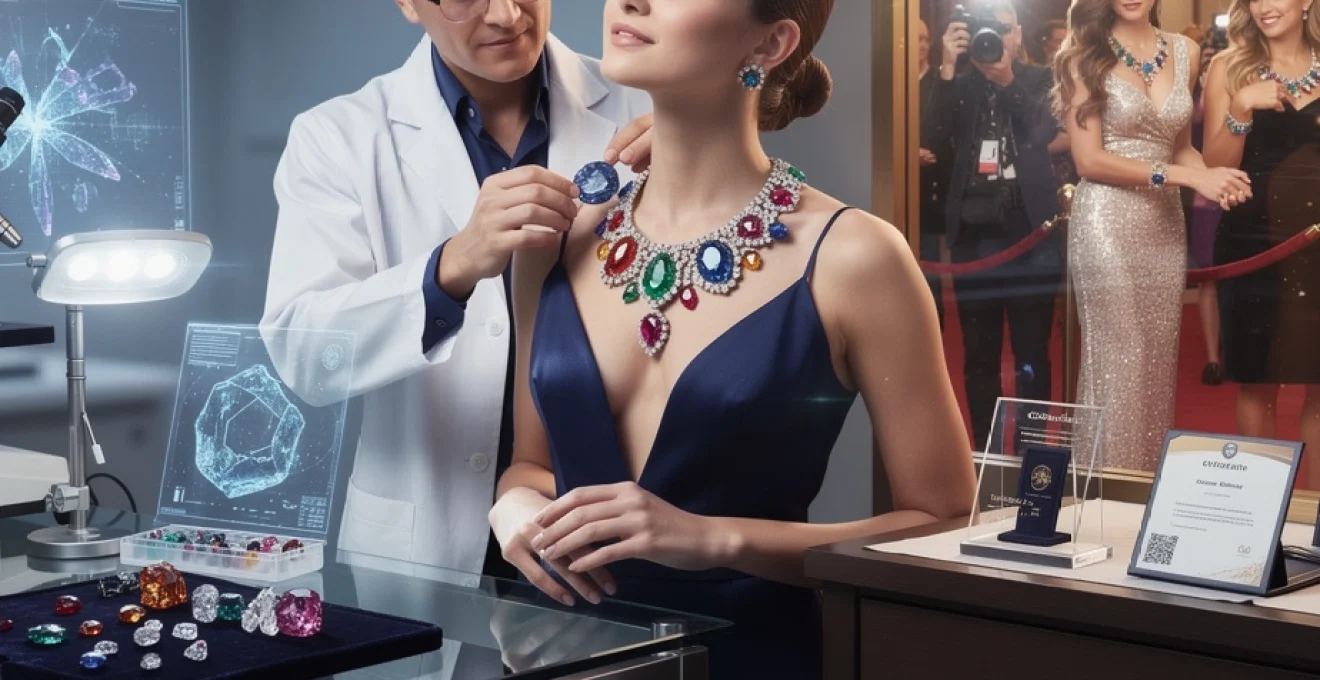
The world of fine jewellery has undergone a remarkable transformation, with precious stone enhancement techniques emerging as the driving force behind contemporary design innovation. Modern jewellery lovers are increasingly drawn to enhanced gemstones that offer exceptional beauty, improved durability, and accessible luxury without compromising on visual appeal. These sophisticated treatment methods have revolutionised how precious stones are presented in today’s market, creating opportunities for both jewellers and consumers to access stunning gemstones that were previously considered too flawed or pale for high-end applications.
Enhancement techniques have opened new possibilities in jewellery design, allowing artisans to work with stones that showcase vibrant colours and remarkable clarity. The growing acceptance of enhanced precious stones reflects a broader shift in consumer attitudes towards value, sustainability, and accessibility in luxury jewellery. As technology advances and detection methods become more sophisticated, the transparency surrounding enhancement processes has improved dramatically, building greater trust between retailers and discerning customers.
Contemporary gemstone enhancement techniques revolutionising jewellery design
The gemstone enhancement industry has evolved significantly over the past decade, introducing sophisticated techniques that transform ordinary stones into extraordinary centrepieces. Modern enhancement methods go far beyond traditional treatments, incorporating cutting-edge technology to achieve results that were once impossible. These processes have fundamentally changed how jewellers approach design, enabling them to work with a broader spectrum of colours and clarities than ever before.
Contemporary enhancement techniques focus on preserving the natural characteristics of stones while addressing specific imperfections or colour limitations. The goal is not to create artificial-looking gems but to unlock the hidden potential within natural stones. This approach has led to increased appreciation for enhanced gemstones among collectors and everyday consumers alike, who recognise the skill and artistry involved in these processes.
Heat treatment applications in sapphire and ruby colour intensification
Heat treatment remains the most widely accepted enhancement method in the precious stone industry, particularly for sapphires and rubies. This process involves exposing gemstones to carefully controlled temperatures, typically ranging from 1000°C to 1800°C, to improve colour saturation and clarity. The treatment works by altering the crystal structure at the molecular level, dissolving inclusions and intensifying natural colour centres already present within the stone.
The effectiveness of heat treatment depends on several factors, including the stone’s origin, initial colour, and inclusion patterns. Sri Lankan sapphires, for instance, often respond beautifully to heat treatment, developing deeper blue hues and improved transparency. Burmese rubies can achieve enhanced red saturation through controlled heating, though the process requires exceptional expertise to avoid damaging the stone’s natural fluorescence properties.
Fracture filling methods using lead glass in emerald enhancement
Emerald enhancement through fracture filling has become increasingly sophisticated, with lead glass treatment offering remarkable improvements in clarity and durability. This process involves filling natural fissures and fractures within emerald crystals with specially formulated glass compounds that have similar optical properties to the host stone. The result is an emerald that appears cleaner and more brilliant while maintaining its natural green colouration.
Modern fracture filling techniques use advanced polymers and glass compounds that are more stable and durable than earlier materials. The process requires precise temperature control and expert handling to ensure the filling material bonds properly with the emerald matrix. When performed correctly, fracture-filled emeralds can display exceptional beauty and improved wearability, making them attractive options for everyday jewellery pieces.
Diffusion treatment processes for creating padparadscha sapphires
Diffusion treatment represents one of the most advanced enhancement techniques, particularly for creating the coveted padparadscha sapphire colours. This process involves introducing specific elements into the surface layers of sapphire crystals through high-temperature diffusion, creating beautiful pink-orange hues that define authentic padparadscha stones. The treatment requires exceptional expertise and precise control of atmospheric conditions during processing.
The success of diffusion treatment depends on careful selection of base stones and precise control of chemical environments. Titanium and beryllium are commonly used diffusion agents, each producing different colour results. The process can take several days to complete, with stones requiring multiple heating cycles to achieve optimal colour penetration and distribution throughout the crystal structure.
<h3
Beryllium heat treatment in orange and pink sapphire production
Beryllium heat treatment has become a game changer in the production of vivid orange and pink sapphires that would otherwise be extremely rare in nature. In this process, sapphires are heated in the presence of beryllium-bearing compounds at very high temperatures, allowing beryllium atoms to diffuse deep into the crystal lattice. This subtle alteration of the stone’s chemistry can transform pale or slightly tinted sapphires into gems with intense, sunset-like hues that are highly desirable in modern jewellery design.
One of the key attractions of beryllium-treated sapphires is the ability to achieve uniform, stable colour throughout the stone rather than a mere surface effect. When correctly executed, the treatment is permanent, with colours that withstand normal wear and cleaning. However, this approach also raises important questions about disclosure and consumer expectations, as visually distinguishing beryllium-treated stones from naturally vivid sapphires can be challenging without advanced testing. For designers and retailers, clear communication about beryllium enhancement helps maintain trust while still celebrating the beauty these stones bring to contemporary pieces.
Celebrity endorsements and red carpet influence on enhanced stone popularity
The rising visibility of enhanced precious stones on red carpets and in celebrity campaigns has had a profound effect on consumer demand. High-profile figures frequently wear jewellery featuring heat-treated sapphires, fracture-filled emeralds, and diffusion-treated padparadscha-like stones, normalising the presence of enhanced gems in the luxury space. When a celebrity engagement ring or awards-season necklace becomes a viral talking point, interest in similar colours and styles rapidly filters down to everyday jewellery lovers.
For many consumers, the exact enhancement technique is less important than the overall aesthetic impact and affordability of the piece. Enhanced gemstones allow stylists and jewellers to create dramatic, large-scale designs with rich colours that would be prohibitively expensive if only untreated, top-grade stones were used. This has helped shift perceptions, positioning enhanced gems not as “second best” but as smart, design-led choices that align with modern tastes. As social media amplifies every red carpet look, we can expect enhanced gemstones to continue shaping colour trends and centre stone preferences.
Technological advancements in gemstone enhancement detection methods
As enhancement techniques have become more sophisticated, so too have the scientific tools used to detect them. Modern gemmological laboratories rely on a combination of spectroscopic, imaging, and analytical methods to identify whether a precious stone has been heat-treated, fracture-filled, diffused, or synthetically grown. These technologies provide an objective foundation for grading reports, enabling jewellers to offer accurate information and buyers to make informed decisions.
Advanced detection methods are particularly important in a market where visually similar stones can have very different value profiles depending on their treatment history. While basic enhancements such as low-temperature heating in sapphires may be widely accepted, more invasive processes like heavy fracture filling or deep diffusion require clear disclosure. By investing in cutting-edge equipment and research, laboratories support greater transparency and help maintain confidence in enhanced gemstone jewellery.
FTIR spectroscopy applications in heat treatment identification
Fourier-transform infrared (FTIR) spectroscopy is one of the core tools used to identify heat treatment in precious stones, especially corundum (ruby and sapphire). FTIR works by measuring how a gemstone absorbs infrared light at different wavelengths, producing a characteristic spectrum that reveals the presence of specific structural features and impurities. Heat treatment can modify or eliminate certain absorption bands, giving gemmologists a reliable fingerprint of thermal enhancement.
For example, in sapphires, high-temperature heating may reduce or remove absorption peaks associated with water or hydroxyl groups trapped in the crystal, while also altering features linked to rutile inclusions. By comparing a stone’s FTIR spectrum with reference databases, experts can often determine whether it has undergone low-, medium-, or high-temperature treatment. For jewellery buyers, this behind-the-scenes analysis means that a “heat only” note on a laboratory report is underpinned by robust scientific evidence rather than visual judgement alone.
Photoluminescence techniques for beryllium diffusion detection
Detecting beryllium diffusion in orange and pink sapphires is significantly more complex than identifying standard heat treatment. Photoluminescence spectroscopy has become one of the most powerful tools for this purpose. In this technique, the gemstone is excited with a specific wavelength of light, and the resulting emission spectrum is analysed for features associated with beryllium-related centres within the crystal lattice. These subtle luminescence signatures can indicate whether beryllium atoms have been introduced during treatment.
Because beryllium diffusion can penetrate deeply into a sapphire, surface-level tests alone are often insufficient. Photoluminescence, especially when combined with other techniques such as laser ablation inductively coupled plasma mass spectrometry (LA-ICP-MS), provides a more comprehensive picture of the stone’s internal chemistry. While the science may sound highly technical, the practical outcome is straightforward: you gain clearer assurance about whether a vivid orange or pink sapphire owes its colour to nature alone or to advanced enhancement processes.
X-ray topography methods in synthetic diamond recognition
As synthetic diamonds become increasingly common in the jewellery market, distinguishing them from natural stones is essential for accurate pricing and ethical disclosure. X-ray topography is a valuable method for examining the internal growth structures of diamonds, providing high-resolution images of strain patterns, growth sectors, and defects. Natural diamonds typically display complex, irregular growth features shaped by geological processes, while many synthetic diamonds grown by HPHT or CVD methods show more systematic or layered patterns.
By analysing these internal structures, gemmological laboratories can often determine not only whether a diamond is natural or laboratory-grown, but also identify certain post-growth treatments such as HPHT colour enhancement. This level of insight helps retailers clearly differentiate between natural, treated, and synthetic diamonds in their inventory. For modern jewellery lovers interested in both value and provenance, X-ray topography is one of the quiet technologies helping to keep the diamond market transparent.
Raman spectroscopy analysis of filled fractures in precious stones
Raman spectroscopy has become a cornerstone technique for detecting fracture filling in emeralds, rubies, and other precious stones. This non-destructive method uses a focused laser to measure how light scatters within the material, generating a spectrum that reveals the molecular composition of both the host gemstone and any foreign substances. In fracture-filled emeralds, for instance, Raman analysis can identify the presence of glass, resin, or oil within fissures that may be invisible to the naked eye.
Because many modern filling materials are engineered to closely match the optical properties of the gemstone, visual inspection alone can be misleading. Raman spectroscopy allows experts to distinguish between minor, traditional oiling and more substantial lead-glass or polymer fillings that significantly affect durability and value. For you as a buyer, this means that a reputable laboratory report will clarify not just that a stone has been “enhanced,” but also how and to what extent its fractures have been filled.
Market economics and pricing strategies for enhanced gemstones
The economics of enhanced precious stones are driven by a delicate balance between beauty, rarity, and consumer perception. Enhancement allows jewellers to transform lower-grade rough into visually striking gemstones, significantly increasing the usable supply of attractive material. This expanded availability helps stabilise prices and makes vividly coloured pieces accessible to a wider audience, particularly in categories such as sapphire, ruby, and emerald jewellery.
Pricing strategies typically reflect both the type and intensity of enhancement. Heat-treated sapphires, which are broadly accepted in the trade, often command prices closer to their untreated counterparts, especially when the treatment is routine and stable. By contrast, heavily fracture-filled emeralds or deeply diffused sapphires may be priced at a substantial discount compared with similar-looking untreated stones, acknowledging their altered durability and collectability. When you compare pieces, asking whether a gem is “untreated,” “heat only,” or “fracture-filled” can help you understand why two seemingly similar stones sit at very different price points.
From a design perspective, enhanced gemstones also give brands flexibility to offer trend-led colours without overcommitting to scarce, high-cost natural material. For example, diffusion-treated padparadscha-style sapphires allow jewellers to produce a full collection of peach-pink rings and pendants at a price that resonates with fashion-conscious buyers. As long as treatments are properly disclosed, this tiered pricing structure benefits both ends of the market: collectors can still invest in rare untreated stones, while style-driven customers enjoy striking pieces at more accessible price levels.
Ethical considerations and consumer transparency in enhancement disclosure
Alongside their aesthetic and economic advantages, enhanced precious stones raise important ethical questions around disclosure and fair marketing. Most jewellery lovers are comfortable with common treatments such as sapphire heat enhancement, but only when these processes are openly acknowledged. Problems arise when enhancements are minimised, obscured, or omitted from product descriptions, leaving buyers unaware of how significantly a stone has been altered.
Transparent disclosure is therefore central to ethical gemstone commerce. International standards and national regulations set clear expectations for how enhancements must be documented and communicated, ensuring that you can compare pieces on an honest like-for-like basis. Responsible retailers embrace these guidelines not as a burden but as a way to build long-term trust, often providing additional educational materials or in-store explanations to demystify complex treatments.
CIBJO guidelines for enhancement treatment documentation
The World Jewellery Confederation (CIBJO) plays a key role in establishing harmonised terminology and disclosure standards for gemstone enhancements. Its Blue Books outline recommended practices for describing treatments such as heating, diffusion, impregnation, and filling, with the aim of ensuring that jewellers around the world speak the same “language” when explaining a stone’s condition. CIBJO emphasises that any enhancement that significantly affects a gem’s value, durability, or care requirements must be clearly disclosed at the point of sale.
In practical terms, this means that sales documents, invoices, and certification should use consistent, unambiguous wording when referring to enhanced gemstones. For instance, an emerald described as “resin-filled” should not be marketed simply as “clarity enhanced” without further detail. When you see CIBJO-aligned descriptions, you can be more confident that the retailer or brand is following recognised international best practice in gemstone disclosure.
GIA grading standards for heat-treated gemstones
The Gemological Institute of America (GIA) is widely regarded as a benchmark authority in gemstone grading, and its reports provide crucial clarity around heat treatment. For rubies and sapphires, GIA will typically indicate whether a stone is “heated” or “no indications of heating,” giving buyers a straightforward understanding of its treatment status. In some cases, reports may include additional notes if more complex enhancements, such as diffusion, are detected.
GIA’s approach reflects the reality that heat treatment is both ancient and widely accepted, particularly where it mimics geological processes and produces stable results. However, by distinguishing heated stones from those with no evidence of treatment, the institute allows the market to maintain a premium for rare, untreated gems. For jewellery lovers, a GIA report is a valuable tool when comparing pieces, particularly when considering higher-value purchases where small differences in treatment status can have a significant impact on price.
FTC regulations on enhancement disclosure requirements
In the United States, the Federal Trade Commission (FTC) provides legal guidance on how gemstone enhancements must be disclosed to consumers. The FTC requires that any treatment that is not permanent, significantly affects the value, or requires special care must be clearly revealed at the time of sale. Misrepresenting or omitting information about such enhancements can be considered deceptive advertising, with legal consequences for businesses.
Although these regulations are US-specific, they influence disclosure practices in many international markets, as global brands seek to maintain consistent standards across their operations. For you as a buyer, being aware of the FTC’s principles can help you ask the right questions: Is this colour stable? Has the clarity been altered with glass or resin? Does this stone need special cleaning precautions because of its treatment? Ethical jewellers will welcome such questions and be prepared to answer them honestly.
Consumer education initiatives by gemmological institute of america
Recognising that gemstone enhancements can be confusing, the Gemological Institute of America invests heavily in consumer education. Through articles, online resources, and in-person seminars, GIA explains the most common treatment methods, their visual impact, and their implications for care and value. This empowers jewellery lovers to move beyond marketing terms and understand, in practical terms, what it means when a stone is heat-treated, fracture-filled, or diffused.
These educational initiatives also encourage a more nuanced conversation about enhanced gemstones. Rather than viewing all treatments as negative, GIA materials help buyers appreciate which enhancements are widely accepted and which may warrant closer scrutiny. By learning the basics of gemstone enhancement before you shop, you can ask more informed questions, interpret grading reports with confidence, and choose pieces that align with your personal values and expectations.
Future trends in synthetic and laboratory-created stone integration
Looking ahead, the line between enhanced natural stones and laboratory-created alternatives is likely to become increasingly fluid in modern jewellery collections. Lab-grown diamonds, sapphires, and emeralds already offer exceptional clarity and colour at accessible price points, appealing to buyers who prioritise visual impact and traceable origins. Many designers are beginning to combine laboratory-created stones with enhanced natural gems in the same collection, using each material where it performs best aesthetically and ethically.
We can also expect further innovation in “hybrid” approaches, where laboratory-grown stones are subtly modified through controlled enhancement to achieve novel colours and effects. As analytical technology advances, detection will keep pace, ensuring that you continue to receive accurate information about every gem’s origin and treatment history. Ultimately, the future of gemstone jewellery is likely to be characterised by choice: whether you are drawn to untreated rarities, expertly enhanced precious stones, or cutting-edge lab-created gems, there will be a wealth of options that combine beauty, transparency, and modern design sensibilities.