Security clasp innovation in 30 seconds
- Genuine haute horlogerie demands micron-level tolerances—not millimetres
- Three engineering markers separate innovation from imitation: patented locking, 904L-grade steel, zero bracelet modification
- Most collector hesitations reflect outdated assumptions, but some concerns remain valid
- Compatibility varies by Rolex reference family—verify before purchase
What haute horlogerie actually demands from a clasp
The phrase gets thrown around liberally. Brands slap “haute horlogerie” onto marketing materials the way restaurants describe everything as “artisanal.” But the term has real meaning—and it applies to accessories just as much as movements. In my conversations with collectors across Europe, I have noticed a persistent blind spot: the assumption that craftsmanship standards only matter inside the case. Wrong. A poorly finished clasp on a well-finished watch is like a supercar with plastic door handles.
What I have observed at watch fairs since 2022 is instructive. Collectors who understand finishing can spot the difference instantly. They look for bevelling consistency, for the way light plays across surfaces, for tolerances that remain invisible to casual observation. According to tolerance specifications from Girard-Perregaux, the micron—one-thousandth of a millimetre—is the standard scale in haute horlogerie production. A single screw requires ten minutes of hand polishing. That context matters when evaluating any component claiming to belong on a prestige watch.
What defines haute horlogerie finishing
Three criteria separate prestige components from mass production: tolerances measured in microns (not millimetres), hand finishing requiring multiple minutes per element, and assembly by a single craftsman who controls every step. The Federation of the Swiss Watch Industry maintains over 150 normative documents covering everything from water resistance to surface quality.
The overlap between disciplines matters here. Understanding the difference between jewellery and goldsmithing helps clarify what watchmaking demands that other crafts do not. Jewellers work to aesthetic tolerances. Watchmakers work to functional tolerances where hundredths of a millimetre determine whether components move correctly. A security clasp claiming haute horlogerie credentials must meet the latter standard.
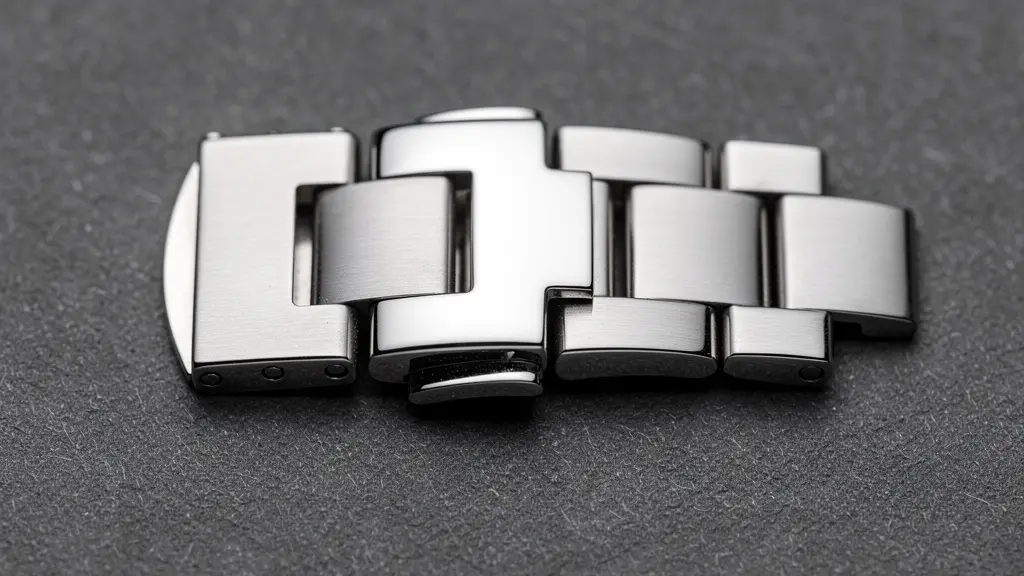
Frankly, most aftermarket accessories fail this test. In my conversations with collectors at European gatherings over the past four years, I have noticed a recurring assumption: that any clasp advertising itself as compatible will match original Rolex standards. The reality? Many fall short, leading to bracelet scratches or awkward conversations with authorised dealers. This observation comes from enthusiast gatherings rather than formal studies, but the pattern is consistent.
Three engineering principles that separate innovation from imitation
Innovation requires solving a problem that existing solutions leave unresolved. Merely repackaging existing mechanisms with better marketing does not count. Three engineering principles distinguish genuine clasp innovation from cosmetic imitation, and understanding them helps you evaluate any product making haute horlogerie claims.
The first principle is the locking mechanism itself. Standard deployant clasps rely on spring tension and friction—elegant but vulnerable. Thieves know exactly how they work. As security insights from Assetsure confirm, professional watch thieves operate in teams, know expensive brands by sight, and understand how clasps and straps function. A genuine innovation must introduce a mechanism that defeats both accidental opening and deliberate removal. The recent innovation report from Europa Star 2025 highlighted exactly this approach: systems that give the owner the option to set a personalised security code blocking the clasp pusher entirely.
| Criteria | Standard Deployant | Security Clasp | Why It Matters |
|---|---|---|---|
| Locking mechanism | Spring tension and friction | Coded pusher block or secondary lock | Defeats both accident and theft |
| Steel grade | 316L (industry standard) | 904L (Rolex-equivalent) | Corrosion resistance, polish retention |
| Tolerance level | Millimetre-scale | Sub-micron (0.1–1 micron) | Fit precision, long-term durability |
| Bracelet modification | N/A (original) | None required | Preserves authenticity and resale value |
| Patent status | Expired or generic | Active registered patent | Verifiable mechanism originality |
The second principle is material selection. According to materials specifications, 904L stainless steel is far tougher than 316L, the grade still widely used by many brands. The higher nickel and chromium content, plus copper addition, provides superior corrosion resistance and takes a better polish. If a security clasp uses 316L while claiming compatibility with your 904L Oyster bracelet, the mismatch will eventually show—both in finish degradation and in the way light plays across surfaces.
The third principle concerns integration engineering. Swiss manufacturers like Orkos have approached this challenge by ensuring their security solutions require zero permanent bracelet modification. You can install, remove, and revert to original without leaving evidence of aftermarket intervention. That reversibility matters both for personal preference and for maintaining clean provenance if you ever sell.

Tolerances tie everything together. Technical analysis from JLC CNC confirms that Swiss watchmaking achieves sub-micron tolerances—between 0.1 and 1 micron—with surface roughness values below 0.05 micrometres. Any component claiming haute horlogerie status must demonstrate this precision. Ask for specifications. If a manufacturer cannot provide tolerance data, that silence tells you something.
Why collectors hesitate and when those concerns are valid
Scepticism is healthy. The question I hear most often at collector gatherings is not “does it work?” but “what am I risking?” Collectors I have spoken with consistently mention three concerns: impact on authenticity, dealer relationship complications, and the fear of adding something that looks cheap to an expensive watch. Some of these hesitations are valid. Others reflect assumptions that no longer hold.
Marcus: from sceptic to convert
I met Marcus at a London watch fair in 2024. He is 52, a retired investment banker, and owns a collection spanning three decades. His turning point came during a cycling commute when his standard deployant opened unexpectedly. He caught the watch before it hit the pavement—barely. “I spent months researching solutions,” he told me, “convinced that anything aftermarket would compromise the watch.” His hesitation centred on authenticity and dealer perception. What changed his mind was finding a Swiss-made option with documented tolerances matching Rolex production standards and, critically, requiring no permanent modification. He has worn the secured clasp daily for eighteen months now with no issues.
Let me be direct about which concerns hold water. The authenticity concern is largely outdated—provided you choose a solution requiring no bracelet modification. If you can remove the security clasp and return to factory configuration without a trace, you have not altered the watch. The dealer relationship concern varies by geography and specific AD. I have heard of dealers who prefer customers not modify anything; I have also heard of dealers who actively recommend security solutions. Ask yours directly rather than assuming.
Practical guidance before fitting
Photograph your bracelet clasp from multiple angles before installation. Note serial numbers if visible. This documentation proves original condition if questions arise later. Most reputable security clasp manufacturers provide written confirmation that their product causes no permanent modification—request this before purchase.
The aesthetic concern is the most valid. Some aftermarket clasps do look cheap. The materials mismatch described earlier creates visible problems over time. Poor finishing stands out immediately against factory components. This is where material selection and tolerance standards matter most. Soyons clairs: if a security clasp does not match the steel grade and finishing quality of your bracelet, it does not belong on your watch regardless of its security credentials.
One concern rarely discussed is insurance implications. Most insurers expect proper care of insured items, including verifying that clasps function correctly. A quality security clasp may actually support your position if you ever need to claim—you took reasonable steps to prevent loss. Check your specific policy language rather than assuming.
Your questions on clasp security and compatibility
The practical questions collectors ask privately deserve direct answers rather than marketing evasion. Here are the doubts I hear most frequently, addressed honestly.
Which Rolex references are compatible?
Compatibility depends on bracelet type rather than watch model. Oyster bracelets across the Submariner, GMT-Master II, Datejust, and Explorer lines typically share clasp dimensions. Jubilee bracelets use different geometry. President bracelets on Day-Date models often require model-specific solutions. Always verify your specific reference number with the manufacturer before ordering—”fits Rolex” is not precise enough.
Does fitting affect my manufacturer warranty?
The impact of aftermarket accessories on manufacturer service relationships varies. Rolex does not publish blanket policies on this point. The safest position: choose solutions requiring no permanent modification, document original condition before installation, and consult your authorised dealer for specific guidance. Movement warranty and bracelet warranty may be treated differently.
Can I install it myself or do I need a watchmaker?
Quality security clasps designed for collector use typically allow DIY installation with basic tools—often just the spring bar tool you already own. The process should take under five minutes. If a product requires professional installation, that suggests either complexity beyond simple integration or a design not optimised for collector convenience. Instructions should be explicit and illustrated.
Will it change the wearing feel?
Weight and balance may shift slightly depending on the security mechanism added. Most quality solutions add under 10 grams—perceptible if you are sensitive to wrist presence but not dramatically different. The more significant change is the opening action: you will need to disengage the security feature before releasing the clasp. This becomes automatic within days.
What happens if I want to revert to the original clasp?
With properly designed security clasps, reversion takes the same time as installation—minutes rather than hours, no tools beyond spring bar removal, no evidence of modification left behind. You should be able to return your bracelet to factory configuration for service visits, sale, or simply because you changed your mind. If a product does not allow clean reversion, reconsider whether it meets your standards.
The next step for your collection
Before you decide on any security clasp
- Verify your exact Rolex reference against the manufacturer’s compatibility list—not just “Submariner” but the full reference number
- Request written confirmation that no permanent bracelet modification is required
- Ask for tolerance specifications—silence on this question is informative
- Photograph your current clasp and bracelet before installation
- Confirm steel grade matches your bracelet—904L for modern Rolex, potentially 316L for vintage
The difference between genuine innovation and marketing fluff comes down to verifiable standards: micron tolerances, documented patents, material specifications you can check independently. I am firmly of the view that if it does not meet watchmaking precision, it has no place on a Rolex bracelet. Your collection deserves components that honour, rather than compromise, the craftsmanship you paid for.