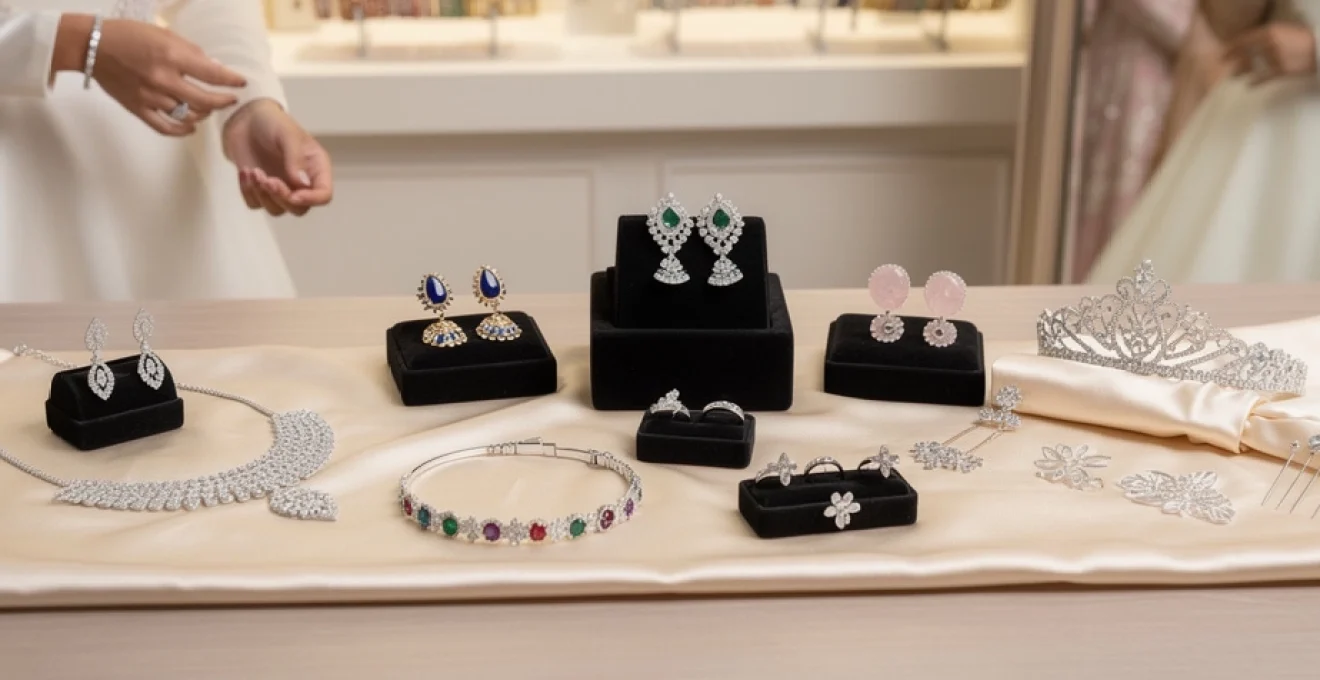
Selecting the perfect bridal jewellery set represents one of the most significant aesthetic decisions in wedding planning, influencing not only your wedding day appearance but also creating lasting memories through pieces that often become family heirlooms. The modern bridal jewellery market offers an overwhelming array of options, from traditional pearl sets to contemporary gemstone collections, each requiring careful consideration of factors including dress compatibility, cultural significance, and long-term wearability. Understanding the intricacies of jewellery coordination, gemstone quality, and metal durability ensures that your investment enhances your natural beauty whilst maintaining its value and significance for years to come.
Understanding bridal jewellery set components and coordination principles
The foundation of exceptional bridal styling lies in understanding how individual jewellery pieces work together to create a harmonious ensemble. A complete bridal jewellery set typically comprises multiple complementary pieces designed to enhance your overall appearance whilst maintaining visual balance and proportion. The coordination principles governing these sets extend beyond simple colour matching to encompass considerations of scale, texture, and stylistic coherence.
Necklace and earring pairing techniques for neckline compatibility
The relationship between your necklace choice and dress neckline determines the visual focus of your bridal ensemble. Strapless gowns provide the ideal canvas for statement necklaces, allowing princess-length pieces (18 inches) to create elegant framing around the décolletage. Alternatively, sweetheart necklines benefit from shorter choker-style pieces that complement the curved silhouette without competing for attention.
V-neckline dresses require careful consideration of pendant placement and chain length. Matinee-length necklaces (20-24 inches) follow the natural line of the neckline, creating visual continuity. When selecting earrings to complement these arrangements, consider the principle of inverse proportion: elaborate necklaces pair best with understated studs, whilst minimal necklaces allow for dramatic drop earrings or chandelier styles.
High neckline gowns, including halter styles and high collars, typically forgo necklaces entirely, shifting focus to statement earrings and bracelets. This approach prevents visual clutter whilst drawing attention to facial features through carefully selected ear adornments.
Bracelet and ring integration with wedding dress sleeve styles
Sleeve design significantly influences bracelet selection and styling approach. Long-sleeved gowns require delicate, understated bracelets that won’t create bulk beneath fitted sleeves or compete with detailed lacework. Tennis bracelets and thin bangles work exceptionally well in these scenarios, providing subtle sparkle without overwhelming the dress design.
Sleeveless and short-sleeved designs offer greater flexibility for bracelet choices. Multiple thin bangles create elegant movement and sound, whilst statement cuffs provide dramatic focal points. The key consideration involves ensuring that bracelet proportions complement your wrist size and overall dress silhouette. Petite brides should avoid oversized pieces that might overwhelm their frame, whilst taller brides can carry bolder designs effectively.
Maang tikka and hair accessory coordination for traditional ceremonies
Traditional ceremonies often incorporate specialised head jewellery requiring careful integration with hairstyle and veil arrangements. Maang tikkas, worn across the forehead, must complement both the wedding crown or headpiece and the overall jewellery set’s metal tone and gemstone selection. The placement requires consultation with your hairstylist to ensure secure attachment and comfortable wear throughout lengthy ceremonies.
Hair accessory coordination extends beyond traditional pieces to include contemporary alternatives such as jewelled combs, pins, and hairbands. These elements should echo the primary jewellery set’s design motifs whilst considering practical factors including hair texture, length, and planned styling. Vintage-inspired ceremonies might incorporate Art Deco headbands, whilst bohemian celebrations could feature floral crowns enhanced with subtle metallic accents.
Metal tone consistency across Multi-Piece jewellery ensembles
Maintaining consistent metal t
one across your entire bridal jewellery set to avoid visual dissonance.
In most cases, this means matching the dominant metal tone of your engagement ring with your necklace, earrings, bracelets, and hair accessories. Mixing metals can be done successfully, but it must be intentional: for example, combining white gold and platinum feels cohesive, whereas yellow gold, rose gold, and silver worn together can appear busy in wedding photography. When in doubt, choose one primary metal and, if you wish, add a subtle accent metal in very small doses, such as the inner band of a ring or a tiny contrasting detail on a pendant.
Lighting conditions also influence how metal tones appear on camera. Warm venue lighting will intensify yellow and rose gold, while cool daylight and studio flashes tend to flatter white metals. Try your full bridal jewellery set under similar lighting to your ceremony or reception wherever possible. Beyond aesthetics, remember your skin undertone: warm complexions typically glow in yellow or rose gold, while cool undertones are complemented by silver, platinum, or white gold. Selecting a consistent metal family that flatters you personally will ensure your bridal jewellery feels both luxurious and harmonious.
Gemstone selection and setting compatibility analysis
Once the structural components of your bridal jewellery set are defined, attention turns to gemstone selection and setting compatibility. Gemstones contribute not only colour and sparkle but also symbolic meaning and long-term investment value. A refined bridal jewellery strategy considers how each stone type performs under different lighting conditions, how it coordinates with your dress and bouquet, and whether its hardness and cut are suitable for frequent wear after the wedding day.
From a technical standpoint, assessing gemstone quality for bridal sets requires familiarity with grading standards, particularly for diamonds and precious stones. Equally important is understanding how different settings—prong, bezel, and channel—interact with stone properties and wedding-day activities. The goal is to achieve a balance between brilliance, security, and comfort so that your bridal jewellery remains both visually striking and structurally sound.
Diamond cut grading and clarity standards for bridal sets
For many brides, diamonds remain the centrepiece of their bridal jewellery sets, whether in solitaire pendants, pavé bands, or halo earrings. When evaluating diamond quality, the cut has the greatest visual impact, often more than colour or clarity, because it determines how effectively the stone reflects light. Excellent or Very Good cut grades maximise brilliance, ensuring your diamonds sparkle vividly in both natural daylight and evening reception lighting.
Clarity, which measures internal and external imperfections, is another critical factor. For bridal jewellery sets, grades between VS2 and SI1 typically offer an optimal balance of beauty and value: inclusions are not visible to the naked eye, yet the price remains more accessible than flawless stones. Because bridal pieces are viewed at a distance in photos and during the ceremony, it is usually more efficient to allocate budget toward superior cut and adequate carat weight rather than chasing higher clarity grades.
Colour grading also influences your overall look, particularly when diamonds are set in white metals such as platinum or white gold. Stones in the G–H colour range appear near-colourless to most observers and pair beautifully with cool-toned gowns. If your bridal jewellery set features yellow or rose gold, you can often drop to I–J colour without noticeable warmth, as the metal itself imparts a flattering glow. Ultimately, consider how your diamonds will appear as a group; consistency within a half-grade range creates a unified, refined finish.
Precious stone alternatives: sapphire, ruby, and emerald integration
Coloured precious gemstones such as sapphires, rubies, and emeralds have seen a notable resurgence in bridal jewellery, particularly among brides seeking unique or heritage-inspired sets. Sapphires, available in shades from deep navy to pastel cornflower, offer excellent durability (9 on the Mohs hardness scale) and make practical centre stones for engagement-style pendants and rings. They also satisfy the traditional “something blue” requirement when integrated subtly into a bridal necklace or bracelet.
Rubies introduce a bold, romantic aesthetic with their rich red tones symbolising passion and commitment. When incorporating rubies into a bridal jewellery set, consider pairing them with warm metals like yellow or rose gold to enhance their saturation. Emeralds, by contrast, bring a regal, vintage feel but require more careful handling due to their relative softness and common inclusions. For this reason, emeralds are often better suited to earrings and pendants than high-impact rings that may be knocked during the wedding day.
When integrating coloured stones into your bridal jewellery, think of them as part of your overall palette rather than isolated accents. Do the hues echo your bouquet, bridesmaid dresses, or décor? Gemstones that subtly repeat your wedding colours create visual continuity in photographs. Additionally, pay attention to matching stone tones across your set—slight differences in sapphire shade, for instance, can become more obvious under flash photography if they are placed side by side on your necklace and earrings.
Semi-precious options: rose quartz, aquamarine, and pearl classifications
For brides favouring softer, romantic aesthetics or more budget-conscious bridal jewellery sets, semi-precious stones offer versatile and expressive alternatives. Rose quartz, with its gentle blush tone, harmonises beautifully with modern minimalist dresses and rose-gold settings, creating an understated yet contemporary bridal look. Aquamarine, a pale blue beryl, provides a fresh, oceanic sparkle that is ideal for spring or coastal weddings and conveniently fulfils the “something blue” tradition within your jewellery set itself.
Pearls occupy a unique position between gemstone and organic material, remaining a cornerstone of classic bridal styling. Understanding basic pearl classifications helps you select pieces that wear well beyond the wedding day. Freshwater pearls are generally more affordable and available in a wide range of shapes and sizes, making them suitable for layered necklaces and multi-strand bracelets. Akoya pearls offer higher lustre and more uniform roundness, often chosen for traditional pearl strands and stud earrings.
For bridal jewellery sets featuring pearls, consistency of size, shape, and overtone is crucial. Mismatched pearls can make a set look less refined, particularly in close-up photographs. Additionally, pearls are softer than most gemstones, so consider placement: they work exceptionally well in earrings and necklaces, which encounter less impact than rings. If you plan to wear your bridal jewellery frequently after the wedding, choose pearls mounted in protective settings and avoid designs that expose them to constant friction.
Setting security assessment for prong, bezel, and channel mountings
The structural integrity of your gemstone settings is as important as aesthetic alignment. Prong settings, which use small metal claws to grip the stone, maximise light entry and sparkle, making them popular for engagement-style centre stones and solitaire pendants. However, prongs should be inspected for even height and secure contact with the stone; poorly aligned or overly thin prongs increase the risk of snagging on lace or veils during the wedding day.
Bezel settings encircle the gemstone with a continuous rim of metal, providing superior protection against impact and reducing the likelihood of stones becoming loose. While bezels may slightly reduce perceived brilliance compared to prongs, they are excellent for brides with active lifestyles or those planning destination weddings where jewellery may be exposed to sand, humidity, or frequent handling. Channel settings, commonly used for wedding bands and tennis bracelets, suspend multiple stones between two parallel metal walls, offering a sleek, modern appearance.
When assessing bridal jewellery sets, ask your jeweller about the thickness of the metal used in mountings and whether the settings have been stress-tested for everyday wear. A practical approach is to gently run a soft cloth over prong-set pieces; if the cloth catches repeatedly, the prongs may require refinement before your wedding. Remember that your bridal jewellery should withstand hugs, dancing, and the occasional accidental knock without compromising stone security.
Metal composition and durability considerations for wedding jewellery
Metal choice underpins both the aesthetics and longevity of your bridal jewellery set. While visual preference often drives initial decisions, understanding metal composition and durability ensures that your pieces remain structurally sound and comfortable over years of wear. Wedding jewellery, particularly rings and bracelets, faces continuous contact with skin, cosmetics, and environmental factors, so selecting metals that age gracefully is essential.
Gold remains the most widely used metal in bridal jewellery, available primarily in 18k and 14k alloys. 18k gold contains 75% pure gold and offers a richer hue with excellent durability for daily wear, making it ideal for engagement rings and bridal bands. 14k gold, with 58.5% pure gold, provides increased hardness and scratch resistance at a more accessible price point, suitable for large statement earrings or layered bracelets that experience occasional rather than constant wear.
Platinum is prized for its strength, naturally white colour, and hypoallergenic properties, making it particularly suitable for brides with sensitive skin or those planning to wear their bridal set daily. Although platinum is more expensive upfront, its density and resistance to metal loss can represent long-term value, especially for intricate settings. Sterling silver offers an attractive budget-conscious alternative, but its softness and propensity to tarnish mean it is best reserved for occasional-wear pieces rather than high-traffic bridal rings.
Beyond composition, consider metal finishes and maintenance requirements. Rhodium plating, frequently used on white gold, enhances brightness but will gradually wear off, requiring re-plating every few years to maintain a crisp white appearance. Matte or brushed finishes hide micro-scratches more effectively than high-polish surfaces but may slightly mute the reflective quality of your bridal jewellery. Ultimately, align your metal choice with your lifestyle: if you work with your hands or plan to wear your set daily, prioritise durability and maintenance practicality over experimental finishes.
Cultural and religious bridal jewellery traditions across different ceremonies
Bridal jewellery sets often carry deep cultural and religious significance, functioning as both adornment and symbolic markers of marital status, family heritage, and spiritual values. When planning your wedding jewellery, understanding the traditions associated with your ceremony can help you respect customs while still expressing your personal style. Many contemporary brides blend classic ritual pieces with modern design, creating bridal sets that feel both authentic and current.
From Hindu mangalsutras to Christian pearl strands, each tradition defines specific items as essential. The challenge lies in harmonising these culturally significant pieces with your overall bridal jewellery aesthetic. By considering metal tone consistency, gemstone coordination, and proportional balance, you can honour the symbolism of your heritage while achieving a cohesive and polished wedding-day appearance.
Hindu wedding sets: mangalsutra, nath, and temple jewellery requirements
In Hindu weddings, bridal jewellery forms an integral part of the ritual structure, with particular emphasis on the mangalsutra, nath (nose ring), and temple-style ornaments. The mangalsutra, traditionally a black-beaded and gold necklace, symbolises marital commitment and is often worn daily after the ceremony. When integrating it into a broader bridal jewellery set, ensure that its gold tone and design motif align with your earrings, bangles, and hair accessories to avoid visual fragmentation.
The nath, usually worn on the left nostril and sometimes connected to the hair with a delicate chain, requires careful hairstyling coordination and comfort testing before the wedding day. Because it draws attention to the central face, pairing it with slightly more understated earrings maintains balance and avoids overcrowding the facial area. Temple jewellery—characterised by intricate depictions of deities, floral motifs, and granulation—often appears in chokers, long harams, waist belts (vaddanam or kamarbandh), and armlets.
To create a cohesive Hindu bridal jewellery set, consider layering lengths thoughtfully: a short choker, medium-length necklace, and long temple haram can be stacked to frame heavily embroidered saris or lehengas without competing with each other. Stick to one primary metal tone—usually high-karat yellow gold—and limit gemstone colours to one or two complementary hues such as ruby and emerald. This approach ensures that even elaborate sets feel intentional and not overwhelming.
Christian bridal elegance: classic pearl sets and diamond tennis collections
Christian wedding ceremonies, particularly those held in churches, often favour refined minimalism and understated elegance in bridal jewellery. Classic pearl sets—comprising a single-strand necklace, pearl studs or drops, and a matching bracelet—remain a timeless choice that complements traditional white gowns and veils. Pearls sit beautifully against lace, satin, and mikado fabrics, providing luminosity without overpowering delicate dress details.
Diamond tennis bracelets and simple diamond line necklaces have also become popular in modern Christian bridal styling, especially for evening receptions. Their uniform sparkle photographs exceptionally well under church lighting and reception spotlights. To maintain harmony, pair these linear diamond pieces with a solitaire pendant or small cluster earrings rather than large chandelier designs; this prevents the overall look from skewing too opulent for a religious setting.
Many Christian brides also choose to highlight their engagement ring and wedding band as focal points of their bridal jewellery set. In such cases, consider more subtle necklaces and earrings that frame rather than compete with your hands. Matching the metal of your bridal set to your rings—whether yellow gold, white gold, or platinum—creates a polished, cohesive effect in close-up ring photographs and during the exchange of vows.
Islamic wedding traditions: kundan work and filigree craftsmanship
Islamic weddings across South Asia and the Middle East showcase a rich heritage of bridal jewellery craftsmanship, with kundan work and fine filigree designs playing central roles. Kundan jewellery, created by setting uncut or polished stones into intricately carved gold or faux-gold backings, delivers a regal, mirror-like shimmer that pairs beautifully with heavily embroidered bridal outfits. Multi-layered kundan necklaces, matching earrings, and matha pattis (forehead bands) frequently form the core of the bridal set.
Filigree jewellery, featuring delicate wirework patterns in gold or silver, introduces an airy, lace-like quality that softens bold fabrics and richly coloured hijabs or headscarves. When combining kundan and filigree in a single bridal jewellery set, use one as the hero element and the other as a subtle accent. For example, a statement kundan choker can be complemented by filigree bangles and rings that echo but do not duplicate its visual weight.
Given the modest dress codes often observed in Islamic ceremonies, jewellery is strategically deployed on visible areas such as the face, hands, and neckline. Consider how your necklace will interact with high-necked or layered garments, and whether your earrings will remain visible under your hijab or dupatta. Lightweight materials and carefully balanced proportions help ensure that even elaborate Islamic bridal jewellery sets remain comfortable throughout extended nikah and reception celebrations.
Sikh ceremony essentials: chooda sets and gold kaleera specifications
Sikh weddings are renowned for their vibrant aesthetics, with bridal jewellery sets playing a central visual and symbolic role. The chooda, a set of red and ivory (or occasionally pink) bangles traditionally gifted by the bride’s maternal uncle, is non-negotiable in many Sikh ceremonies. Because the chooda occupies significant wrist space, other bracelets or cuffs should be kept minimal or omitted entirely to avoid crowding and to respect its symbolic importance.
Kaleere, ornate umbrella-shaped charms tied to the chooda, add dramatic movement and sound as the bride walks and participates in rituals. Their length and density should be considered carefully: overly heavy kaleere can become uncomfortable or snag on embroidered lehengas and dupattas. Opting for hollow rather than solid metal designs reduces weight while maintaining visual impact. Coordinate the metal tone of your kaleere—usually gold-plated—with your necklace, earrings, and maang tikka for a unified appearance.
Because Sikh bridal outfits often feature bold colours and heavy embroidery, jewellery should enhance rather than compete with the garment. A structured gold necklace with modest gemstone accents and medium-sized earrings usually offers sufficient presence. Remember that the focus will frequently fall on your hands and wrists during the pheras and blessing rituals; therefore, ensure that your rings, chooda, and kaleera align stylistically and do not obstruct comfortable hand movements.
Budget allocation strategies and investment value assessment
Establishing a clear budget for your bridal jewellery set at the outset prevents impulse purchases and ensures that each piece represents genuine value. A practical starting point is to allocate a fixed percentage of your overall wedding budget—many couples choose between 5% and 15%, depending on whether they view the jewellery as a long-term investment or a primarily ceremonial expense. Within this allocation, distinguish between core pieces you intend to wear frequently (such as rings and classic earrings) and statement elements that may be reserved for special occasions.
From an investment perspective, timeless designs in high-quality metals and well-cut diamonds or durable gemstones generally hold their appeal and potential resale value better than highly trend-driven pieces. If your budget is limited, consider prioritising one or two premium items—such as a diamond pendant or tennis bracelet—and complementing them with more affordable accents in silver or gold-plated settings. This strategy allows you to achieve a luxurious overall bridal look without compromising your financial comfort.
To avoid budget creep, compare prices across several reputable jewellers and ask for certification on higher-value stones, particularly diamonds over 0.30 carats. Certification from recognised laboratories provides assurance of cut, colour, and clarity, making it easier to assess whether you are paying a fair price. Remember also to factor in potential aftercare costs such as resizing, re-plating, or periodic prong checks; opting for brands that offer complimentary maintenance for a specified period can deliver long-term savings.
Finally, evaluate cost per wear when deciding between multiple bridal jewellery options. A versatile pair of diamond or pearl studs that can be worn to work, anniversaries, and formal events may offer better lifetime value than an oversized, highly ornate necklace that rarely leaves its box. Ask yourself: will this piece feel as relevant and special in ten years as it does today? Prioritising items that pass this test helps ensure that your bridal jewellery budget becomes an investment in your future style, not just a one-day expense.
Professional styling consultation and final selection methodology
Even with a clear understanding of metals, gemstones, and cultural traditions, finalising your bridal jewellery set can feel complex. This is where professional styling consultations—whether in-store, virtual, or via a personal shopper service—offer significant advantages. A specialist can evaluate your dress, veil, hairstyle, and engagement ring together, then recommend proportions and combinations that you might not have considered. They can also advise on practical matters such as weight distribution, clasp security, and how different pieces will interact during movement.
A systematic selection methodology helps transform inspiration into a cohesive plan. Begin by confirming your non-negotiables: perhaps a family heirloom ring, a culturally significant mangalsutra, or your existing engagement ring. Next, choose your primary metal tone to anchor the set. From there, select one hero piece—often a necklace or earrings—that will serve as the visual focal point. All remaining items should be evaluated in terms of how well they support rather than compete with this central element.
Before committing to purchases, schedule a full “dress rehearsal” of your bridal look. Wear your gown or a close alternative, style your hair similarly to your planned wedding hairstyle, and try on every piece of jewellery together. Pay attention to comfort: do heavy earrings pull uncomfortably after thirty minutes? Does a bracelet catch on lace or beadwork? Take photos in different lighting conditions and from multiple angles; these images often reveal scale or coordination issues that are less obvious in the mirror.
Where possible, finalise your bridal jewellery set at least six to eight weeks before your wedding. This timeline allows for any necessary adjustments, such as resizing rings, altering chain lengths, or reinforcing settings. It also gives you time to become familiar with how your pieces feel, so you move naturally and confidently on the day itself. By combining professional guidance with a structured decision process, you ensure that your bridal jewellery set not only looks exquisite but also performs flawlessly throughout every moment of your celebration.