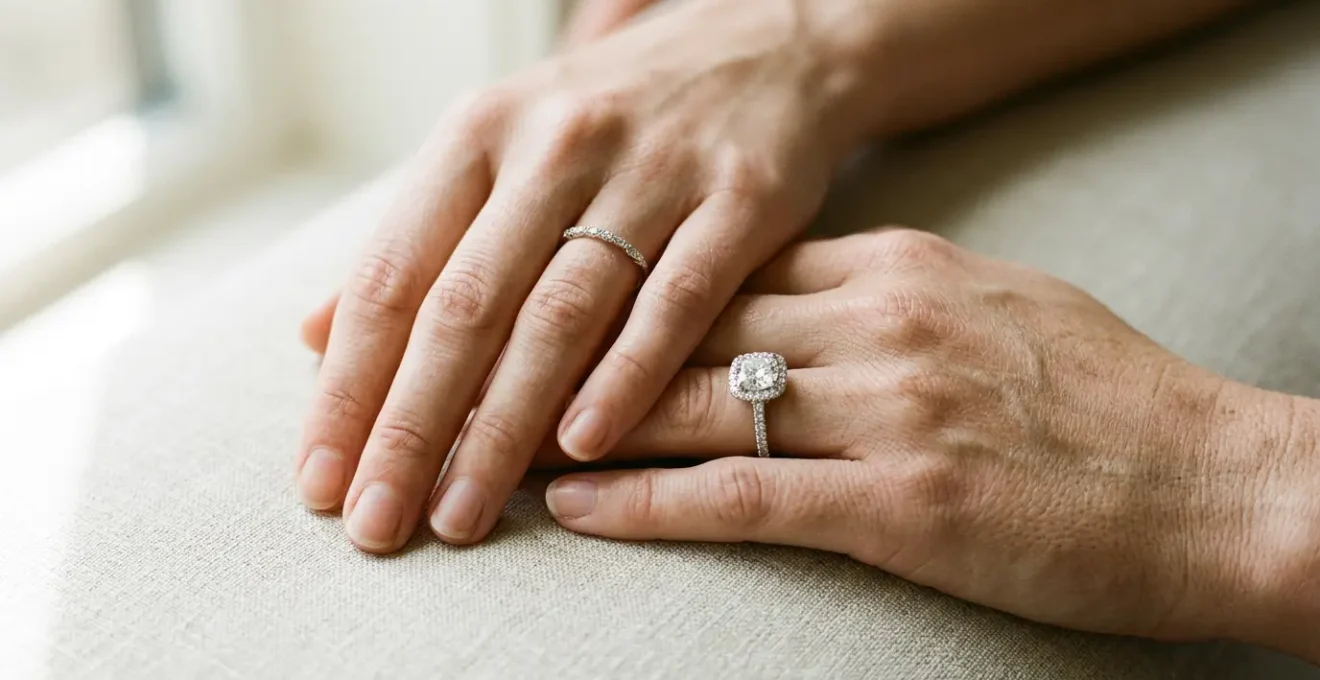
A promise ring isn’t just a placeholder for an engagement ring; it’s a powerful, modern symbol of the commitment journey itself.
- It intentionally differs in cost and style to celebrate the present promise, not overshadow the future one.
- There are no rigid rules for wearing it—its placement is part of your unique story.
- After engagement, it becomes the first chapter in a “ring stack,” a wearable history of your relationship.
Recommendation: View the promise ring as your relationship’s first milestone, chosen for its personal meaning, not its price tag.
In a world of swipe-right romance and undefined situationships, a quiet rebellion is taking place. Young couples are increasingly looking for ways to signal intention and celebrate their bond without succumbing to the immediate pressure of wedding planning. While the diamond engagement ring has long been the ultimate symbol of commitment, an older tradition is being reclaimed and redefined for the 21st century: the betrothal, or as it’s more commonly known today, the promise ring. This isn’t about rushing to the altar; it’s about honoring the present.
Many people dismiss promise rings as a juvenile gesture or a mere placeholder for “the real thing.” But that perspective misses the point of this modern revival. For today’s couples, especially Gen Z, it’s a deliberate act of creating a personalized legacy. It’s a tangible way to say, “I’m committed to this journey with you,” celebrating a significant relationship milestone on its own terms. This trend speaks to a larger cultural shift, where the authenticity of the journey is valued just as much as the destination.
But if this isn’t an engagement, what is it? A betrothal ring signifies a promise for the future, a private understanding between two people that stands separate from a formal engagement announcement. It’s a low-pressure pledge that allows a relationship to deepen naturally. This guide explores the nuances of this revived tradition, from its appearance and symbolism to its place in a modern love story. We will decode the differences, debunk the myths, and show how these meaningful pieces of jewelry are becoming the first chapter in a couple’s unique narrative.
To help you navigate this personal and meaningful decision, this article breaks down everything you need to know about the modern promise ring and other symbolic jewelry. From budget and style to symbolism and etiquette, consider this your guide to making a commitment that feels authentic to you.
Summary: Betrothal vs. Engagement Ring: A Modern Guide
- Why Should a Promise Ring Be Less Flashy Than the Future Engagement Ring?
- Left Hand or Right Hand: Where Do You Wear a Pre-Engagement Ring?
- Claddagh or Infinity Knot: Which Symbol Best Represents a Promise?
- The Error of Spending Your Wedding Savings on a Promise Ring
- What Should You Do with the Promise Ring After You Get Engaged?
- Pinky or Ring Finger: Where Should You Wear Your Signet Ring Today?
- Toi et Moi Rings: Why Are Two Different Stones More Popular Than Solitaires?
- How to Wear a Signet Ring in the 21st Century Without Looking Old-Fashioned?
Why Should a Promise Ring Be Less Flashy Than the Future Engagement Ring?
The primary visual distinction between a promise ring and an engagement ring lies in its subtlety. A promise ring is a whisper, not a shout. Its purpose is to be a deeply personal symbol for the couple, not a public declaration to the world. Therefore, its design is intentionally more modest. This isn’t about devaluing the promise; it’s about honoring the different stages of a relationship’s narrative. The promise ring is the prologue, and it shouldn’t overshadow the dramatic reveal of the main story’s climax—the engagement ring.
This difference is also reflected in the cost. The focus of a promise ring is on its symbolic value, not its monetary worth. According to 2024 jewelry industry data, promise rings typically cost between $100 and $1,000, while the average engagement ring can range from $5,000 to $7,500. This financial distinction is crucial. It ensures that the promise is an accessible, low-pressure gesture that doesn’t create financial strain or set an impossibly high bar for a future engagement ring.
Designs often feature smaller stones, delicate bands, or symbolic motifs like knots or hearts rather than a prominent center diamond. Materials like sterling silver or 10K gold are common choices, offering beauty and durability without the high price tag of platinum or 18K gold. By choosing a more understated design, couples keep the focus where it belongs: on the meaning of the commitment being made in the present moment, a beautiful first chapter in their shared story.
Left Hand or Right Hand: Where Do You Wear a Pre-Engagement Ring?
One of the most common questions about promise rings is where they should be worn. Unlike the strict tradition of the engagement ring on the left ring finger in many Western cultures, the “rules” for a promise ring are wonderfully flexible. This freedom is part of its modern appeal, allowing couples to create a tradition that is uniquely their own. The choice of finger and hand becomes another layer of personal storytelling.
A popular option is to wear the promise ring on the ring finger of the right hand. This placement acknowledges the ring’s significance while keeping the traditional engagement ring finger on the left hand available for the future. It creates a beautiful symmetry—a promise on one hand, a future betrothal on the other. Another choice is to wear it on a different finger of the left hand, such as the middle finger, to keep it close to the heart without occupying the “engagement” spot.
Ultimately, there is no single “correct” answer, and global traditions prove it. In Germany, for example, the engagement ring is often worn on the left hand and then moved to the right hand after marriage. In countries like Poland and Turkey, the right hand is the traditional choice for both engagement and wedding rings. This cultural variety shows that the symbolism is in the intention, not a universal rule. Some people even choose to wear their promise ring on a chain as a necklace, keeping the symbol close to their heart. This decision is the couple’s first act of creating their own shared history.
Claddagh or Infinity Knot: Which Symbol Best Represents a Promise?
While a simple band can be a powerful symbol of eternity, many couples choose promise rings with specific motifs to tell a more detailed story. The design becomes a piece of intentional symbolism, a visual representation of the unique promise being made. Two of the most popular choices are the Irish Claddagh and the infinity knot, but the history of jewelry offers a rich tapestry of symbols to draw from, each with a profound meaning.
The Claddagh ring, with its heart held by two hands and topped with a crown, represents love, friendship, and loyalty. The infinity knot, a continuous, looping line, symbolizes an unbreakable bond and eternal connection. However, the tradition of symbolic promise rings is ancient. As the 7th-century Visigothic Code stated, the giving of a ring as a pledge was a binding promise that, “under no circumstances, be broken.” This highlights the historical weight and significance of such a gesture.
that when the ceremony of betrothal has been performed… and the ring shall have been given or accepted as a pledge, although nothing may have been committed to writing, the promise shall, under no circumstances, be broken.
– Visigothic Code, History of the Engagement Ring – Michael Gabriels
Exploring other historical symbols can help couples find a design that truly resonates with their story. The Gimmel ring, with its interlocking bands, speaks of unity, while the Ouroboros (a snake eating its tail) represents the eternal cycle of renewal. The choice of symbol is perhaps the most personal aspect of a promise ring, transforming it from a piece of jewelry into a meaningful talisman for the relationship.
| Symbol | Historical Origin | Meaning | Modern Interpretation |
|---|---|---|---|
| Gimmel Ring | 16th Century Germany | Two or three interlocking bands | Unity through individuality |
| Ouroboros | Ancient Egypt | Snake eating its tail | Eternal cycle of renewal |
| Triskelion | Celtic Culture | Three spirals | Forward movement and progress |
| Unadorned Band | Ancient Rome | Simple circle | Eternity without beginning or end |
The Error of Spending Your Wedding Savings on a Promise Ring
As a relationship columnist, one of the biggest mistakes I see young couples make is confusing the financial scale of a promise ring with that of an engagement ring. A promise ring should never be a major financial investment. Spending a significant amount, especially from funds earmarked for future goals like a wedding or a down payment, undermines the very purpose of this low-pressure pledge. It’s a symbolic gesture, and its emotional weight should far exceed its price tag.
Getting caught up in the “wow” factor of an expensive ring misses the point. The beauty of the promise ring lies in its intimacy and intention. When a couple focuses too much on the budget, they risk turning a heartfelt promise into a financial transaction, creating pressure where there should be none. A 2025 study on engagement ring spending noted that a majority of couples prioritize a balanced approach to ring budgets, emphasizing quality without overextending their finances. This sensible mindset is even more critical for a promise ring.
The money saved by choosing a modest promise ring can be the first contribution to a shared future. It’s a tangible way to demonstrate that your commitment is about building a life together, not just acquiring beautiful things. This practical step transforms the promise from a simple statement into a proactive plan, making the commitment even more real.
Your Promise Fund Strategy: A Practical Checklist
- Open a dedicated savings account for your future engagement and wedding.
- Set up automatic transfers of the money you saved by choosing a modest promise ring.
- Track your savings progress together as a couple, making it a shared, exciting goal.
- Consider experience-based promises, like a special trip, as an alternative to a physical ring.
- Document your promise with meaningful, low-cost gestures like framed letters or a time capsule.
What Should You Do with the Promise Ring After You Get Engaged?
When the proposal happens and the engagement ring makes its debut, a new question arises: what becomes of the promise ring? The answer, much like the tradition itself, is being beautifully reimagined by modern couples. Far from being discarded or hidden away, the promise ring graduates to a new role: it becomes the foundational piece of a “story stack.” This concept transforms a collection of rings into a wearable history of a relationship, with each band representing a different chapter.
Contemporary couples are embracing this trend, seeing their promise ring as the beginning of a jewelry legacy. According to a 2024 study on ring trends, many now view each ring as a chapter in their relationship. After the engagement, the promise ring is often moved to the right hand permanently, or it’s stacked on the left ring finger alongside the engagement ring and, eventually, the wedding band. This creates a visually stunning and deeply personal collection that tells a story at a glance.
Other creative options are also emerging. Some couples choose to have the stone from the promise ring reset into the wedding band, physically merging the first promise with the ultimate one. Others pass the promise ring down as a family heirloom, marking another significant life moment. The key is that the promise ring’s journey doesn’t end with the engagement. Instead, its meaning evolves, forever marking the important first commitment that started it all.
Pinky or Ring Finger: Where Should You Wear Your Signet Ring Today?
While promise rings are a symbol of a shared commitment, other rings, like the signet ring, are making a comeback as powerful statements of personal identity. Historically a symbol of heritage and status, often bearing a family crest, the modern signet ring has been reclaimed as a canvas for self-expression. For couples, it can even serve as an alternative or complementary promise symbol, chosen to represent their new, shared identity.
Traditionally, a signet ring was worn on the pinky finger. This kept it out of the way and made it practical for its original purpose: stamping wax seals. Today, wearing it on the pinky finger still carries a classic, stylish feel—a nod to tradition while remaining a personal statement. However, just as with promise rings, the rules are being rewritten. Many people now wear signet rings on their ring finger or even their index finger, depending on the desired look and the ring’s design.
For a couple, matching signet rings can be a unique take on the promise ring. They could be engraved with combined initials, a meaningful date, or a symbol that represents their relationship. Worn on the right ring finger, a signet ring can hold the same significance as a traditional promise ring while offering a more modern or androgynous aesthetic. The choice of finger ultimately comes down to personal comfort and the story you want to tell.
Toi et Moi Rings: Why Are Two Different Stones More Popular Than Solitaires?
As couples seek more personalized symbols, the “Toi et Moi” ring has surged in popularity for both promise and engagement rings. French for “You and Me,” this design features two gemstones set side-by-side, symbolizing two individuals coming together. Its appeal lies in its inherent narrative power; it’s a story of partnership encapsulated in a single piece of jewelry. This trend away from the traditional single-stone solitaire speaks volumes about modern relationships.
The rise of the Toi et Moi aligns with the fact that, according to a survey by The Knot, 67% of couples are now taking longer to get engaged than previous generations. This longer courtship period fosters a deeper sense of partnership and individuality within the couple, which the Toi et Moi design perfectly represents. Each stone can be different—in type, color, or cut—to symbolize the distinct personalities joining as one. The most iconic example is the ring Napoleon gave Joséphine in 1796, featuring a pear-shaped diamond and sapphire, which established the style as the ultimate romantic symbol.
Today’s celebrities have embraced this trend, further fueling its popularity. From Jackie Kennedy’s classic diamond and emerald combination to Megan Fox and Ariana Grande’s more modern interpretations using birthstones and pearls, the Toi et Moi offers endless possibilities for personalization. It’s a bold departure from the solitaire, celebrating partnership over a singular focus.
| Celebrity | Stone Combination | Symbolism |
|---|---|---|
| Jackie Kennedy | 2.88ct Diamond & 2.84ct Emerald | Classic elegance meets vibrant life |
| Megan Fox | Emerald & Diamond | Birthstones of the couple |
| Ariana Grande | Diamond & Pearl | Strength meets wisdom |
| Emily Ratajkowski | Princess & Pear Diamond | Modern geometry meets classic romance |
Key Takeaways
- The promise ring is a modern, low-pressure symbol of a commitment journey, not just a placeholder for engagement.
- Its value is in its personal symbolism, not its price tag; it should be intentionally more modest than a future engagement ring.
- After engagement, it becomes the first chapter in a “story stack,” a wearable history of your relationship.
How to Wear a Signet Ring in the 21st Century Without Looking Old-Fashioned?
The key to wearing a signet ring—or any piece of traditionally-coded jewelry—in the 21st century is to make it an authentic expression of personal identity rather than a rigid nod to the past. The old-fashioned feel comes from the idea that a signet ring must bear a family crest and adhere to strict rules of heraldry. The modern approach throws those rules out the window. Today’s signet rings are minimalist, abstract, and deeply personal.
Contemporary jewelers are revolutionizing the style with sleek, unadorned metal surfaces or engravings of abstract lines, personal initials, or even geographic coordinates of a meaningful place. This shift is part of a larger trend, particularly in men’s jewelry, which is moving toward more expressive and individualized pieces. The modern signet ring is less about broadcasting lineage and more about carrying a private symbol. It’s a quiet statement of who you are, what you value, or a commitment you’ve made—to yourself or to another.
To wear one without looking dated, focus on a clean design and wear it with confidence. Pair a minimalist silver or titanium signet ring with casual wear to subvert its formal history. Let it be the only ring on your hand to make a subtle statement, or stack it with other delicate bands for a more eclectic look. The goal is to integrate it into your personal style, making it feel like a part of you, not a costume piece from another era.
Whether you choose a promise ring, a signet, or a Toi et Moi design, you are participating in the beautiful, modern tradition of writing your own love story. The most important step is to begin the conversation together about what commitment looks like for you. Start exploring the symbols and styles that feel like a true reflection of your unique partnership.