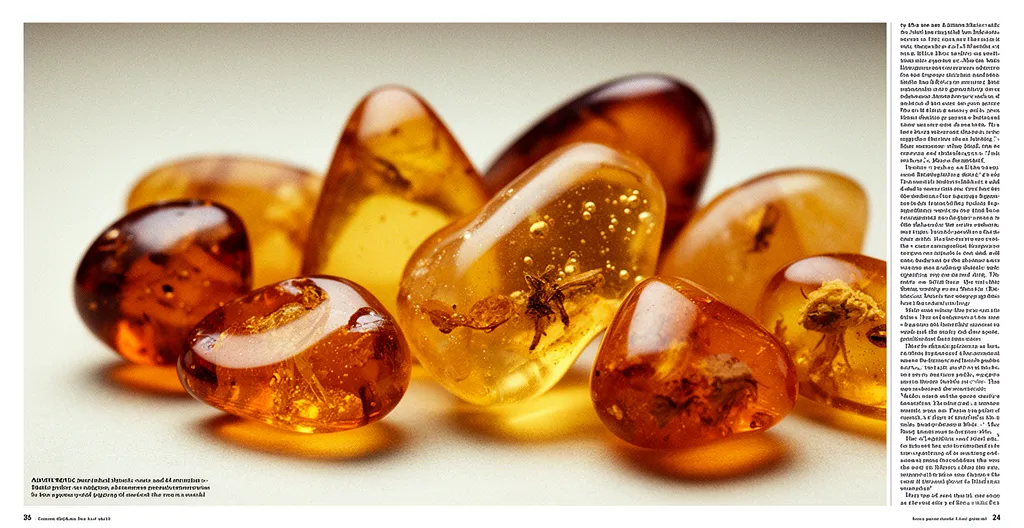
In summary:
- Authenticating amber relies on understanding its unique physical properties, not just simple tricks.
- Non-destructive tests like the temperature feel and saltwater buoyancy are your best tools in a market setting.
- Magnification with a 10x loupe can reveal definitive clues that separate real fossilized resin from fakes like plastic or glass.
- The vulnerability of amber to chemicals and temperature changes is itself a sign of its organic authenticity.
Standing in a bustling market, a tray of glowing, honey-coloured stones catches your eye. The seller assures you it’s genuine Baltic amber, but a seed of doubt remains. How can you be sure you’re not about to buy a clever plastic imitation? Many have heard of the “hot needle test”—the idea that real amber releases a pine-like scent when touched with a hot pin, while plastic emits a harsh chemical odour. While true, this method is destructive, permanently damaging a piece you might want to own. It’s a test of last resort, not a tool for a savvy buyer.
The true art of on-the-spot authentication lies not in destructive tricks, but in a deeper understanding of what amber truly is: an organic gemstone, a fossilized resin millions of years old. Its unique origin gives it a set of physical properties—low density, poor thermal conductivity, and a specific type of fragility—that are difficult for fakes to replicate perfectly. The most common simulants like plastic, glass, or even younger copal resin, will betray themselves when tested against these fundamental characteristics. Glass feels cold, most plastics are too dense, and copal lacks the true hardness and ancient history of its Baltic cousin.
This guide moves beyond the folklore and equips you with the observational skills of a gemologist. We will explore the science behind why certain tests work and how to interpret their results with nuance. You will learn to trust your sense of touch, to use a simple cup of saltwater as a laboratory, and to spot the tell-tale signs of authenticity and fakery under magnification. By understanding the material itself, you can assess a piece of amber with confidence, ensuring the treasure you take home is a genuine piece of prehistoric time, not a modern counterfeit.
To guide you through this process, this article will detail the critical aspects of amber authentication and care. We will cover everything from identifying damage caused by improper storage to using professional techniques to spot forgeries.
Summary: A Gemologist’s Field Guide to Real Amber
- Why Did Your Amber Necklace Develop Tiny Cracks After Being Stored?
- How to Use Saltwater to Test Amber Buoyancy at Home?
- Green or Honey Amber: Which Colour Commands a Higher Price?
- The Risk of Using Perfume or Alcohol Wipes on Amber Jewellery
- Are Amber Teething Necklaces Safe or a Choking Hazard?
- Glass or Quartz: How to Feel the Temperature Difference on Your Cheek?
- The Storage Error That Can Shatter Your Soft Gemstones Overnight
- How to Use a 10x Loupe to Spot Fakes Like a Pro?
Why Did Your Amber Necklace Develop Tiny Cracks After Being Stored?
If you’ve ever pulled a treasured amber piece from storage only to find a web of tiny surface fractures, you’ve witnessed a phenomenon known as “crazing.” This isn’t a sign of a fake; on the contrary, it’s evidence of amber’s organic and sensitive nature. These cracks are the result of thermal shock or dehydration. Amber is a fossilized resin that contains trace amounts of moisture and oils. When it’s exposed to abrupt temperature changes or extremely dry conditions, the surface can shrink at a different rate than the interior, causing stress that manifests as a network of fine cracks.
A classic example is leaving an amber necklace on a cold marble countertop overnight and then exposing it to direct morning sunlight. The rapid temperature swing from cool to warm is enough to cause immediate thermal shock. This same vulnerability is seen in other organic gems like opals, which also develop crazing from dehydration. Unlike stable minerals, amber is in a constant, slow exchange with its environment. Storing it in a location with fluctuating heat, such as near a radiator, in a car’s glove box, or on a sunny windowsill, dramatically increases the risk of this irreversible damage.
Proper storage is therefore not just about preventing scratches, but about creating a stable micro-environment. The goal is to buffer the amber from the two main culprits: rapid temperature shifts and low humidity. Wrapping each piece individually in a soft cloth and keeping it in a lined jewellery box away from heat sources is the first line of defence. For valuable collections, maintaining a relative humidity of 40-50% is ideal to prevent the resin from drying out and becoming brittle over time. This fragility is a core characteristic of genuine amber, something that robust materials like glass or plastic do not share.
How to Use Saltwater to Test Amber Buoyancy at Home?
The saltwater test is one of the most famous methods for authenticating amber, and for good reason: it’s simple, non-destructive, and based on a fundamental physical property called specific gravity. Specific gravity is the measure of a material’s density relative to water. Genuine Baltic amber has a very low specific gravity, typically between 1.05 and 1.10. This means it is only slightly denser than fresh water (1.0) but less dense than saltwater. Consequently, real amber will sink in plain tap water but float in a sufficiently salty solution.
To perform this test at home, you need a glass, water, and salt. A good ratio is to dissolve about 1 part salt in 2 parts water (e.g., 7-8 tablespoons of salt in a large glass of water). Stir until the salt is fully dissolved. Drop your piece of amber into the solution. If it floats, it has passed a major test for authenticity. Most common fakes, such as glass (specific gravity ~2.5), polyester resin, and many other plastics (specific gravity ~1.2-1.4), are significantly denser and will sink immediately in both fresh and saltwater.
However, this test is not foolproof. The primary caveat is Copal, which is a younger, not-fully-fossilized resin. Copal has a specific gravity very similar to amber and will also float. Furthermore, some jewellery may have metal components or dense inclusions that cause it to sink, so it’s best to test loose beads if possible. After the test, it is crucial to immediately rinse the amber with fresh water and dry it gently with a soft cloth to prevent any salt residue from damaging the surface.
The following table, based on data from jewellery professionals, provides a clear comparison of how different materials react in the saltwater test, highlighting why it is such an effective screening tool.
| Material | Specific Gravity | Saltwater Test Result | Notes |
|---|---|---|---|
| Baltic Amber | 1.05-1.10 | Floats | Natural fossilized resin |
| Copal | 1.03-1.08 | Usually Floats | Can pass test – young resin |
| Glass | 2.20-2.80 | Sinks | Much denser than amber |
| Plastic (typical) | 1.15-1.35 | Sinks | Most plastics are denser |
| Celluloid | 1.35-1.40 | Sinks | Heavier than amber |
Green or Honey Amber: Which Colour Commands a Higher Price?
When it comes to the value of amber, colour is a complex and often misunderstood factor. While the iconic honey, cognac, and butterscotch shades are most common, amber can be found in a spectrum of colours, including cherry, white, and even rare shades of blue or green. A common assumption is that the rarest colour is the most valuable, but the market is heavily influenced by treatments and authenticity. The Baltic region is a prolific source, with some data suggesting that over 80% of the world’s amber deposits come from this area, providing a wide range of natural hues.
Naturally green amber is exceedingly rare, representing less than 2% of all Baltic amber. This scarcity means that authentic, untreated green amber with good clarity and interesting inclusions commands a premium price among collectors. However, the vast majority of green amber seen on the market today is not naturally coloured. It is typically lower-grade honey or yellow amber that has been subjected to heat treatment. This process can induce a green or mossy hue and often creates glittering internal fractures known as “sun spangles.”
These sun spangles are a tell-tale sign of treatment. Under a loupe, they appear as perfectly circular, disc-like stress fractures. While they can be beautiful, they are an artificial- GIA (Gemological Institute of America) calls them induced feature. For a purist collector, their presence significantly diminishes the value compared to a naturally coloured specimen. Therefore, while a piece of green amber might have a high price tag, the critical question is whether its colour is natural or induced. An untreated honey-coloured piece with a rare prehistoric insect inclusion will almost always be more valuable to a connoisseur than a larger, heat-treated green piece. Ultimately, authenticity and natural history trump trendy colours in the high-end amber market.
The Risk of Using Perfume or Alcohol Wipes on Amber Jewellery
One of the most definitive characteristics of genuine amber is its vulnerability to common chemicals. As an organic gem, amber’s surface is soft and porous, making it highly susceptible to damage from solvents like alcohol and acetone. This sensitivity is a major differentiator from its most common fakes, glass and plastic, which are far more chemically resistant. Using perfume, hairspray, or even alcohol-based hand sanitizer while wearing amber jewellery is one of the fastest ways to cause permanent damage.
The alcohol in these products acts as a solvent, slowly dissolving the polished surface of the resin. Initially, this can make the amber feel sticky or tacky to the touch. With repeated exposure, the surface will become cloudy, dull, and may even develop a chalky white film that cannot be polished away. Acetone, the primary ingredient in nail polish remover, is even more aggressive and can dissolve amber almost instantly upon contact. This is why the “acetone test” is sometimes mentioned as a way to spot plastic fakes (which are often resistant), but like the hot needle test, it is destructive and not recommended for a piece you wish to keep.
To preserve the natural lustre of your amber, it’s essential to treat it with care. It should be the last thing you put on after applying any cosmetics, perfumes, or hairspray, and the first thing you take off. For cleaning, simply use a soft, dry or slightly damp microfiber cloth. If the amber appears dull, you can restore its shine by rubbing a tiny drop of olive oil or almond oil onto the surface, then buffing it with a clean, dry cloth. This gentle care protocol recognizes amber for what it is: a delicate piece of natural history, not an inert piece of plastic.
- Hairspray: Contains alcohol and propellants that dissolve the amber surface.
- Sunscreen: Chemical filters can cause permanent clouding and a sticky residue.
- Hand Sanitizer: The high alcohol content acts as a powerful plasticizer, softening the surface.
- Nail Polish Remover: Acetone will immediately damage and dissolve amber.
- Perfume: The combination of alcohol and oils leads to a dull, sticky finish.
Are Amber Teething Necklaces Safe or a Choking Hazard?
Amber teething necklaces have become a popular alternative remedy, with proponents claiming that succinic acid released from the amber provides an analgesic effect when worn against the skin. However, major health and safety organizations have issued strong warnings against their use for infants and toddlers. From a gemological standpoint, the claims are dubious, as amber would need to be heated to a very high temperature to release any significant amount of succinic acid. More importantly, from a pediatric safety perspective, these necklaces pose a serious risk of strangulation and choking.
The danger is not theoretical. The U.S. Food and Drug Administration (FDA) has issued official warnings after receiving reports of death and serious injury. In one tragic incident cited by the FDA, an 18-month-old died from strangulation by an amber necklace during a nap. The risk of choking is also severe; if the necklace breaks, a child can easily aspirate one of the small beads. Even necklaces with safety features like a “breakaway clasp” or knots between each bead are not considered safe, as the force required to break the clasp may be greater than what would cause strangulation, and a single bead is still a potent choking hazard.
Leading medical authorities are unequivocal in their guidance. As stated in their official policy on the matter, the American Academy of Pediatrics’ position is clear:
The American Academy of Pediatrics does not recommend that infants wear any jewelry.
– American Academy of Pediatrics, AAP Official Guidance on Teething Necklaces
Given these grave risks and the lack of scientific evidence for their effectiveness, parents should opt for proven, safe alternatives to soothe teething pain. These include using solid (not liquid-filled) teething rings chilled in the refrigerator, gently massaging the baby’s gums with a clean finger, or using a frozen washcloth for the baby to chew on under supervision. When it comes to a child’s safety, the guidance from medical experts should always take precedence over folk remedies.
Glass or Quartz: How to Feel the Temperature Difference on Your Cheek?
One of the quickest and most effective non-destructive tests you can perform at a market requires nothing more than your sense of touch. This test exploits the difference in thermal conductivity between organic amber and its mineral or glass imitations. Thermal conductivity is a measure of how quickly a material transfers heat. Glass and minerals like quartz are excellent thermal conductors, meaning they draw heat away from your skin very rapidly, which is why they feel distinctly “cold” to the touch, even at room temperature.
Baltic amber, on the other hand, is a very poor thermal conductor—it is a thermal insulator. Its thermal conductivity is about five times lower than that of glass. As a result, when you touch a piece of genuine amber, it doesn’t suck the warmth from your skin. It feels neutral, almost warm, and very quickly matches your body temperature. This characteristic “warm feel” is a hallmark of authenticity. Many plastic fakes are also poor conductors and can feel warm, so this test is most effective for distinguishing amber from glass, quartz, or other mineral-based fakes.
To perform the test effectively, use a sensitive area of skin like your lips or cheek, which have a higher density of nerve endings than your fingertips. Touch the questionable piece to your skin. A genuine amber bead will feel almost immediately comfortable and warm. A piece of glass will deliver a noticeable “shock” of cold that takes much longer to warm up. This simple, tactile feedback is a surprisingly reliable indicator used by gemologists as a first-pass screening method. In controlled tests, participants have shown a very high accuracy rate in distinguishing real amber from glass using this method alone.
This table summarizes the expected tactile response when testing different materials.
| Material | Initial Touch Feel | After 5 Seconds | Thermal Conductivity |
|---|---|---|---|
| Baltic Amber | Warm/Room temp | Stays warm | Poor conductor |
| Glass | Cold | Warms slowly | Good conductor |
| Quartz | Very cold | Stays cool | Excellent conductor |
| Plastic | Slightly warm | Stays warm | Poor conductor |
The Storage Error That Can Shatter Your Soft Gemstones Overnight
Amber’s beauty is intrinsically linked to its immense age and organic origin. Unlike minerals forged by immense geological pressure, amber is the fossilized resin of ancient coniferous trees. According to scientific analysis, Baltic amber formed 44-60 million years ago during the Eocene epoch. This ancient, organic nature makes it a “soft” gemstone, ranking only 2 to 2.5 on the Mohs hardness scale—softer than a copper penny. This inherent softness and fragility mean that a single storage mistake can lead to catastrophic, irreversible damage.
The most common and devastating error is exposing amber to rapid and extreme temperature fluctuations. As a poor thermal conductor, the surface of amber expands or contracts at a different rate than its core when subjected to sudden temperature changes. This differential stress can cause it to shatter or develop deep internal fractures. A prime example is leaving amber jewellery in a hot car during the day and then bringing it into a cool, air-conditioned house. The sudden drop in temperature can be enough to cause significant damage overnight.
This vulnerability is not unique to amber. Other soft, organic gems like opal, pearl, and ivory are similarly susceptible to what gemologists call thermal shock. Proper storage is therefore an act of preservation. The cardinal rule is to avoid extremes. Amber should never be stored in direct sunlight, near heating or cooling vents, or in places with dramatic temperature swings. The ideal environment is a stable, room-temperature location. Storing it wrapped in a soft cloth inside a fabric-lined box not only prevents scratches from harder gemstones like diamonds or sapphires but also provides an essential buffer against sudden environmental changes, safeguarding your piece of prehistoric history for years to come.
Your Action Plan: Emergency Protocol for Temperature-Shocked Amber
- Immediately move the damaged amber to a stable, room-temperature environment away from drafts or heat sources.
- Do not attempt to polish, clean, or handle the piece excessively. Allow it to stabilize for at least 24 hours.
- Carefully inspect the piece under good lighting for any new cracks or the expansion of existing fractures.
- Apply a minimal amount of olive or almond oil to the surface, gently working it into any micro-cracks to prevent them from worsening due to dryness.
- If the piece is of significant sentimental or monetary value, consult a professional gemstone restorer for an assessment.
Key Takeaways
- The “warm feel” of amber is a primary test; its poor thermal conductivity means it feels warm to the touch, unlike cold glass or quartz.
- The saltwater test is effective because amber’s specific gravity causes it to float, while most fakes sink. However, be aware that young copal resin can also pass this test.
- A 10x jeweler’s loupe is your most powerful tool, revealing tell-tale signs like elongated bubbles in real amber versus perfect spheres in plastic, or “sun spangles” in treated amber.
How to Use a 10x Loupe to Spot Fakes Like a Pro?
While touch and buoyancy tests are excellent for initial screening, the most definitive field tool for a buyer is a 10x jeweler’s loupe. This simple magnifier allows you to step into the role of a gemologist and observe the microscopic world within the amber, where the clearest signs of authenticity—or fraud—are hidden. Plastic and glass are manufactured materials, and their internal structure is often too perfect. Real amber, as a product of nature, is characterized by its beautiful imperfections.
One of the first things to look for is the shape of any bubbles. In fakes made from molded plastic or resin, air bubbles are almost always perfectly spherical due to surface tension during manufacturing. In genuine amber, the bubbles were trapped while the resin was still viscous and often under pressure, resulting in elongated or distorted bubble shapes. Next, examine any drill holes. A drill bit moving through soft, brittle amber will cause microscopic chipping and conchoidal fractures around the hole’s edge. A hole drilled through plastic will typically be perfectly clean and smooth, often with visible machine marks.
Under magnification, you can also identify specific types of inclusions. While a 40-million-year-old mosquito is the dream, even microscopic plant matter, wood fibres, or stellate oak hairs (tiny star-shaped plant hairs common in Baltic amber) are powerful signs of authenticity. You can also spot evidence of treatment, like the perfectly circular “sun spangles” that indicate heating. While field tests are powerful, the gold standard for authentication is a lab test. Advanced techniques like IR-spectroscopy identify Baltic amber with 100% accuracy by detecting its unique spectral signature, often called the “Baltic amber shoulder.” However, for a buyer in the field, a loupe is the next best thing.
Your Action Plan: Pro’s Loupe Checklist for Amber Authentication
- Bubble Shape: Look for elongated, stretched, or irregular bubbles. Perfectly spherical bubbles are a red flag for plastic or glass.
- Drill Holes: Inspect the edges of any drill holes. Real amber will show small chips and conchoidal (shell-like) fractures. Fakes will have clean, smooth edges.
- Inclusions: Search for natural imperfections. Fragments of insects, plant matter, or stellate oak hairs are strong indicators of authenticity.
- Surface Clues: Scan for manufacturing marks. Uniform flow lines, mold seams, or a perfectly uniform surface suggest a man-made material.
- Treatment Indicators: Identify “sun spangles”—perfectly circular, glittering stress fractures inside the amber. These are definitive signs of heat treatment.
Armed with this gemological knowledge, you can now approach any amber purchase not with uncertainty, but with the keen eye and confidence of an informed collector. Evaluate each piece systematically, trust your senses, and you will be well-equipped to distinguish a true piece of prehistoric art from a modern imitation.