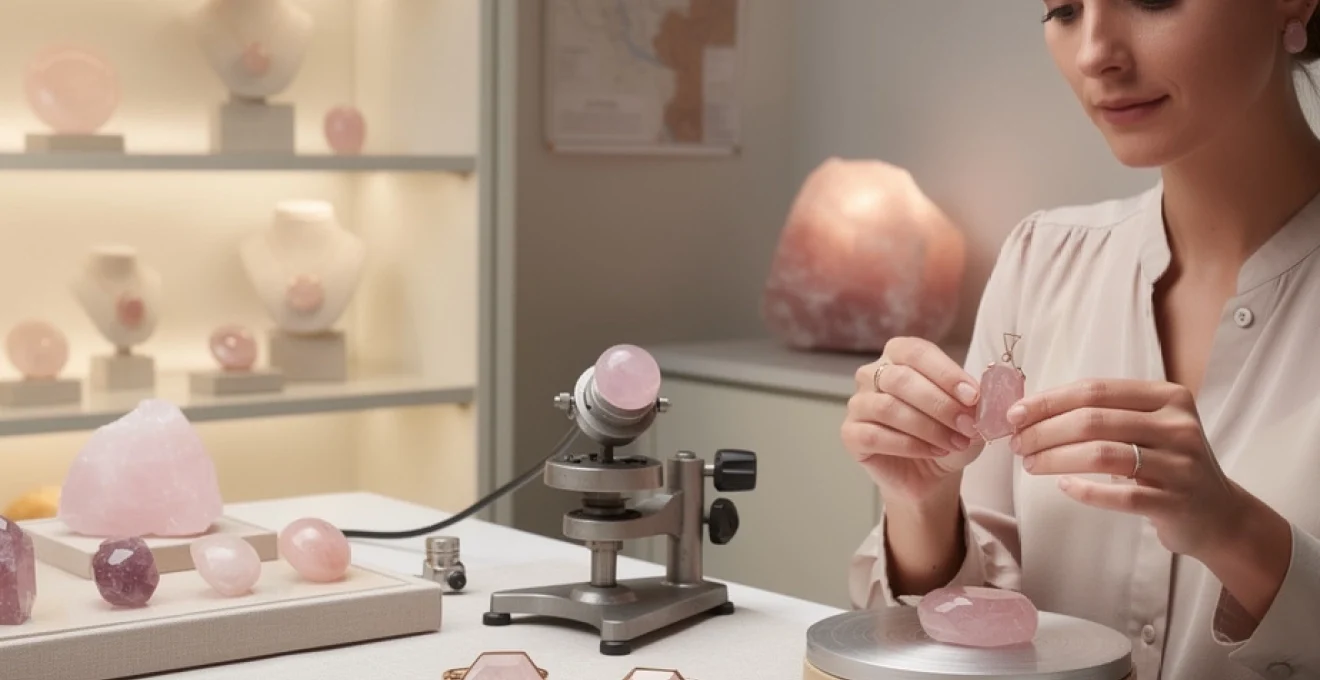
Rose quartz captivates the jewellery world with its ethereal pink hues and gentle luminosity, representing one of nature’s most romantic gemstone offerings. This beloved member of the quartz family transforms ordinary jewellery pieces into extraordinary expressions of elegance and emotional resonance. From ancient civilisations to contemporary haute couture collections, rose quartz continues to enchant designers and collectors with its distinctive combination of accessible beauty and profound symbolic meaning.
The gemstone’s popularity stems not only from its aesthetic appeal but also from its remarkable versatility in jewellery applications. Whether fashioned into delicate cabochons for vintage-inspired rings or precision-cut brilliant stones for modern pendants, rose quartz adapts seamlessly to diverse design philosophies. Professional jewellers appreciate its workability and durability, whilst consumers are drawn to its associations with love, healing, and emotional balance.
Understanding the technical aspects of rose quartz becomes essential for anyone seeking to appreciate or work with this remarkable gemstone. From its crystalline structure to cutting methodologies, each element contributes to the stone’s ultimate beauty and performance in finished jewellery pieces.
Rose quartz mineral properties and gemological classification
Rose quartz belongs to the extensive quartz family, classified scientifically as silicon dioxide (SiO₂) with distinctive pink colouration that sets it apart from its crystalline relatives. The gemstone exhibits trigonal crystal symmetry, though it rarely forms well-defined crystal faces in nature. Instead, rose quartz typically occurs in massive formations, creating the characteristic translucent to opaque appearance that defines quality specimens.
Crystalline structure and hexagonal formation characteristics
The internal architecture of rose quartz follows the classic quartz framework structure, featuring silicon atoms bonded to four oxygen atoms in tetrahedral arrangements. These tetrahedra link together to form continuous three-dimensional networks that provide the gemstone’s fundamental stability. The hexagonal crystal system manifests in rose quartz through its optical properties and growth patterns, even when external crystal faces remain undeveloped.
Microscopic examination reveals the presence of oriented needle-like inclusions within the crystal matrix, often identified as dumortierite or similar fibrous minerals. These inclusions contribute significantly to rose quartz’s characteristic appearance, creating the soft, dreamy quality that distinguishes premium specimens from lower-grade materials.
Mohs hardness scale rating and durability assessment
Rose quartz registers consistently at 7 on the Mohs hardness scale, positioning it among the more durable gemstones suitable for everyday jewellery wear. This hardness rating indicates that rose quartz can scratch materials rated below 7, including common metals like copper and brass, whilst remaining vulnerable to harder substances such as emerald, sapphire, and diamond.
The gemstone’s fracture characteristics follow typical quartz patterns, exhibiting conchoidal breakage when subjected to sharp impacts. Professional jewellers must consider this brittleness during setting procedures, particularly when creating tension mounts or designs requiring precise stone placement. Proper setting techniques can effectively protect rose quartz from impact damage whilst showcasing its natural beauty.
Titanium and iron oxide inclusions creating pink coloration
The distinctive pink colouration of rose quartz results from complex interactions between trace elements and the host crystal structure. Recent gemological research identifies titanium and iron oxides as primary chromophores, with microscopic rutile needles contributing to colour intensity variations. These metallic inclusions scatter light wavelengths selectively, absorbing certain frequencies whilst reflecting the soft pink tones that characterise quality specimens.
Colour saturation varies considerably across different geographical sources, with Madagascar producing particularly intense rose-red specimens and Brazilian deposits yielding lighter, more ethereal pink tones. Professional colour grading considers both hue consistency and intensity when evaluating rose quartz quality for jewellery applications.
Transparency grades from translucent to opaque specimens
Rose quartz transparency ranges from near-transparent to completely opaque, with most commercial specimens falling within the translucent category. The finest examples exhibit a cloudy transparency that allows light penetration whilst maintaining the soft, romantic appearance prized by collectors and designers
and free from obvious cloudiness or dark inclusions. At the opposite end of the spectrum, heavily included or milky specimens may still be desirable for carved pieces or beadwork, where overall colour and texture take precedence over clarity. When selecting rose quartz for delicate jewellery creations, striking the right balance between translucency, structural integrity, and aesthetic intent ensures that each stone performs optimally in its final setting.
Traditional lapidary techniques for rose quartz jewellery
Transforming raw rose quartz into refined jewellery components relies on time-honoured lapidary techniques adapted to the stone’s specific characteristics. Its moderate hardness, conchoidal fracture, and internal fibrous inclusions all inform how cutters approach shaping and finishing. Understanding these processes allows designers and collectors to appreciate why some rose quartz jewellery appears silky and diffused, while other pieces display crisper outlines and more architectural forms.
Cabochon cutting methods for smooth dome surfaces
Cabochon cutting remains the classical approach for showcasing rose quartz’s soft glow and internal texture. Lapidaries begin by sawing the rough into calibrated preforms, orienting the stone to maximise colour and minimise visible fractures. The preforms are then ground against diamond-charged laps to establish the basic outline—usually round, oval, pear, or cushion—before the domed surface is carefully shaped.
During this stage, the cutter must manage heat build-up and avoid excessive pressure, which can exploit natural tension planes and cause the quartz to chip. Once the dome is formed, progressively finer abrasives are used to refine the curvature and remove any visible flat spots, much like smoothing the surface of a still pond. A final polish with cerium oxide or tin oxide brings out the gemstone’s vitreous lustre, emphasising its milky translucence and enhancing any subtle phenomena such as asterism.
For designers seeking star rose quartz cabochons, orientation becomes even more critical. The fibrous inclusions responsible for the six-rayed star must be aligned perpendicular to the base of the cabochon. When executed correctly, overhead lighting reveals a centred, well-defined star that glides across the surface, lending an almost celestial quality to otherwise understated jewellery designs.
Faceting protocols for brilliant and step-cut variations
Although rose quartz is more frequently cut as cabochons, faceting has gained traction in contemporary jewellery where sharper lines and sparkle are desired. Faceters typically reserve this approach for finer, more transparent material, where light can travel through the gemstone with minimal scattering. The process starts with orienting the preform to minimise visible veil-like inclusions and to balance colour distribution across the finished stone.
Standard brilliant cuts, such as round or oval brilliants, use a network of triangular and kite-shaped facets to create maximum scintillation. With rose quartz, however, the inherently soft glow means the effect is gentler than in high-dispersion stones like diamond or zircon. Step cuts—emerald, baguette, or cushion with parallel facet rows—can be particularly successful, emphasising the gemstone’s serene colour rather than intense sparkle. These cuts suit minimalist rose quartz engagement rings and modern pendants where clean geometry is paramount.
Because of quartz’s conchoidal fracture, careful control of facet angles and polishing pressure is essential. Faceters often work slightly slower on rose quartz than on harder materials, ensuring facet junctions remain crisp without inducing micro-fractures. When executed with precision, a faceted rose quartz becomes a compelling alternative for clients seeking a pastel gemstone with contemporary lines and a more architectural aesthetic.
Tumbling and polishing processes for natural finishes
Tumbling offers an efficient, low-intervention way to prepare rose quartz for bead strands, charm bracelets, and organic-inspired jewellery collections. Rough fragments are placed in a rotary or vibratory tumbler with progressively finer grades of abrasive media, mimicking the natural smoothing action of river stones over time. This process rounds sharp edges, softens irregularities, and gradually reveals the stone’s inherent colour.
Over multiple stages—typically from coarse grit through to pre-polish and final polish—the rose quartz develops a silky, pebble-like finish ideal for casual, bohemian, or meditation jewellery. Because tumbling treats many pieces at once, it is an economical method for producing large quantities of smaller rose quartz components without the intensive labour required for individual cabochons or faceted stones. The final polish, often achieved with aluminium oxide or cerium oxide, enhances the gemstone’s gentle sheen without introducing high-gloss reflections that might conflict with its relaxed aesthetic.
For designers, tumbled rose quartz pieces offer a tactile quality that polished faceted stones cannot replicate. Their subtle irregularities and softly rounded contours make them particularly suited to stringing on silk cords, incorporation into macramé designs, or combining with metals in mixed-media jewellery where texture and contrast play a central role.
Drilling and piercing techniques for bead creation
Bead production represents one of the most widely used applications for rose quartz, especially in delicate jewellery creations such as layering necklaces and slim, stackable bracelets. Precision drilling is a critical step, as poorly executed holes can weaken the stone and lead to premature breakage in finished strands. Lapidaries typically use diamond-tipped drill bits combined with continuous water lubrication to manage heat and remove debris.
The drill speed and pressure must be meticulously controlled; too much force risks chipping the entry or exit points, while insufficient cooling can cause micro-cracks along the bore. For very small beads—2 mm to 4 mm in diameter—the margin for error is minimal, and specialised micro-drilling equipment helps maintain consistency. The resulting beads are then cleaned, sorted by size and colour, and often given a final light polish to remove any surface residue from the drilling process.
High-quality rose quartz beads exhibit smooth, chip-free drill holes that accommodate common stringing materials such as silk, nylon-coated wire, or precious metal chains. For jewellers, investing in well-drilled beads reduces restringing issues and enhances the longevity of delicate designs. For wearers, this attention to detail translates to strands that drape fluidly and resist the fraying and breakage that can occur when beads abrade against poorly finished drill edges.
Contemporary rose quartz setting methodologies
Modern jewellery design has expanded the vocabulary of settings available for rose quartz, marrying traditional metalwork with contemporary aesthetics and engineering. While classic bezel and prong settings remain popular, many designers now experiment with negative space, mixed metals, and alternative mounting systems to highlight the stone’s soft colour and emotional symbolism. Understanding these methodologies helps you choose pieces that balance visual lightness with adequate protection for the gemstone.
Prong settings, for example, allow maximum light entry around faceted rose quartz, giving the illusion of a floating gem. Four- or six-prong configurations in white, yellow, or rose gold can emphasise different aspects of the stone’s character; cooler metals underscore its ethereal quality, while warmer tones amplify its romantic warmth. Jewellers must, however, avoid overly thin prongs, which can exert concentrated pressure on the quartz and increase the risk of chipping during wear.
Bezel settings offer a more protective approach, encasing the rose quartz’s girdle in a continuous metal rim. This style is especially suited to cabochons and tumbled stones in rings and bracelets, where impact risk is highest. A finely crafted bezel hugs the stone without obscuring its profile, much like a picture frame designed to enhance rather than dominate the artwork it contains. Contemporary designers often employ open-back bezels, allowing light to pass through the stone and preserving its luminous glow.
For ultra-delicate jewellery, such as threader earrings or airy pendants, designers frequently turn to semi-bezel, partial-claw, or tension-inspired settings that visually slim the silhouette while still supporting the gemstone. True tension settings, where the stone is held solely by pressure between two metal arms, are used more cautiously with rose quartz due to its conchoidal fracture. Instead, many jewellers adopt pseudo-tension designs, where hidden support elements discreetly reinforce the structure while preserving the dramatic floating effect.
In contemporary bead-based pieces, rose quartz is often integrated using fine-gauge wire wrapping and micro-setting techniques. Tiny faceted rondelles may be individually wire-wrapped onto chains to create “station” necklaces, while micro-pavé settings combine multiple small rose quartz stones in sculptural clusters. These innovations align with current trends towards layering, personalisation, and modular jewellery that can be reconfigured to suit different moods and occasions.
Iconic rose quartz jewellery collections and designer showcases
Over the past decade, rose quartz has moved from a supporting role in costume jewellery to a central feature in many fine jewellery collections. High-profile designers and heritage maisons have embraced its gentle colour as a counterpoint to more traditional precious stones, often pairing it with diamonds, pearls, or complementary pastel gems such as morganite and aquamarine. This renewed attention has elevated rose quartz from “semi-precious” afterthought to a deliberate style statement.
Major fashion houses have introduced capsule collections built around rose quartz’s soft aesthetic, particularly in response to broader trends favouring mindful luxury and emotional storytelling. Designs often feature large, sculptural cabochons set in minimal metal frameworks, allowing the stone to read almost like a modern art object. In bridal jewellery, rose quartz engagement rings and wedding bands have emerged as romantic alternatives for couples seeking symbolism of enduring tenderness rather than conventional status markers.
Independent designers have also played a significant role in redefining how rose quartz is perceived. Many artisan jewellers highlight ethically sourced rose quartz in limited-edition pieces, emphasising hand-finished textures, recycled metals, and bespoke cuts. By treating each stone as a unique canvas—celebrating natural veils, subtle colour zoning, and irregular forms—they create one-of-a-kind designs that resonate with clients who value individuality over uniformity.
Collector interest in rose quartz has further increased thanks to museum exhibitions and design competitions featuring the gemstone in avant-garde contexts. Sculptural cuff bracelets, architectural chokers, and conceptual brooches demonstrate that rose quartz can be bold and modern, not merely delicate and demure. For jewellery enthusiasts, following these showcases offers inspiration on how to style rose quartz pieces—whether you prefer a single understated pendant or a dramatic, layered ensemble that places the stone centre stage.
Rose quartz sourcing origins and mining locations
The journey of rose quartz from geological formation to jewellery bench begins in a handful of key mining regions around the world. Although quartz is one of Earth’s most abundant minerals, gem-quality rose quartz suitable for delicate jewellery is more limited, with distinct localities contributing unique colour profiles and internal characteristics. Understanding these origins allows both professionals and enthusiasts to make more informed, sustainable choices.
Brazil remains one of the largest commercial sources of rose quartz, particularly from the state of Minas Gerais, where extensive pegmatite deposits yield sizable blocks of pastel to medium-pink material. These Brazilian stones often exhibit a gentle, evenly distributed colour and are widely used for beads, cabochons, and carved jewellery components. Madagascar, by contrast, is renowned for producing intensely coloured rose-red specimens with higher translucency and, in some cases, the coveted star effect.
Other significant sources include South Africa, India, and the United States. South African rose quartz tends to display a robust, saturated pink suited to statement pieces and larger carvings. Indian material, frequently cut into beads and tumbled stones, is highly accessible and supports a thriving cottage industry of small-scale lapidary workshops. In the U.S., notable deposits in South Dakota and Maine provide material favoured by artisan jewellers who value local provenance and shorter supply chains.
Ethical sourcing has become an increasingly important consideration in rose quartz jewellery production. Responsible suppliers prioritise traceability, fair labour practices, and reduced environmental impact, often working with smaller mines and community-based operations rather than large-scale industrial extraction. As a buyer, you can look for jewellers who disclose origin information, participate in industry transparency initiatives, or align with third-party ethical sourcing frameworks, ensuring your rose quartz jewellery reflects not only beauty but also conscientious values.
Care protocols and preservation techniques for rose quartz pieces
Preserving the soft allure of rose quartz in delicate jewellery creations requires thoughtful care that respects both its strengths and vulnerabilities. While its Mohs hardness of 7 provides good resistance to everyday abrasion, the stone’s internal inclusions and conchoidal fracture pattern make it susceptible to sharp impacts and thermal shock. Adopting a few simple habits can significantly extend the life and lustre of your rose quartz pieces.
Cleaning is best carried out with lukewarm water, a mild, phosphate-free soap, and a soft cloth or brush. Gently agitate the jewellery to dislodge accumulated lotions, skin oils, and airborne particles, then rinse thoroughly and pat dry. Ultrasonic and steam cleaners, although convenient for more robust gemstones, are not recommended for rose quartz; their intense vibrations and rapid temperature changes can exacerbate existing micro-fractures or create new ones.
Storage also plays a crucial role in preservation. Ideally, rose quartz jewellery should be kept in individual soft pouches or lined compartments, separated from harder stones such as sapphires, rubies, and diamonds that could scratch its surface. For bead strands and delicate chains, laying them flat rather than hanging helps prevent stretching of the thread or wire, maintaining the original drape envisaged by the designer. Avoid prolonged exposure to strong sunlight or high UV environments, which may subtly fade the stone’s colour over many years.
Everyday wear considerations are particularly important for rings and bracelets, which are more exposed to knocks and abrasions. Removing rose quartz jewellery before engaging in activities such as sports, gardening, or household cleaning reduces the risk of accidental damage. Harsh chemicals found in cleaning agents, chlorine from swimming pools, and even some beauty products can dull metal settings and leave residues on the gemstone surface, diminishing its natural sheen.
For pieces with complex settings or heirloom value, periodic professional inspections are advisable. A jeweller can check for loose prongs, compromised bezels, and worn stringing materials, addressing minor issues before they evolve into costly repairs. With consistent care and mindful handling, rose quartz jewellery will retain its gentle radiance, continuing to embody the themes of love, calm, and quiet elegance that make this gemstone so beloved.