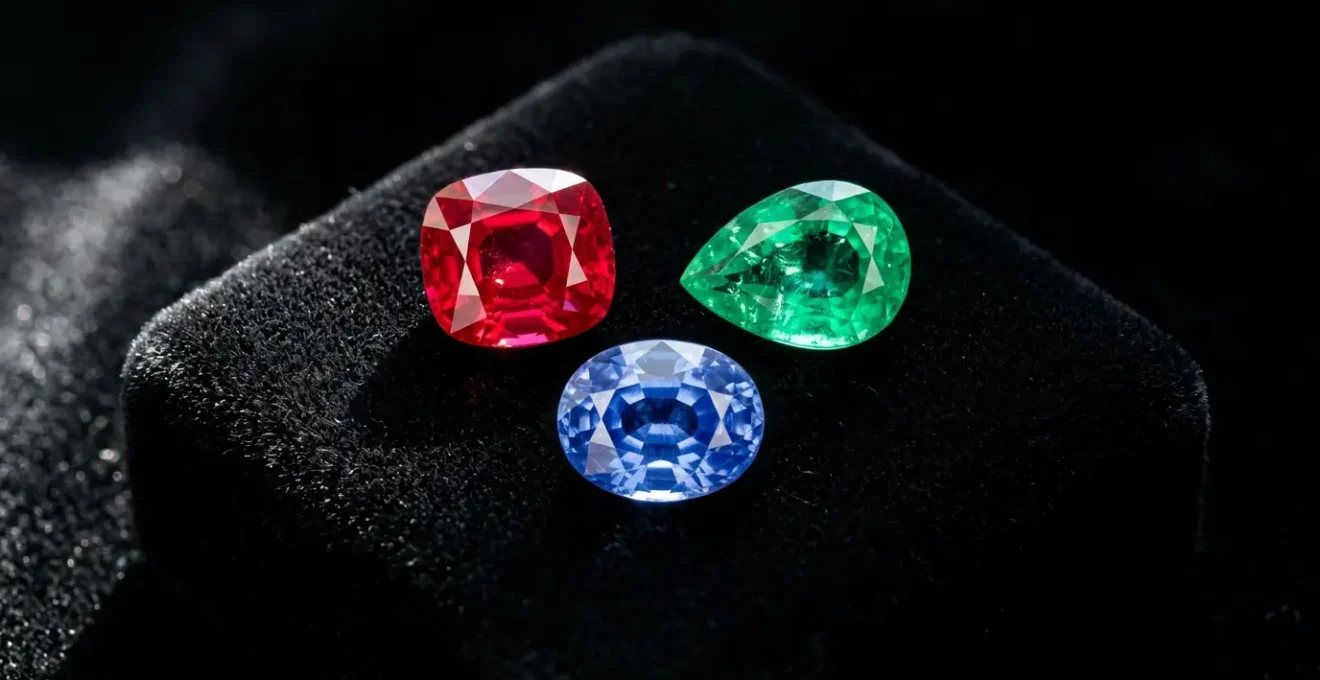
The long-term value of a precious stone hinges less on its raw appreciation and more on navigating the UK’s specific financial landscape of taxes, insurance, and market liquidity.
- Classic stones like unheated Burmese Rubies and Kashmir Sapphires remain top performers, but their net return can be eroded by overlooked costs.
- Standard home insurance is dangerously inadequate, and understanding the £6,000 CGT chattel exemption is non-negotiable for profitable resale.
Recommendation: Focus on a stone’s net asset value by factoring in certification, provenance, and all associated holding and disposal costs before acquisition.
For the UK-based investor looking to diversify beyond the volatility of stocks and the illiquidity of property, precious stones present a compelling proposition: a tangible, portable, and historically resilient store of wealth. The conventional wisdom is well-trodden—invest in the “Big Three” (rubies, sapphires, and emeralds), scrutinise the “4Cs” (Carat, Cut, Clarity, and Colour), and always demand a certificate from a reputable laboratory. This advice, while sound, represents merely the entry fee to the world of gem investment.
The true determinant of a successful 10-year investment lies not just in the intrinsic beauty or rarity of the gem, but in mastering the complex and often-overlooked financial ecosystem surrounding it. This is a landscape of insurance policies that can fail to cover true market worth, subtle tax implications upon resale, and the nuances of liquidity that separate a valuable asset from a sellable one. The most significant gains are not made by simply buying a fine stone, but by understanding and mitigating the financial friction that can erode its value over time.
But what if the key to superior returns was not just identifying a high-quality ruby, but understanding the specific insurance clause that protects it, or the tax threshold that defines your profit? This guide moves beyond the jeweller’s loupe to adopt the perspective of a prudent investment consultant. We will dissect the structural factors, hidden costs, and strategic decisions that dictate which precious stones genuinely retain—and grow—their value within the specific context of the UK market. We will analyse the critical questions of insurance, provenance, liquidity, storage, taxation, and the very definition of value in this unique asset class.
This article provides a structured analysis of the key factors that influence the real-world returns of gemstone investments over a decade. The following summary outlines the path we will take to build a comprehensive investment strategy.
Summary: Which Precious Stones Retain Their Value Best After 10 Years?
- Why Your Home Insurance Might Undervalue Your Gem Collection by 40%?
- How to Trace the Origin of a Stone to Avoid Unethical Mines?
- Ruby vs Sapphire: Which Stone Offers Better Resale Liquidity in the UK?
- The Storage Error That Can Shatter Your Soft Gemstones Overnight
- When Does Selling a Precious Stone Trigger Capital Gains Tax in the UK?
- How to Save 20% by Buying a 0.90ct Diamond Instead of 1.00ct?
- Why Does a “Cartier” Signature Add 30% to the Hammer Price?
- Why Is High Jewellery Considered a Portable Asset Class for the Ultra-Rich?
Why Your Home Insurance Might Undervalue Your Gem Collection by 40%?
The first and most common financial pitfall for a new gem investor is assuming their standard home insurance provides adequate cover. This is a critical oversight. In the event of loss, theft, or damage, an inadequate policy can instantly wipe out years of appreciation. The core of the problem lies in the ‘single-item limit’ clauses prevalent in most UK household policies. These clauses cap the maximum payout for any individual item, regardless of its certified valuation.
For most investors, this creates a significant and dangerous coverage gap. According to industry analysis, most standard UK home insurance policies limit single-item claims to £1,000-£2,500. Any stone valued above this threshold—which applies to virtually all investment-grade gems—would be drastically under-insured. An investor holding a £10,000 sapphire might only receive £2,500, representing an immediate 75% loss. This isn’t an investment risk; it’s a failure of basic asset protection.
To secure your investment, it’s imperative to move beyond standard cover and treat gem insurance as a distinct part of your strategy. This involves taking specific, deliberate steps:
- Review your policy’s single-item limit: Any gem valued above this amount requires separate specification.
- Obtain a formal ‘Valuation for Insurance Purposes’: This must be done by a UK-registered valuer, ideally a member of the Jewellery Valuers Association (JVA). This document is the basis for your cover.
- Consider specialist ‘agreed value’ policies: Insurers like T.H. March or Hiscox offer policies where the payout amount is agreed upon in advance, eliminating ambiguity at the point of a claim. This is the gold standard for investment-grade pieces.
- Update valuations regularly: The gem market is dynamic. A valuation should be updated every two years to ensure your cover keeps pace with market appreciation.
- Document everything: Maintain a secure file with photographs, laboratory certificates, and original purchase receipts for all pieces.
How to Trace the Origin of a Stone to Avoid Unethical Mines?
A gemstone’s origin is a critical component of its value, influencing not only its desirability and price but also its ethical standing and, increasingly, its marketability. In today’s market, discerning investors and collectors demand transparency. The stigma associated with “conflict minerals” or gems from unethical sources can render an otherwise beautiful stone illiquid. Therefore, tracing a stone’s provenance is not merely an ethical exercise; it is a fundamental act of investment due diligence.
The key to verifying origin lies in independent laboratory certification. Top-tier gemological labs possess the sophisticated equipment and reference databases to determine a stone’s geographic origin with a high degree of confidence. They analyse a stone’s unique chemical fingerprint and the specific types of microscopic inclusions to match it to known geological deposits. This scientific verification provides the ultimate assurance that a stone is what the seller claims it to be.
As the image of a gemological laboratory suggests, this is a highly specialised field. For an investor, this means prioritising stones accompanied by reports from globally respected institutions. The choice of lab often depends on the type of stone and its origin. For instance, in a high-value transaction for a blue sapphire from Sri Lanka, a reputable dealer would be expected to provide certificates from leading authorities like CGL (Colombo Gemological Laboratory), GLA (Gemlab Austria), and particularly the highly-respected Swiss labs, Gübelin and SSEF. The absence of such documentation for a significant stone should be considered a major red flag.
Ruby vs Sapphire: Which Stone Offers Better Resale Liquidity in the UK?
When considering the “Big Three,” investors often debate the relative merits of ruby versus sapphire. Both are varieties of the mineral corundum, making them exceptionally durable (9 on the Mohs scale) and suitable for investment. However, their market dynamics, rarity, and liquidity profiles differ significantly. From a pure performance standpoint, ruby has historically held the edge, driven by extreme rarity and intense demand from key markets.
Unheated rubies of the highest quality, particularly those from Burma (Myanmar) with the coveted “pigeon’s blood” colour, are exceptionally scarce. This rarity translates directly into price performance. For instance, over the last decade, high-quality examples have shown remarkable growth, with some sectors of the market performing exceptionally well. A clear example is the fact that from 2013 to 2023, Mozambique rubies showed a remarkable 550% value increase, underscoring the powerful appreciation potential of top-tier rubies. Sapphires, while also strong performers, are generally more available than rubies, which can temper their price growth rate slightly.
The following table provides a comparative overview of the key investment factors for these two stones, based on a recent analysis of the coloured stone market.
| Factor | Ruby | Sapphire |
|---|---|---|
| Annual Growth Rate | 8-10% p.a. | 6% p.a. |
| Rarity | 20x rarer than diamonds | More common than rubies |
| Best Origins | Burma (Myanmar) | Kashmir, Ceylon |
| Liquidity | High for pigeon blood specimens | Strong for cornflower blue |
| Market Demand | Consistently highest | Stable with variety options |
In terms of resale liquidity in the UK market, both are strong, but with nuances. High-quality rubies, especially certified unheated stones over two carats, will almost always find a ready market. The demand is consistent and global. Sapphires, particularly classic Ceylon or the mythical Kashmir “cornflower blue” specimens, also enjoy excellent liquidity. The broader availability of sapphires in various colours and sizes means there are more price points available, which can sometimes facilitate a quicker sale, even if the ultimate percentage return is lower than that of an equivalent top-grade ruby.
The Storage Error That Can Shatter Your Soft Gemstones Overnight
An investment-grade gemstone is a tangible asset, but its physical nature also makes it vulnerable. While hard stones like ruby and sapphire are relatively robust, other popular investment gems, most notably emerald, are far more delicate. Improper storage is not a minor issue; it’s a catastrophic risk that can lead to irreversible damage, instantly destroying the stone’s value. The most common error is storing different types of gems together without separation.
Emeralds, despite a respectable hardness of 7.5-8 on the Mohs scale, are famously brittle due to their natural internal characteristics. Scientific analysis shows that virtually 99% of emeralds have inclusions, often referred to as a “jardin” (garden). These tiny fractures make the stone susceptible to chipping or even shattering from sharp impacts. Storing an emerald in a pouch with a harder diamond or sapphire is an invitation for disaster, as a simple jolt can cause the harder stone to scratch or fracture the emerald. This risk is amplified for stones like opal, which are not only soft but also sensitive to changes in humidity, a real concern with the UK’s fluctuating climate.
Protecting the physical integrity of your collection requires a disciplined approach to storage. The following guidelines are critical:
- Store emeralds separately: Due to their inherent brittleness, emeralds should always have their own dedicated pouch or box compartment.
- Keep opals in humid conditions: To prevent “crazing” (the formation of a fine network of cracks), opals should be stored with a source of moisture, like a damp cotton ball in a sealed container.
- Never use ultrasonic cleaners on treated gems: The vibrations can be catastrophic for oiled emeralds or fracture-filled stones, permanently damaging them.
- Wrap each stone individually: To prevent scratching, every single piece, regardless of hardness, should be wrapped in a soft, non-abrasive cloth before being placed in a jewellery box.
- Maintain a stable environment: Avoid storing gems in areas with extreme temperature or humidity fluctuations, and keep them out of direct sunlight, which can fade the colour of certain stones like amethyst or kunzite.
When Does Selling a Precious Stone Trigger Capital Gains Tax in the UK?
A successful investment culminates in a profitable sale. However, in the UK, profit often means tax. For gemstone investors, the relevant levy is Capital Gains Tax (CGT). Failing to understand and plan for CGT can result in a significant portion of your hard-won gains being paid to HMRC, drastically reducing your net return. It’s a crucial piece of the financial puzzle that must be considered from the moment of acquisition, not just at the point of disposal.
The UK’s tax system treats precious stones as ‘chattels’—personal possessions that are tangible and movable. This classification is advantageous because it brings them under a specific and valuable exemption. The most important rule to know is the chattels exemption threshold. A gain is completely exempt from CGT if the disposal proceeds (the sale price) are £6,000 or less. This is a key difference from other jurisdictions; for example, in Austria and Germany, gemstone profits can be tax-free if the asset is held for more than a year. In the UK, the £6,000 rule is paramount.
If you sell a stone for more than £6,000, you may be liable for CGT on the gain (the sale price minus the original purchase price and allowable costs). The calculation can be complex, involving marginal relief rules to ensure the tax doesn’t unfairly penalise gains just over the threshold. The applicable tax rate depends on your income tax band, with basic-rate taxpayers paying 10% and higher-rate taxpayers paying 20% on gains from chattels (as of the current tax year).
Your Checklist: CGT Calculation Steps for UK Gemstone Sales
- Calculate total disposal proceeds: Determine the final sale price you received for the stone.
- Check the £6,000 chattels exemption: If the sale price is £6,000 or less, your gain is exempt, and no tax is due.
- Calculate marginal relief (if applicable): If the proceeds are over £6,000, the taxable gain is limited to five-thirds of the excess over £6,000. You use the lower of this figure or the actual gain.
- Deduct costs: Subtract the original purchase price and any allowable costs (e.g., auction fees, valuation costs) from the sale price to find your net gain.
- Apply the correct CGT rate: Apply the current CGT rate (10% for basic-rate taxpayers, 20% for higher-rate taxpayers) to the final taxable gain.
How to Save 20% by Buying a 0.90ct Diamond Instead of 1.00ct?
In the world of gemstones, pricing is not linear. It moves in steps, with significant price-per-carat jumps occurring at key psychological weight thresholds. These are often referred to as “magic sizes,” and the most famous of these is the 1.00-carat mark. A stone weighing 1.00 carat can be disproportionately more expensive than one weighing 0.95 carats, even if the visual difference in size is imperceptible to the naked eye. For a savvy investor, understanding and exploiting this market inefficiency is a powerful strategy for maximising value.
The premium for hitting a magic size like 1.00 ct, 1.50 ct, or 2.00 ct is purely market-driven, catering to a consumer desire to own a stone of a specific round number. An investor, however, should be driven by financial logic, not sentiment. By targeting a stone that falls just shy of a magic size—for example, a 0.90-carat gem instead of a 1.00-carat one—an investor can often acquire a stone that looks virtually identical in terms of its “face-up” diameter for a discount that can be as high as 20-30%. This strategy allows you to pay for visual impact rather than a number on a certificate.
This principle is especially relevant in a volatile market where values can shift rapidly. In recent years, the gemstone market has seen significant upward movement. For instance, during one period of high demand, some top-quality stones jumped 50% or more in just three months. In such an environment, acquiring assets at the most efficient price point possible provides a crucial buffer and enhances potential upside. The smart money is spent on quality, cut, and colour, not on paying a premium for a rounding number that offers no additional visual benefit.
Why Does a “Cartier” Signature Add 30% to the Hammer Price?
Two seemingly identical gemstones can achieve vastly different prices at auction. The difference often has little to do with the 4Cs and everything to do with a fifth, less tangible factor: provenance. Provenance encompasses the history of a stone, including its origin, its previous owners, and, most powerfully, its association with a prestigious jewellery house. A signature from a brand like Cartier, Van Cleef & Arpels, or Bulgari can add a significant premium—often 30% or more—to a piece’s value. This is the “structural premium” of a brand.
This premium is not just marketing fluff; it is a quantifiable market reality. It represents a guarantee of several key factors. First, it assures exceptional quality and craftsmanship. A house like Cartier has a reputation for selecting only the finest stones and employing master artisans to set them. Second, it confers a sense of history and artistry, transforming the piece from a simple commodity into a work of art. Third, it provides brand recognition and liquidity; a “Cartier” piece is instantly understood and desired in the global market, making it easier to sell. This scarcity of large, high-quality signed pieces further elevates their prestige.
This concept of value extending beyond the stone itself is a core tenet of high-end gem investment. The market pays for rarity in all its forms, whether it’s a rare origin, a rare colour, or the rare touch of a master jeweller. As noted by experts in the field, this is a key driver of long-term performance. As Private Banker International highlights in their investment guide:
A gemstone has a unique valuation according to its individual characteristics… an example is a fine ruby (high quality) from Burma – historically, this has been the best performing gemstone in terms of value growth
– Private Banker International, Guide to Gemstone Investment Strategies
For an investor, this means a choice: are you investing purely in the geological asset (the loose stone) or in the finished cultural asset (the signed piece)? While the entry price for a signed piece is higher, its long-term value retention and liquidity can often be superior due to this powerful brand premium.
Key Takeaways
- True investment success lies in managing the net asset value by accounting for all costs, not just focusing on the initial purchase price.
- Standard UK home insurance is fundamentally insufficient for investment-grade gems; specialist, ‘agreed value’ policies are non-negotiable for proper asset protection.
- Before planning a sale, it is imperative to master the UK’s Capital Gains Tax rules for chattels, particularly the £6,000 exemption threshold, to accurately forecast your net return.
Why Is High Jewellery Considered a Portable Asset Class for the Ultra-Rich?
At the highest echelons of wealth management, high jewellery and investment-grade gemstones are not merely adornments or collectors’ items; they are treated as a distinct and strategic asset class. For the ultra-rich, these items function as a highly concentrated, portable store of wealth that offers unique advantages over more conventional assets like real estate or equities. Their value is internationally recognised, transcending borders, currencies, and political regimes.
This perspective is rooted in the unique physical and financial characteristics of top-tier gemstones. As one industry analysis puts it, the appeal is clear:
Gemstones are compact, lightweight and universally valued. Hence, they are easy to transport and trade worldwide
– GemsNY Blog, Are Precious Stones Investment Worthy?
This portability is a powerful feature. A multi-million-pound portfolio of gems can be discreetly transported in a small case, offering a level of mobility that is impossible with property or a portfolio of physical gold bars. In times of economic instability or geopolitical uncertainty, this ability to move significant wealth across borders with minimal logistical friction is a form of insurance in itself. Furthermore, the global auction market for high jewellery provides established venues for liquidation in key financial hubs like London, New York, Geneva, and Hong Kong.
This utility is underpinned by strong financial performance. While the market has its cycles, the long-term trajectory for the rarest and finest pieces has been consistently upward, driven by finite supply and growing global demand. The potential returns can be substantial, cementing their status as a serious investment. For example, analysis of long-term auction results shows that high-quality rubies can achieve compound annual returns of 18.41%, a figure that rivals many traditional growth assets. It is this combination of robust returns, universal value, and unparalleled portability that solidifies high jewellery’s place as a key component in the asset allocation strategies of the world’s wealthiest individuals.
To effectively build a portfolio that stands the test of time, the next logical step is to seek a professional valuation and strategic review of your potential acquisitions, ensuring every decision is based on a comprehensive understanding of both the asset and its market.