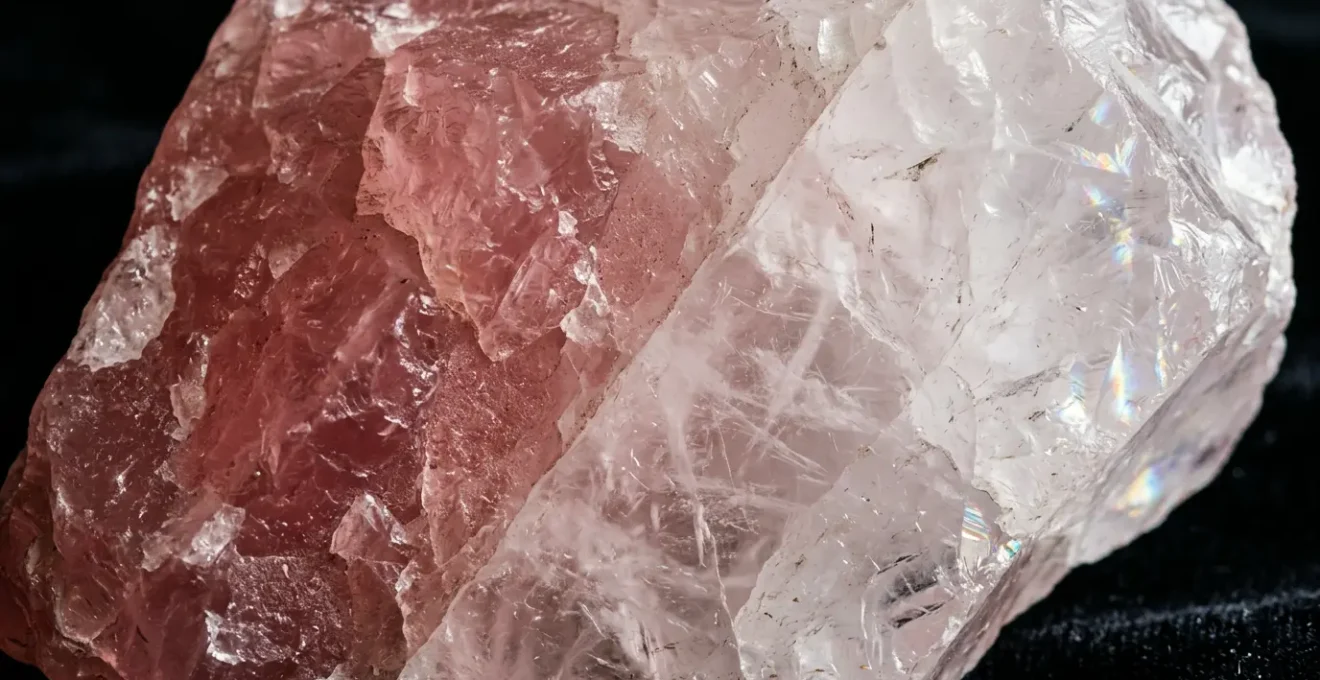
Your rose quartz is fading not because it’s ‘dirty’ or ‘low quality’, but due to a specific, often irreversible, chemical reaction to UV light.
- The stone’s color comes from either stable microscopic mineral inclusions or light-sensitive atomic “color centers”.
- Prolonged sun exposure permanently alters these color centers, turning the delicate pink to a pale, milky white.
Recommendation: True preservation involves understanding your specific stone’s properties and actively managing its exposure to both light and extreme temperatures.
You place a beautiful rose quartz crystal on your windowsill, letting it soak in what you believe is cleansing sunlight. A few months later, you notice its once-vibrant pink hue has become a pale, washed-out version of its former self. It’s a common and disheartening experience for many crystal lovers. The immediate advice is often simple: keep it out of the sun. While correct, this advice barely scratches the surface of the fascinating science at play.
The fading of rose quartz is not a simple bleaching effect. It is a complex process rooted in quantum physics and mineralogy, and understanding it is the key to truly caring for your stones. The crucial, often-overlooked fact is that not all rose quartz is created equal. The very origin of its pink color determines its stability. Is the pink from microscopic needles of a different mineral embedded within the quartz, or is it from atomic-level impurities that create unstable “color centers”? Answering this question changes everything about how you should care for your crystal.
This deep dive moves beyond generic warnings to provide a mineralogist’s perspective on the photosensitivity of quartz. We will explore the different causes of its pink color, the mechanics of UV-induced fading, and why related stones like amethyst suffer a similar fate. More importantly, you will learn not just what to avoid, but why, empowering you to become a more knowledgeable and effective guardian of your crystal collection. The fading may be permanent, but preventing it is entirely possible with the right knowledge.
Summary: Why Rose Quartz and Other Gems Fade
- Why Does Your Rose Quartz Have Cloudy Lines Inside the Stone?
- How to Tell if Your Rose Quartz Roller is Real Stone or Pink Glass?
- Cabochon or Faceted: Which Cut Shows Off the Pink Colour Best?
- The Risk of Thermal Shock When Cleaning Rose Quartz in Hot Water
- How to Identify if Your Rose Quartz Has a Rare 6-Ray Star?
- Why Did Your Amethyst Ring Turn Clear After a Summer Holiday?
- When to Remove Amethyst Jewellery to Prevent Colour Fading in Summer?
- Which Semi-Precious Stone Offers the Best Hardness for Daily Rings?
Why Does Your Rose Quartz Have Cloudy Lines Inside the Stone?
Those cloudy or milky lines within your rose quartz are not flaws; they are the stone’s birthmarks and often the very source of its color and character. From a mineralogical standpoint, these features are known as inclusions. In many cases, the pink hue of common rose quartz is caused by microscopic, fibrous inclusions of a mineral related to dumortierite. These tiny pink fibers are suspended within the clear quartz crystal, acting like a pigment and giving the entire stone its rosy appearance. This type of rose quartz is typically cloudy or translucent precisely because of the density of these inclusions.
Crucially, the color from these dumortierite-like inclusions is generally stable and does not fade in sunlight. The cloudiness is a sign of this more robust form of coloration. However, there is a second, much rarer type of rose quartz. This type is often transparent and gets its color not from inclusions, but from atomic-level irradiation-induced color centers involving phosphorus (P) or aluminum (Al) impurities. These “color centers” are highly unstable and are the primary culprits behind fading. When exposed to UV radiation, the electronic state of these impurities changes, and the pink color vanishes, often permanently.
Therefore, the presence of cloudy lines can be a positive indicator. While gem-grade, transparent rose quartz is prized for its clarity, it is also the most susceptible to losing its color. The cloudy, included variety, while more common, holds its color far more reliably. The internal features of your stone tell a story about its origin and its inherent sensitivity to light.
How to Tell if Your Rose Quartz Roller is Real Stone or Pink Glass?
The popularity of rose quartz in beauty tools like facial rollers has unfortunately led to a market flooded with imitations, most commonly made from pink-dyed glass. Distinguishing a genuine stone from a fake is crucial, not just for authenticity but because their properties are entirely different. A real rose quartz roller will feel cool to the touch due to the stone’s higher thermal conductivity, and it will often display the natural internal features we’ve discussed, such as cloudy lines, internal fractures, or uneven color distribution known as zoning.
Glass imitations, by contrast, tend to warm up quickly in your hand. They often appear perfectly uniform in color and may contain tiny, perfectly spherical air bubbles, a tell-tale sign of the manufacturing process. The most definitive test, however, relates directly to the stone’s photosensitivity. As one analysis notes, rose quartz can turn white when left for more than five minutes under direct, intense sunlight, whereas the color in pink glass is stable and will not fade. This is a destructive test, of course, so it’s best used as a final confirmation on a piece you are unsure about.
The table below provides a clear, at-a-glance comparison of the key differences to look for when authenticating your rose quartz items. Observing these characteristics will help you ensure you have a genuine piece of quartz and not a simple glass imitation.
| Test Method | Real Rose Quartz | Pink Glass |
|---|---|---|
| UV Exposure Test | Prolonged exposure can cause its pink color to fade. Short periods in the sun are generally safe for cleansing and charging. | Color remains stable indefinitely |
| Thermal Conductivity | Feels noticeably cold to touch, slow to warm up | Warms quickly to room temperature |
| Internal Features | Natural inclusions, cloudy lines, possible zoning | Uniform color, possible spherical bubbles |
| Time to Fade | Rose quartz can turn white when left for more than five minutes under direct sunlight | No fading occurs |
Cabochon or Faceted: Which Cut Shows Off the Pink Colour Best?
The way a gemstone is cut dramatically influences how it interacts with light, which in turn affects how we perceive its color and special characteristics. For rose quartz, the choice between a faceted cut and a smooth, domed cabochon depends entirely on what feature you want to highlight. Faceting, which involves cutting multiple flat planes onto the stone’s surface, is designed to maximize brilliance and sparkle by increasing internal light reflection. This can make a transparent, gem-grade rose quartz appear more lively and bright.
However, this increased light interaction comes with a significant risk. For the photosensitive variety of rose quartz, faceting effectively creates more windows for UV radiation to penetrate the stone, potentially accelerating the fading process. The effect is potent; as mineralogical research shows, a natural specimen was completely bleached within just 10 hours of UV irradiation. This makes faceted rose quartz a delicate choice for jewellery worn frequently outdoors.
Conversely, the cabochon cut is essential for displaying a rare and beautiful phenomenon known as asterism. As the Gem Society explains, this effect requires a specific type of inclusion and cut to be visible:
Asterism, or the ‘star stone’ effect, occurs rarely in quartz but is especially striking in rose quartzes. Since these gems may contain microscopic inclusions of rutile needles, cabs can sometimes show a six-rayed star when properly cut.
– Gem Society, Rose Quartz Value, Price, and Jewelry Information
This “star” is created by light reflecting off perfectly aligned rutile needle inclusions within the stone. A faceted cut would completely obscure this effect. Therefore, if the goal is to reveal a hidden star, a cabochon is not just better—it’s the only option.
The Risk of Thermal Shock When Cleaning Rose Quartz in Hot Water
While rose quartz is a relatively durable gemstone, its physical integrity can be compromised by more than just light. A significant, often-overlooked risk is thermal shock. This occurs when the stone experiences a rapid and extreme change in temperature, such as being plunged from a cold environment into hot water. This sudden temperature gradient can cause the crystal lattice to expand or contract unevenly, leading to the formation of internal fractures and potentially causing the stone to crack.
Despite its respectable hardness of 7 on the Mohs scale, rose quartz is particularly vulnerable to thermal shock because it frequently contains the very inclusions that give it its color. These internal features create microscopic stress points within the crystal structure, making it less resilient to sudden temperature changes than a perfectly uniform stone. For this reason, using mechanical cleaning systems like ultrasonic or steam cleaners is strictly advised against, as they can exacerbate these internal weaknesses.
The safest way to clean your rose quartz jewellery is with a gentle, manual approach. Instead of sunlight, many collectors prefer to cleanse and charge their photosensitive stones under the soft, indirect light of the moon. For physical cleaning, follow this simple protocol:
- Use only lukewarm water to avoid temperature extremes.
- Add a single drop of a mild, ammonia-free detergent or dish soap.
- Gently scrub the stone with a very soft brush, such as a baby toothbrush.
- Rinse thoroughly with lukewarm water and pat dry with a soft, lint-free cloth.
How to Identify if Your Rose Quartz Has a Rare 6-Ray Star?
The appearance of a floating, six-rayed star on the surface of a gemstone—a phenomenon called asterism—is one of the most captivating optical effects in the mineral world. While common in stones like star sapphires and rubies, it is significantly rarer in quartz. When it does occur in rose quartz, the effect is particularly magical. This star is not a pattern within the stone, but an illusion of light created by reflection or transmission through microscopic, needle-like inclusions of rutile that are aligned in parallel groups.
Interestingly, the star in rose quartz is typically caused by diasterism, where the effect is created by light *transmitted through* the stone, rather than epiasterism, which is caused by light *reflecting off* the surface of inclusions as seen in sapphires. This is why star rose quartz often has a soft, ethereal glow. To see this effect, the stone must be cut into a cabochon with the dome oriented correctly to the internal crystal structure. Finding the star requires a specific lighting setup, but it’s a rewarding treasure hunt you can do at home.
This simple process will help you search for the elusive star in your own cabochon-cut rose quartz. The key is using a single, focused light source to create the sharp contrast needed for the star to appear.
Action Plan: Revealing the Hidden Star in Your Rose Quartz
- Use a single-point light source like a penlight or your phone’s torch. A bright, focused beam is essential.
- Work in a dimly lit room to maximize the contrast between the stone and the star effect.
- Position the light source directly above and slightly behind your viewing angle, looking straight down onto the dome of the cabochon.
- Slowly rotate the stone in your fingers. The star is not static; it should appear to glide smoothly across the curved surface as the stone moves.
- Adjust the angle of the light and your viewing position. The star’s visibility can be highly dependent on the precise geometry of the light, the stone, and your eye.
Why Did Your Amethyst Ring Turn Clear After a Summer Holiday?
The tale of a cherished amethyst ring losing its vibrant purple after a sunny vacation is a classic cautionary tale in the gem world. Like its pink cousin, amethyst is a variety of quartz whose color is notoriously sensitive to UV light. The mechanism is remarkably similar to that of photosensitive rose quartz, involving unstable color centers created by natural irradiation deep within the Earth.
As experts at Crystal Destiny explain, the specific chemistry involves iron impurities within the quartz lattice. They note the process clearly:
The purple hue in amethyst comes from iron impurities that have been naturally irradiated within the earth. When exposed to sunlight, this iron can oxidize further, causing the purple to fade to a pale lavender or even clear quartz.
– Crystal Destiny, Crystals to Never Leave in Sunlight: Protect Your Collection
This fading is not a defect but an inherent property of the stone. While the transformation might take weeks or months of continuous exposure, a summer holiday involving long days at the beach or by the pool can provide a concentrated dose of UV radiation sufficient to cause noticeable fading. According to mineralogical observations, the fading rate varies among gems. Rose quartz is known to fade quickly, sometimes within a year of regular sun exposure, while amethyst fades at a slower rate. Nonetheless, the change is cumulative and, for all practical purposes, irreversible.
When to Remove Amethyst Jewellery to Prevent Colour Fading in Summer?
Knowing that amethyst and rose quartz fade in sunlight is one thing; knowing when the risk is highest is key to practical prevention. Summer, with its long days and intense sun, is prime time for UV damage. The key is to think about jewellery not just as an accessory but as a delicate object that requires mindful protection during certain activities. It’s not necessary to hide your jewellery away all season, but you should be strategic about when you wear it.
Certain situations dramatically increase UV exposure, either through duration or intensity. These are the moments when it is wisest to remove your photosensitive crystal jewellery and store it safely in a pouch or box:
- Beach Days: This is a triple threat. You have direct overhead sun, plus UV rays reflecting off both the sand and the water’s surface, multiplying the exposure.
- Swimming Pools: Similar to the beach, the surface of the water acts like a mirror, bouncing UV radiation onto your skin and jewellery.
- Gardening or Hiking: Any prolonged outdoor activity, even on a partly cloudy day, leads to significant cumulative UV exposure.
- Riding in a Convertible: This provides continuous, direct exposure with no protection.
- Working Near a Sunny Window: Standard glass windows block most UVB rays but allow a significant portion of UVA rays to pass through, which are also responsible for color fading over time.
The speed of fading can be surprising. While amethyst might take several weeks of daily exposure to show changes, crystal experts warn that some highly photosensitive stones like deep purple amethyst or kunzite can show visible fading in just a few hours of direct sunlight. The best policy is one of precaution: if you’re planning to be in intense, direct sun for an extended period, leave your vulnerable gems at home.
Key takeaways
- The fading of rose quartz is a chemical reaction in unstable “color centers,” not a simple bleaching.
- Its cause of color (stable inclusions vs. sensitive impurities) determines its resistance to UV light.
- Proper care requires managing both light exposure to prevent fading and temperature changes to avoid thermal shock.
Which Semi-Precious Stone Offers the Best Hardness for Daily Rings?
When choosing a gemstone for a ring intended for daily wear, durability is paramount. While we’ve focused on color stability, physical hardness is an equally critical factor. The Mohs scale, which measures a mineral’s resistance to scratching, is the standard reference. A higher number indicates greater durability. With a hardness of 7, both rose quartz and amethyst are reasonably durable and can be suitable for daily wear with some care. They are harder than steel, but can be scratched by common materials like sand (which is also quartz) or more durable gemstones.
However, as experts at Satin Crystals point out, durability is a multi-faceted issue: Sunlight has UV rays that may degrade the chemical bonds determining a crystal’s color… Heat can change the color centers by fading or darkening the stone. Chemicals like acid or harsh cleaning solutions can also strip the crystal’s color.
Therefore, the best stone for daily wear combines high Mohs hardness with excellent stability against light, heat, and chemicals.
The following table, based on an analysis of gemstone durability factors, compares several popular semi-precious stones, putting their hardness in the context of their UV stability to give a more holistic “Daily Wear Rating.”
| Gemstone | Mohs Hardness | UV Stability | Overall Daily Wear Rating |
|---|---|---|---|
| Sapphire | 9 | Excellent | Excellent |
| Rose Quartz | 7 | Poor – charge your crystals under moonlight instead. This is a superior option to sunlight for vulnerable stones like Amethyst and Rose Quartz | Moderate |
| Amethyst | 7 | Poor – fades readily | Moderate |
| Tourmaline | 7-7.5 | Good (varies by color) | Good |
| Aquamarine | 7.5-8 | Moderate | Good |
As the table shows, while quartz varieties are hard enough for many situations, stones like sapphire (hardness 9) offer superior resistance to both scratching and fading, making them an excellent choice for a truly worry-free daily ring. Tourmaline and aquamarine also present good compromises, offering slightly better hardness and stability than quartz.
By understanding the science behind your gemstone’s beauty, you move from a passive owner to an active, knowledgeable custodian. Protecting the delicate color of rose quartz or amethyst is not about fearfully hiding them away, but about a mindful partnership with these beautiful, natural objects.