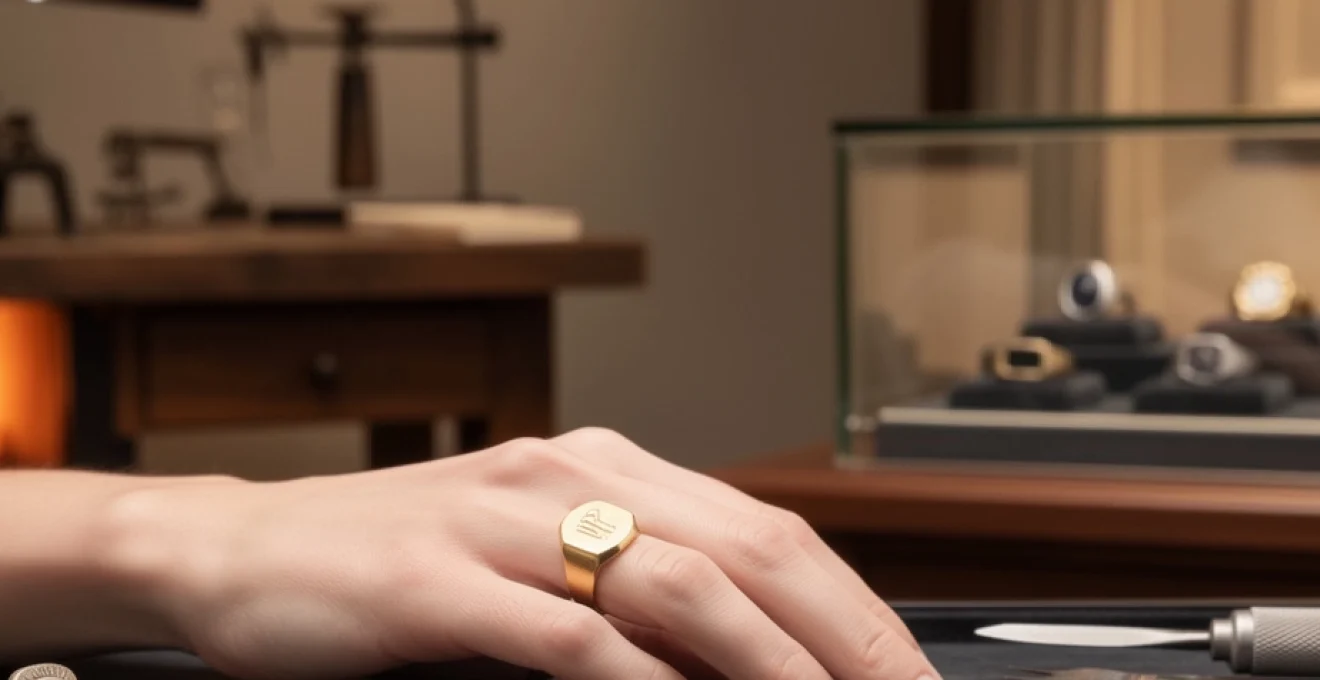
# Why signet rings remain a timeless statement in personal jewellery
Signet rings occupy a unique position in the jewellery landscape, straddling the line between functional object and deeply personal ornament. Unlike fleeting fashion trends that emerge and fade within seasons, these distinctive pieces have maintained their cultural relevance across millennia. From the clay tablets of ancient Mesopotamia to the contemporary runways of Paris and Milan, signet rings have consistently served as markers of identity, authority, and individual expression. Their enduring appeal lies not merely in aesthetic beauty, but in the profound human need to leave a mark—both literally and figuratively—on the world. Today, as consumers increasingly seek jewellery with meaning beyond mere decoration, signet rings are experiencing a remarkable renaissance, attracting everyone from heritage collectors to minimalist millennials seeking personalised luxury.
Historical evolution of signet rings from ancient mesopotamia to modern day
The story of signet rings begins not with jewellery as we understand it today, but with the fundamental human need for authentication and identity verification. These pieces evolved alongside the development of writing, commerce, and social hierarchies, adapting to serve the specific requirements of each era whilst maintaining their core function as personal seals. Understanding this evolution reveals why signet rings possess such enduring cultural weight and continue to resonate with contemporary wearers seeking connection to historical traditions.
Cylinder seals and authentication in ancient mesopotamian society
The earliest predecessors to signet rings appeared in ancient Mesopotamia around 3500 BCE in the form of cylinder seals—small carved stone cylinders that could be rolled across wet clay to create an impression. These portable authentication devices were essential in a society conducting increasingly complex commercial transactions. Whilst not technically rings, cylinder seals established the fundamental principle that would define signet jewellery: a personal mark that could verify identity and authorise documents. As metalworking techniques advanced, craftsmen began mounting these carved seals onto finger rings, creating the first true signet rings around 2500 BCE. These early examples typically featured carved semi-precious stones such as lapis lazuli or carnelian, set into bronze or copper bands. The images carved into these seals ranged from religious symbols to depictions of animals, each serving as a unique identifier for the owner.
Roman intaglio signet rings as legal identity markers
Roman civilisation elevated the signet ring from practical tool to status symbol and legal instrument. By the Republican period, signet rings had become so integral to Roman legal and commercial life that specific laws governed their use. Intaglio engraving—where designs were carved into the surface of gemstones rather than raised above it—became the dominant technique, creating impressions that stood proud in sealing wax. The Romans developed sophisticated glyptics, the art of gem engraving, producing extraordinarily detailed miniature carvings that depicted everything from mythological scenes to portraits of family members. These rings served multiple functions: they authenticated wills and contracts, indicated social rank (initially only free citizens could wear gold rings), and expressed personal taste and cultural refinement. The destruction of a person’s signet ring could effectively erase their legal identity, demonstrating the profound connection between these objects and personal authority.
Medieval heraldic signets and noble family crests
The medieval period witnessed the integration of signet rings into the complex system of heraldry that defined European aristocratic society. As literacy remained limited and family lineages grew increasingly important for inheritance and political alliances, heraldic devices became essential identifiers. Noble families commissioned signet rings bearing their coat of arms, which were used to seal correspondence, authenticate orders, and mark property. These rings often represented significant financial investment, crafted in gold and featuring precious gemstones chosen both for beauty and symbolic meaning. The right to bear arms and use a heraldic signet became a jealously guarded privilege, with unauthorised use punishable as forgery. This period also saw the emergence of ecclesiastical signets used by bishops and abbots to authenticate church documents, establishing parallel traditions of religious and secular signet use that would continue for centuries.
Victorian era mourning signets and sentimental jewellery practices
The Victorian era transformed signet rings from purely functional or heraldic objects into vehicles for deeply personal emotional expression
The Victorian era transformed signet rings from purely functional or heraldic objects into vehicles for deeply personal emotional expression. As mourning culture flourished under Queen Victoria’s influence, jewellers began incorporating hairwork, enamel portraits, and symbolic motifs such as willows, urns, and clasped hands into signet designs. Black enamel borders, jet inlay, and engraved inscriptions like “In Memoriam” turned the once-administrative signet into an intimate memorial worn daily. These mourning signets often held locks of hair from deceased loved ones beneath hinged bezels, merging the idea of a legal seal with that of a private reliquary. In many families, such pieces were passed down through generations, preserving both grief and affection in a tangible, wearable archive of sentiment.
Technical craftsmanship and metalworking techniques in signet ring production
Behind every signet ring that feels effortlessly timeless lies a complex blend of metallurgy, sculpture, and microscopic engraving. While the basic concept—a flat or gently domed surface designed to carry a personal emblem—has remained stable for thousands of years, the technical means of creating it have evolved dramatically. Today’s artisans draw on both ancient hand skills and cutting-edge technology to produce signet rings that can withstand daily wear, yet still carry razor-sharp detail in their crests, monograms, and motifs. Understanding how a signet ring is made helps explain why high-quality pieces can last long enough to become family heirlooms.
Lost-wax casting method for custom signet ring fabrication
Most bespoke signet rings begin with the lost-wax casting method, a process that has roots in antiquity but has been refined by modern precision tools. In this technique, the jeweller first sculpts a detailed wax model of the ring, either by hand-carving or using CAD design and 3D printing to achieve exact proportions. This wax model is then encased in a refractory investment material and heated so that the wax melts and drains away, leaving a negative cavity in the shape of the ring. Molten gold, platinum, or silver is poured into this cavity, taking on every nuance of the original wax design. Once the investment is broken away and the casting cleaned, the result is a solid metal signet ring blank, ready for further shaping, engraving, and polishing. This approach allows for highly customised dimensions—thicker shanks for durability, slightly oversized heads for detailed family crests, or streamlined profiles for minimalist signet rings suited to everyday wear.
Hand engraving versus laser etching for monogram detailing
The defining feature of any signet ring is its engraving, and the method used has a significant impact on both aesthetics and longevity. Traditional hand engraving involves a skilled craftsman using tiny steel gravers to carve directly into the metal surface, creating V-shaped cuts that catch the light and, in the case of seal engraving, produce crisp wax impressions. This technique allows for subtle modulation of depth and line weight, giving heraldic beasts, scrollwork, and lettering a sense of life and three-dimensionality. It is slow, meticulous work, but the result is a surface that will soften gracefully over decades of wear while remaining legible.
Laser etching, by contrast, uses focused beams of light to vaporise microscopic layers of metal according to a digital design. It excels at reproducing ultra-fine details, complex logos, or contemporary minimalist monograms with remarkable precision and consistency. For many modern wearers who prioritise clean lines and rapid turnaround, laser engraving offers practical advantages, especially for corporate signet rings or personalised gifts. However, because laser-etched lines are often shallower than hand-cut ones, they may not be suitable for traditional wax-seal use and can wear more quickly on heavily used surfaces. For this reason, many heritage jewellery houses still recommend hand seal engraving for clients who want functional signet rings as well as visually striking ones.
Bezel setting construction and hardstone intaglio mounting
While many signet rings feature a solid metal face, others are designed to hold carved hardstones—classically bloodstone, carnelian, onyx, or sardonyx—engraved with intaglio designs. To secure these, jewellers construct a bezel setting: a continuous rim of metal that encircles the stone and is gently pushed over its edges. This creates a protective frame that shields the stone from impact and keeps it firmly in place during daily wear. Because hardstones can be brittle if struck at the wrong angle, the proportions of the bezel—its height, thickness, and contour—are carefully calibrated to balance security with elegance.
Hardstone intaglios are often created separately, sometimes by specialist lapidary engravers who focus solely on carving into gemstones. Once complete, the stone is precisely measured and paired with a custom-made bezel, ensuring a snug, almost seamless fit. This modular approach means that antique intaglio stones can be remounted into new signet ring settings, breathing contemporary life into historical gems. For clients drawn to the idea of a “modern antique,” combining a new gold band with a vintage intaglio is a way to carry centuries of history on the hand while enjoying the comfort and proportions of current jewellery design.
Hallmarking standards and precious metal alloy compositions
Because signet rings are often worn every day and intended to be passed down, the choice of metal and its hallmarking are more than aesthetic considerations—they are guarantees of durability and authenticity. Precious metals are almost always used in alloy form, combining pure gold, silver, or platinum with other metals to improve hardness, colour, and wear resistance. For instance, 18ct gold contains 75% pure gold mixed with metals such as copper, silver, or palladium to achieve yellow, rose, or white tones; 9ct gold, common in the UK, contains 37.5% gold and offers enhanced hardness at a more accessible price point. Platinum, prized for its density and naturally white colour, is typically used in high-purity alloys such as 950 platinum, making it exceptionally resistant to wear and ideal for finely detailed engraving.
Hallmarking systems—administered by official assay offices in countries such as the UK, France, and Switzerland—verify these compositions through independent testing. A typical hallmark on a signet ring might include a fineness mark (for example, 750 for 18ct gold), an assay office symbol, and sometimes a maker’s mark that identifies the workshop. For collectors and those commissioning bespoke pieces, understanding hallmarks is akin to reading the passport of the ring: they confirm that the piece is what it claims to be and provide a traceable link to its origin. When you invest in a signet ring with clear, reputable hallmarks, you are not only buying a piece of jewellery, but also securing its long-term value and provenance.
Contemporary design interpretations by heritage jewellery houses
As signet rings return to prominence in personal jewellery collections, heritage houses have played a pivotal role in reinterpreting this classic form for modern tastes. Rather than simply reproducing archival designs, many brands are weaving the signet’s historic DNA into broader signature collections, aligning it with recognisable motifs that customers already love. The result is a new generation of signet rings that feel both rooted in tradition and unmistakably contemporary. These pieces often blur the line between unisex jewellery and gendered design, reflecting wider shifts in how we wear and perceive luxury accessories.
Cartier’s tank-inspired rectangular signet collections
Cartier, famed for its architectural Tank watch, has translated that same geometric clarity into signet rings with strong, rectangular silhouettes. Rather than a classic oval head, these Tank-inspired signets echo the clean lines and elongated profiles of the original timepiece, creating a graphic, almost industrial elegance. The flat top of the ring naturally lends itself to engraving, whether that’s a single initial, a discreet corporate emblem, or a minimalist geometric motif that complements the overall design. For wearers who favour modern signet rings that sit comfortably alongside a watch or cufflinks, this rectangular format feels especially coherent.
Cartier often pairs these sharp profiles with luxurious finishes—high-polish yellow or rose gold, pavé diamond borders, or contrasting brushed and mirror-polished surfaces. This play of light across crisp planes turns the signet from a purely symbolic piece into a sculptural object that animates the hand with every gesture. In a sense, these Tank-inspired signets are to traditional heraldic rings what modernist architecture is to medieval castles: a reimagining of enduring concepts—authority, identity, permanence—through a contemporary visual language.
Tiffany & co. atlas and return to tiffany signet adaptations
Tiffany & Co. has also embraced the signet ring revival, integrating the form into its best-known collections such as Atlas and Return to Tiffany. In the Atlas range, Roman numerals—originally inspired by the clock on the brand’s Fifth Avenue flagship—wrap around or frame the signet head, combining timekeeping symbolism with the signet’s heritage as a marker of continuity and legacy. These designs are particularly popular with clients who want a signet ring that feels unmistakably Tiffany, yet still offers room for subtle personalisation via initials or dates engraved on the inner band.
The Return to Tiffany adaptations, by contrast, play with the brand’s iconic tag motif, transforming the familiar heart or oval tag into a compact signet-style top. Often crafted in sterling silver or 18ct gold and sometimes accented with enamel, these pieces appeal to a younger audience seeking casual, everyday signet rings that still carry a sense of brand heritage. For many first-time buyers, such designs become a gateway into the broader world of personalised jewellery—an accessible way to experiment with signet styling without committing to a fully bespoke family crest.
Bulgari’s roman-inspired coin and monogram signet ranges
Bulgari leans heavily into its Roman roots when it comes to signet ring design, drawing on ancient coins, inscriptions, and architectural details from the Eternal City. Many of its signet-inspired pieces feature round, coin-like heads engraved or set with motifs reminiscent of Roman currency—profiles of deities, laurel wreaths, or Latin lettering. This coin-signet hybrid speaks directly to the signet’s origin as a tool of commerce and authority, while simultaneously referencing the archaeological treasures on display in Rome’s museums. For wearers fascinated by classical history, these rings function as portable artefacts with contemporary craftsmanship.
Alongside coin designs, Bulgari has also developed bold monogram signets that showcase the brand’s signature lettering and double-logo structures. Wide gold bands with raised or engraved “BVLGARI” scripts transform the signet from an intimate personal seal into a confident public statement. Yet even here, there is scope for personalisation: inner-band inscriptions, hidden dates, or subtle gemstone accents allow clients to layer their own narratives onto the brand’s strong visual DNA. In all of these interpretations, the core idea remains the same—a signet ring as a compact canvas where heritage, branding, and personal identity intersect.
Cultural symbolism and gender-neutral jewellery movement
Beyond individual brands, the renewed popularity of signet rings is deeply connected to broader cultural shifts in how we understand identity, heritage, and gender expression. Historically, signet rings were closely associated with male authority—kings, nobles, merchants, and clerics used them to exercise legal power. Today, that exclusivity has largely dissolved. Signet rings now appear on the hands of people of all genders, ages, and backgrounds, functioning as gender-neutral jewellery that communicates story rather than status alone. This democratization reflects a wider move towards personal symbolism in accessories, where the meaning you ascribe to a piece matters more than adherence to old etiquette rules.
Social media and celebrity culture have accelerated this shift, with musicians, actors, and influencers styling chunky gold signet rings alongside nail art, stacks of delicate bands, or even engagement rings. Instead of being confined to the pinky finger of the non-dominant hand, signets now migrate across the hand—worn on thumbs, index fingers, or as part of ring stacks that mix metals and textures. This fluid approach challenges the idea that there is a “correct” way to wear a signet ring; instead, the emphasis lies on what feels authentic to the wearer. In this sense, the modern signet ring becomes less a badge of inherited privilege and more a versatile tool for self-expression, equally at home in a minimalist capsule wardrobe or an avant-garde, maximalist look.
Customisation options and personalisation trends in signet jewellery
If there is one reason signet rings continue to resonate so powerfully, it is their unparalleled capacity for personalisation. Few other jewellery forms offer such a generous blank canvas for storytelling—whether that story centres on ancestry, profession, belief, or a more abstract set of values. Contemporary clients are embracing this flexibility, commissioning bespoke signet rings that range from faithful reproductions of centuries-old heraldic achievements to ultra-minimalist initial rings that whisper rather than shout. The common thread is the desire to wear something that feels genuinely “yours,” not just another off-the-shelf accessory.
Family coat of arms and heraldic achievement reproduction
For those with an interest in genealogy or established heraldic records, reproducing a family coat of arms on a signet ring remains a classic choice. This process typically begins with research: confirming the correct blazon (formal description) of the arms, distinguishing between different branches of a family, and ensuring that any legal or cultural guidelines are respected. Once the correct heraldic design is identified, the challenge is one of translation—taking a complex shield, helm, crest, mantling, and motto, and distilling them into a composition that reads clearly at ring size. Experienced heraldic engravers know how to simplify or emphasise elements so that lions, eagles, chevrons, and fleurs-de-lis remain recognisable, even when reduced to a few millimetres across.
Many clients choose to adapt historical arms rather than reproduce them verbatim, adding small details that reflect contemporary life. A tiny book to represent academic achievement, a musical symbol for a career in the arts, or a subtle change in tincture (colour) to mark a new chapter in the family story—these adjustments keep heraldry alive as a living language rather than a fossilised one. When executed with care, a heraldic signet ring becomes a powerful conversation starter, connecting its wearer not only to past generations but also to a wider cultural tradition of symbolism and storytelling.
Bloodstone, carnelian, and onyx in traditional signet design
Traditional signet rings often rely on the quiet drama of hardstones like bloodstone, carnelian, and onyx, each bringing its own visual and symbolic character. Bloodstone—a dark green jasper flecked with red—has long been associated with courage and protection, its contrasting colours lending great clarity to engraved crests when used for seal impressions. Carnelian, with its warm orange-red translucence, was favoured in Roman and Victorian signets alike for its ability to reveal delicate intaglio work under raking light. Onyx, particularly in layered forms such as sardonyx, offers natural colour banding that can be exploited to create striking two-tone engravings, where raised elements appear in one hue against a contrasting background.
Choosing a hardstone for your signet ring is akin to choosing the paper and ink for a letter—the message may be the same, but the medium profoundly shapes its tone and legibility. Practical considerations also come into play: darker stones tend to hide everyday wear better, while lighter or translucent stones showcase fine engraving but may require more careful handling. Many bespoke jewellers now offer curated selections of ethically sourced hardstones, allowing you to select a gem that resonates both aesthetically and symbolically. Whether you are drawn to the deep greens of bloodstone or the graphic starkness of black onyx, the stone effectively becomes the stage on which your personal emblem performs.
Contemporary minimalist monogramming and initial engraving
Not everyone wants a full heraldic achievement on their finger, and the rise of minimalist aesthetics has made simple monogram signet rings especially popular. These designs often feature clean, undecorated bands with a modestly sized head, engraved with one to three initials in a carefully chosen typeface. The effect is more akin to a designer logo or typographic logo mark than to a traditional coat of arms, aligning with modern preferences for subtle branding and pared-back luxury. For professionals who want discreet yet personalised jewellery that pairs easily with business attire, such initial signets offer a refined solution.
Advances in digital design and engraving mean that you can now choose from a vast array of fonts and layouts, or even commission a custom monogram that merges letters into a single, interlocking symbol. Some clients opt for negative-space engravings, where the letters are formed by the absence of metal rather than raised lines, creating a contemporary, almost architectural feel. Others hide additional messages on the inside of the band—dates, coordinates, or short phrases that only the wearer knows about. In all these cases, the signet ring continues its age-old function as a bearer of coded information, but the codes themselves are updated to reflect modern lives and relationships.
Investment value and heirloom potential of precious metal signets
Beyond their aesthetic and emotional appeal, well-made signet rings also offer tangible investment value, particularly when crafted from high-quality precious metals and executed by reputable makers. While it would be misleading to treat jewellery solely as a financial asset—resale markets and fashion cycles can be unpredictable—signet rings occupy a special category because their relevance tends not to depend on passing trends. Gold and platinum signets in classic shapes, with thoughtful engraving and clear hallmarks, tend to hold their desirability over decades. They are, in effect, portable stores of value that can be worn and enjoyed daily while also forming part of a long-term legacy.
The true return on investment, however, often reveals itself in the heirloom dimension. When a signet ring is passed from one generation to the next, it transfers more than metal and gemstone value; it carries stories, habits, and family narratives. A grandparent’s initials, a crest associated with a migration or a business founded decades ago, even small scratches picked up during a lifetime of use—all become part of the object’s patina, both literal and metaphorical. This is why so many people choose to commission signet rings at key life milestones: graduations, marriages, career achievements, or the birth of a child. They are marking a moment in time with something designed to outlast them.
From a practical standpoint, if you are considering a signet ring as a future heirloom, it is worth prioritising quality over quantity. Opt for solid rather than hollow construction, sufficient metal thickness on the head to allow for future re-engraving, and classic profiles that will not feel dated in a decade. Keep any documentation—design sketches, invoices, certificates of metal fineness—as part of the ring’s archive, just as you might keep papers for a piece of fine art. In doing so, you ensure that your signet ring remains not only a timeless statement in personal jewellery today, but also a meaningful inheritance that future generations will be proud to wear and interpret in their own way.