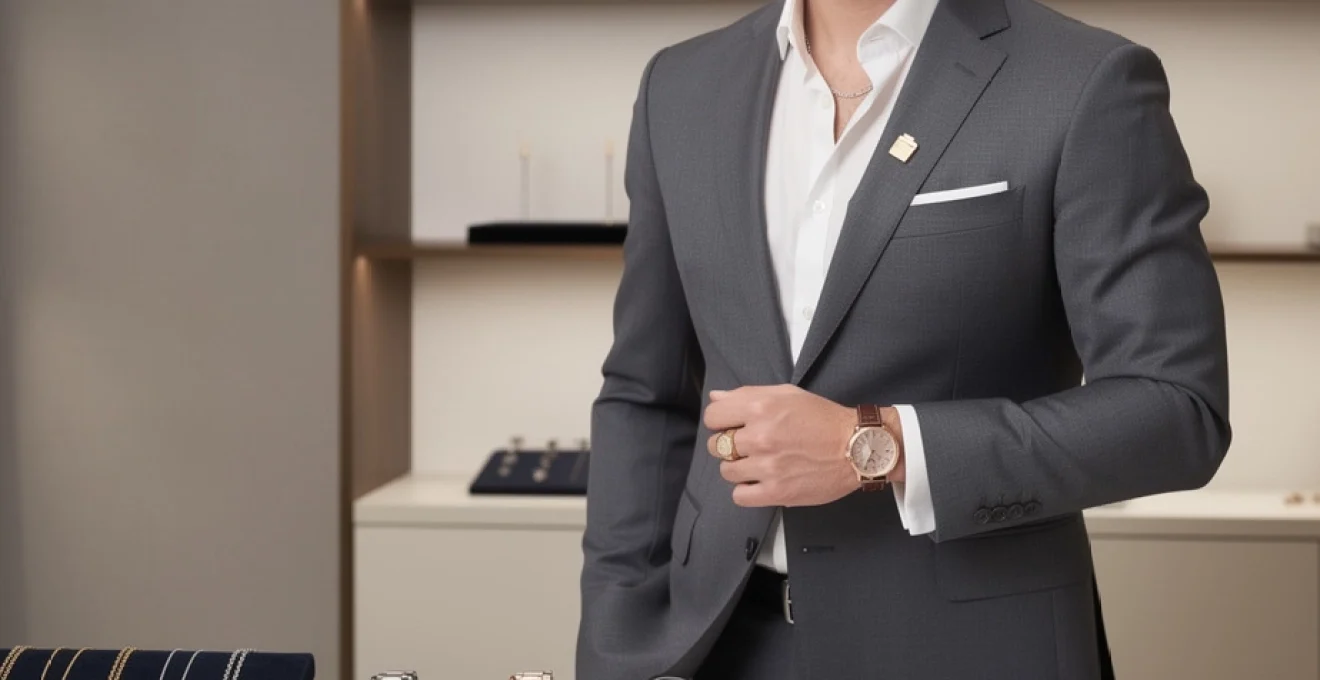
The landscape of masculine accessories has undergone a remarkable transformation over the past decade. Contemporary menswear embraces jewellery as an essential element of personal style, moving far beyond the traditional confines of wedding bands and wristwatches. This evolution reflects broader cultural shifts towards self-expression and the blurring of rigid gender norms in fashion. Modern gentlemen recognise that well-chosen accessories can elevate their appearance whilst maintaining professional credibility and masculine sophistication.
Quality craftsmanship and refined aesthetics now define the masculine jewellery market. Discerning consumers seek pieces that demonstrate artisanal excellence rather than ostentatious display. The emphasis has shifted from quantity to curation, with successful styling requiring careful consideration of materials, proportions, and contextual appropriateness. Understanding these nuances enables you to build a collection that enhances your personal aesthetic whilst respecting traditional notions of masculine elegance.
Essential men’s jewellery categories for contemporary style
The foundation of any sophisticated masculine jewellery collection rests upon several key categories, each serving distinct stylistic and functional purposes. These essential pieces form the backbone of contemporary masculine accessorising, offering versatility across professional and social contexts. The modern approach prioritises quality over quantity, with each piece selected for its ability to complement existing wardrobe elements whilst maintaining individual character.
Signet rings: heritage craftsmanship and modern interpretations
Signet rings represent one of the oldest forms of masculine jewellery, with historical significance spanning centuries. Traditional signet rings featured family crests or monograms engraved into precious metals, serving as personal seals for important documents. Contemporary interpretations maintain this heritage whilst adapting to modern sensibilities through streamlined profiles and minimalist engravings.
The most sophisticated modern signet rings feature understated proportions that avoid overwhelming the wearer’s hand. Premium examples utilise 18-karat gold or platinum construction with hand-engraved surfaces that demonstrate exceptional craftsmanship. The positioning traditionally favours the little finger, though contemporary styling allows for greater flexibility depending on personal preference and ring size considerations.
Minimalist chain necklaces: sterling silver and gold vermeil options
Chain necklaces have emerged as cornerstone pieces in contemporary masculine jewellery collections. The most versatile options feature medium-weight construction that provides presence without appearing ostentatious. Sterling silver chains offer excellent value and neutral tone compatibility, whilst gold vermeil provides luxurious appearance with practical durability considerations.
Length selection significantly impacts both aesthetic and practical considerations. Standard lengths between 20-24 inches accommodate most body types whilst allowing the chain to rest appropriately beneath shirt collars. The chain’s visual weight should complement your physical build – heavier individuals can successfully wear more substantial chains, whilst slighter builds benefit from refined, lighter construction.
Classic timepieces: mechanical movements and refined case materials
Mechanical timepieces represent the pinnacle of masculine accessory sophistication, combining functional precision with artisanal craftsmanship. The resurgence of mechanical movements reflects appreciation for traditional horological skills and tangible engineering excellence. Premium examples feature complications that demonstrate technical mastery whilst maintaining legible dial layouts for practical usage.
Case materials significantly influence both aesthetic character and long-term durability. Stainless steel provides exceptional resilience and neutral tone compatibility, whilst precious metal cases offer increased luxury positioning. The most versatile timepieces feature classic proportions with case diameters between 38-42mm, accommodating various wrist sizes without appearing oversized or diminutive.
Cufflinks: traditional Mother-of-Pearl and contemporary geometric designs
Cufflinks serve as essential formal accessories whilst offering opportunities for subtle personal expression. Traditional mother-of-pearl options provide timeless elegance with natural iridescence that complements formal attire beautifully. Contemporary geometric designs allow for greater creativity whilst maintaining professional appropriateness through refined proportions and quality materials.
The most successful cufflink selections coordinate with existing accessories through consistent metal tones and proportional harmony. Quality construction ensures reliable function through spring-loaded or fixed post mechanisms that secure properly without excessive bulk. Premium examples feature hand-finished surfaces with attention to edge detailing and overall finishing quality
For professional environments, classic designs in sterling silver, white gold, or yellow gold remain the most versatile choices. Reserve novelty motifs and brightly coloured enamels for social occasions where dress codes are more relaxed. When in doubt, prioritise understated symmetry, high-quality mechanisms, and finishes that echo the rest of your men’s jewellery collection.
Understated bracelets: leather, metal, and hybrid construction techniques
Understated bracelets have become essential for men who want to introduce jewellery gradually without compromising a polished appearance. Slim leather bands, brushed metal cuffs, and refined chain bracelets sit comfortably alongside a watch, adding visual interest without dominating the wrist. The key is to ensure the bracelet’s width and visual weight remain in proportion to your watch and overall build.
Leather bracelets, particularly those crafted from full-grain or Italian calf leather, develop an attractive patina over time that echoes the character of a well-worn pair of shoes. Metal bracelets in sterling silver, stainless steel, or titanium offer cleaner, more architectural lines suited to minimal wardrobes. Hybrid constructions combining leather with metal hardware or connectors bridge the gap between casual and refined, making them especially practical for smart-casual office attire.
When stacking multiple bracelets, treat your wrist as a balanced composition rather than a place to showcase every piece you own. One structured metal bracelet paired with a single leather strand usually provides enough complexity for modern men’s jewellery without appearing cluttered. As a guiding principle, avoid wearing more than two bracelets alongside a watch, and prioritise comfort – if you are constantly adjusting a bracelet, it is probably too loose, too heavy, or poorly proportioned.
Premium materials and manufacturing processes in men’s accessories
Discerning collectors increasingly look beyond surface aesthetics to understand how their men’s jewellery is engineered and finished. Material selection and manufacturing processes directly influence durability, comfort, and long-term value. By familiarising yourself with precious metal alloys, gemstone grading, and artisanal techniques, you can distinguish genuinely well-crafted pieces from mass-produced alternatives that merely imitate luxury.
This knowledge is not purely academic; it has practical implications for everyday wear. The metal alloy in your ring affects how it resists scratches, how often it needs polishing, and even whether it may irritate sensitive skin. Similarly, the way a bracelet is finished determines how it will age as it comes into contact with desk edges, shirt cuffs, and the natural oils of your skin. Understanding these factors empowers you to build a men’s jewellery collection that matures gracefully rather than deteriorating quickly.
Precious metal alloys: 18-karat gold, platinum, and palladium properties
For fine men’s jewellery, 18-karat gold remains the benchmark, balancing purity with structural strength. Composed of 75% pure gold and 25% alloying metals, 18k gold offers richer colour and increased resistance to tarnish compared to lower karatages, while being more durable than 22k or 24k options. Yellow, white, and rose gold tones are achieved by adjusting the proportion of copper, silver, palladium, and other metals within the alloy.
Platinum, prized for its density and natural whiteness, has become a preferred choice for high-end wedding bands and luxury watch cases. Its molecular structure means that when platinum is scratched, the metal is displaced rather than lost, allowing skilled jewellers to restore surfaces more easily over time. Platinum’s hypoallergenic properties also make it an excellent option for men with sensitive skin who wish to avoid nickel-containing alloys.
Palladium, part of the same family as platinum, offers similar corrosion resistance with significantly lighter weight. This makes palladium particularly attractive for larger rings and substantial men’s jewellery designs where comfort is a priority. Although less widely recognised than gold or platinum, palladium has gained prominence in recent years as precious metal prices have fluctuated, offering an appealing blend of modernity, resilience, and discrete luxury.
Gemstone selection: diamond cut grades and alternative precious stones
Gemstones in men’s jewellery should enhance a design rather than dominate it. For diamonds, cut quality has a greater visual impact than carat weight alone. Well-cut stones reflect light efficiently, producing brightness and scintillation that remain visible even in modest sizes. When reviewing graded stones, prioritise cut grading first, followed by clarity and colour within your budget parameters.
Whilst diamonds remain the default choice for subtle accents in cufflinks, signet rings, and dress watches, alternative precious stones offer opportunities for more individual expression. Deep blue sapphires, rich green emeralds, and inky black onyx can provide refined contrasts against white metals and warm gold alloys. These stones introduce colour in a controlled, architectural way – more like a considered interior design palette than a flamboyant costume piece.
Would you prefer something more unconventional yet still sophisticated? Consider gemstones such as spinel, tourmaline, or moonstone, which have gained traction in contemporary men’s jewellery collections. These alternatives often represent compelling value when compared with traditional stones, whilst still delivering strong visual impact and narrative depth. As with diamonds, always request information on origin and treatment to ensure ethical sourcing and transparency.
Artisanal crafting techniques: hand-engraving and milgrain detailing
Artisanal techniques differentiate fine men’s jewellery from mass-produced accessories in subtle yet meaningful ways. Hand-engraving, executed by skilled craftsmen using precision tools, introduces depth and character that machine-etched patterns simply cannot replicate. Whether used for monograms on a signet ring or decorative borders on cufflinks, hand-engraving creates a tactile surface that catches light differently from flat, laser-cut designs.
Milgrain detailing – the application of tiny beaded edges along borders – is another hallmark of refined craftsmanship. Originally developed in early 20th-century jewellery, milgrain softens transitions between surfaces and lends a vintage-inspired sophistication to contemporary men’s jewellery. On a wedding band or dress ring, a fine milgrain edge can feel like the sartorial equivalent of a hand-stitched lapel on a bespoke jacket: discreet, but immediately recognisable to those who appreciate such details.
These traditional techniques require time, patience, and manual expertise, which is why they tend to be found on higher-end pieces rather than entry-level designs. When you examine a ring, bracelet, or watch case under magnification, look for crisp, consistent lines, clean transitions, and evidence that finishing has been done by hand rather than left to automated processes. Such signs indicate jewellery that has been crafted to last decades rather than mere seasons.
Surface finishing methods: brushed, polished, and matte texture applications
Surface finishing plays a crucial role in defining the character of men’s jewellery and how it interacts with light. Highly polished finishes offer mirror-like reflection that feels formal and dressy, making them ideal for cufflinks, dress rings, and case bezels on classic timepieces. However, such surfaces show scratches more readily, which is an important consideration for pieces you plan to wear daily.
Brushed and satin finishes provide a more subdued, contemporary aesthetic that many men find easier to integrate into minimal wardrobes. Created by running abrasive tools in one direction across metal surfaces, brushing softens reflections and disguises minor wear. Matte finishes go a step further, diffusing light almost completely and giving jewellery a more architectural, almost industrial feel – particularly effective on wide bands and sculptural cuffs.
In many of the most successful designs, finishes are combined strategically: for example, a polished bezel framing a brushed watch dial, or a signet ring with a matte shank and polished engraving surface. This contrast functions like pairing wool suiting with a silk tie – each texture enhances the other. When selecting finishes for your men’s jewellery collection, consider both visual appeal and how each piece will age under real-world conditions.
Brand analysis: leading houses in masculine luxury jewellery
While independent artisans and emerging labels play an important role in today’s market, a handful of established maisons continue to define benchmarks for masculine luxury jewellery. Understanding the design language and heritage of these houses helps you make informed decisions when investing in statement pieces. Each brand offers a distinct perspective on what refined men’s jewellery should look and feel like.
Rather than chasing logos for their own sake, focus on how each brand’s core collections align with your lifestyle and aesthetic values. Are you drawn to bold architectural forms, or do you prefer discreet, almost minimalist jewellery that reveals its quality only on closer inspection? By answering these questions, you can narrow your attention to those houses whose design codes genuinely resonate with your personal style.
Cartier santos collection: aviation-inspired design heritage
The Cartier Santos collection holds a unique place in the history of men’s jewellery and timepieces. Originally created in 1904 for Brazilian aviator Alberto Santos-Dumont, the watch was one of the first designed specifically to be worn on the wrist rather than kept in a pocket. Its exposed screws and square bezel drew inspiration from industrial architecture and early aviation engineering, lending the design a purposeful, masculine character.
Today’s Santos models preserve this heritage through their geometric cases, Roman numeral dials, and signature screw details on both bezels and bracelets. For men seeking jewellery that bridges the gap between watchmaking and refined metalwork, the Santos offers a compelling option. Stainless steel variants provide everyday robustness, while bi-metal or full-gold executions deliver heightened luxury within the same iconic silhouette.
In a broader men’s jewellery context, the Santos demonstrates how functional objects can evolve into style signifiers with rich backstories. Incorporating such a piece into your collection communicates appreciation for design history and mechanical innovation, rather than a fleeting interest in trend-driven accessories. It is, in many respects, a wearable piece of industrial heritage.
Tiffany & co. men’s line: contemporary interpretations of classic forms
Tiffany & Co. has long been associated with refined jewellery, and its dedicated men’s lines translate that legacy into clean, contemporary forms. Recent collections focus on architectural silhouettes, substantial chains, and sculpted rings that feel deliberately modern without abandoning the brand’s commitment to craftsmanship. The use of sterling silver, 18k gold, and occasionally titanium reinforces a sense of tactile solidity.
Many of Tiffany’s men’s jewellery designs lean towards minimalism, making them particularly suitable for those building a core accessory wardrobe. Think polished signet-style rings without engraving, squared cufflinks with subtle branding, and link bracelets that reinterpret classic chain motifs. These pieces function much like well-cut navy tailoring: versatile, quietly luxurious, and appropriate in almost any setting.
For men seeking an understated yet recognisable design language, Tiffany’s collections provide a coherent framework. You can assemble a ring, bracelet, and necklace combination that shares related lines and proportions, creating a unified aesthetic without appearing overly styled. This cohesion is especially valuable when dressing for professional environments where subtlety is paramount.
David yurman cable motif: signature twisted wire construction
David Yurman’s signature cable motif has become synonymous with sculptural men’s jewellery that balances ruggedness with refinement. Inspired by classical architecture and maritime ropework, the twisted wire construction appears across bracelets, rings, and cufflinks. The result is a tactile, three-dimensional texture that catches light in a distinctive way, differentiating Yurman pieces from flatter, more conventional designs.
In men’s collections, the cable motif is often rendered in sterling silver or mixed with 18k gold accents, creating subtle contrast along edges or end caps. Some designs incorporate gemstones set into polished terminals, offering just enough colour for visual interest without straying into overt opulence. The cables themselves can be rigid or flexible, depending on the piece, with each approach offering a different wearing experience.
What makes the Yurman cable particularly compelling for men’s jewellery is its versatility across dress codes. A slim cable bracelet can sit unobtrusively next to a sports watch during business hours, then become a focal point when worn alone with a rolled-up shirt sleeve. For men who prefer jewellery with a recognisable yet not aggressively branded identity, the cable motif is a strong contender.
Bulgari b.zero1: italian modernist architecture influence
Bulgari’s B.zero1 collection draws inspiration from Rome’s Colosseum and Italian modernist architecture, translating bold structural forms into wearable men’s jewellery. The rings and bracelets are characterised by stacked, cylindrical profiles and engraved logo bands that frame the central volume. This layered construction creates a strong graphic presence, appealing to men who appreciate contemporary design and confident silhouettes.
Available in combinations of 18k yellow, white, and rose gold, as well as ceramic accents, B.zero1 pieces often play with contrasting surfaces and tones. The design’s repetition of concentric forms can be likened to a minimalist sculpture scaled down for the hand or wrist. For those who enjoy statement pieces in their men’s jewellery wardrobe, B.zero1 offers an expressive option that remains rooted in architectural coherence rather than ornament for its own sake.
Do you gravitate towards jewellery that feels almost like wearable architecture? If so, Bulgari’s approach may resonate strongly. While B.zero1 is more assertive than many understated staples, its disciplined geometry ensures it pairs well with sharp tailoring and monochrome outfits, providing a focal point without visual noise.
Professional styling guidelines for workplace and formal events
Navigating men’s jewellery in professional and formal environments requires a strategic approach. The objective is to project competence and polish whilst allowing subtle glimpses of personality. In conservative industries, expectations remain relatively traditional, whereas creative fields often embrace more adventurous accessories. Understanding where your workplace sits on this spectrum is the first step towards making informed styling decisions.
As a practical rule, limit yourself to one visible statement piece in any professional outfit – for example, a refined watch or a single signet ring – then support it with quieter elements. Matching metal tones across your belt buckle, watch, cufflinks, and rings creates a cohesive visual line, much like coordinating leathers in your shoes and belt. When attending formal events, elevate materials and finishing rather than radically increasing the quantity of jewellery.
In boardrooms and black-tie settings alike, restraint communicates confidence. Jewellery should underscore your presence, not compete with your message.
For office wear, focus on slim bracelets, discreet necklaces worn under shirts, and classic cufflinks for days that call for double cuffs. Earrings, large chains, and multiple rings may be perfectly acceptable in certain settings, but if you are unsure, err on the side of simplicity until you understand your organisation’s culture. At formal events, consider upgrading to a dress watch with a leather strap, polished cufflinks in precious metal, and a single elegant ring. Tie bars and lapel pins can be introduced, but only when they contribute to rather than clutter the ensemble.
Investment considerations: valuation metrics and market trends
Beyond aesthetic pleasure, many men now view jewellery as a potential long-term store of value. However, not every piece of men’s jewellery qualifies as an investment in the strict financial sense. Understanding valuation metrics – including metal weight, gemstone quality, brand prestige, and scarcity – helps separate potential heirlooms from purely decorative purchases.
Precious metal content provides a baseline, with gold and platinum pieces holding intrinsic value linked to global commodity markets. That said, the artistic and historical significance of a design can far exceed its melt value. Limited editions from respected maisons, collaborations with noted designers, and vintage pieces from iconic collections sometimes appreciate over time, especially when accompanied by original documentation and packaging.
Recent market trends show strong demand for high-quality vintage sports watches, signed jewellery from major houses, and pieces with clear provenance. Yet liquidity in the jewellery market is not uniform; selling back mass-produced items or generic designs can be challenging and may involve significant discounts. If your primary goal is financial return, you may be better served by focusing on a small number of exceptional pieces rather than a broad assortment of mid-range items.
For most men, the wisest approach is to view jewellery as a “use and enjoy” asset: something that delivers daily aesthetic and emotional value, with the possibility of retaining or modestly increasing in worth over decades. Ask yourself: would I still be satisfied with this piece if it never appreciated in price? If the answer is yes, then any future financial upside becomes an added benefit rather than the sole justification for purchase.
Care and maintenance protocols for long-term preservation
Even the most robust men’s jewellery requires regular care to preserve its appearance and structural integrity. Everyday exposure to sweat, cologne, hand sanitiser, and household chemicals can gradually dull finishes and weaken settings if left unchecked. Establishing simple maintenance routines ensures that your accessories age gracefully rather than deteriorating prematurely.
For most metal-based pieces, a routine clean with lukewarm water, mild soap, and a soft brush is sufficient to remove surface grime. Dry thoroughly with a lint-free cloth, taking care around gemstone settings. Avoid ultrasonic cleaners for pieces containing softer stones or organic materials such as pearls, wood, or leather, as vibrations and moisture can cause damage. Leather bracelets benefit from occasional conditioning with a dedicated leather balm, much like quality shoes or belts.
Storage is equally important. Keep men’s jewellery separated in individual pouches or compartments to prevent scratching, particularly when mixing softer metals like gold with harder materials such as stainless steel or ceramic. For silver items prone to tarnish, consider anti-tarnish strips or cloths in your storage box. Watches should be stored crown-up in a cool, dry place, with mechanical movements serviced every three to five years by an authorised technician.
Ultimately, thoughtful care routines are an extension of the same mindset that leads you to choose understated, well-made jewellery in the first place. By cleaning, storing, and servicing your pieces with intention, you ensure that they remain faithful companions for years – perhaps even generations – to come.