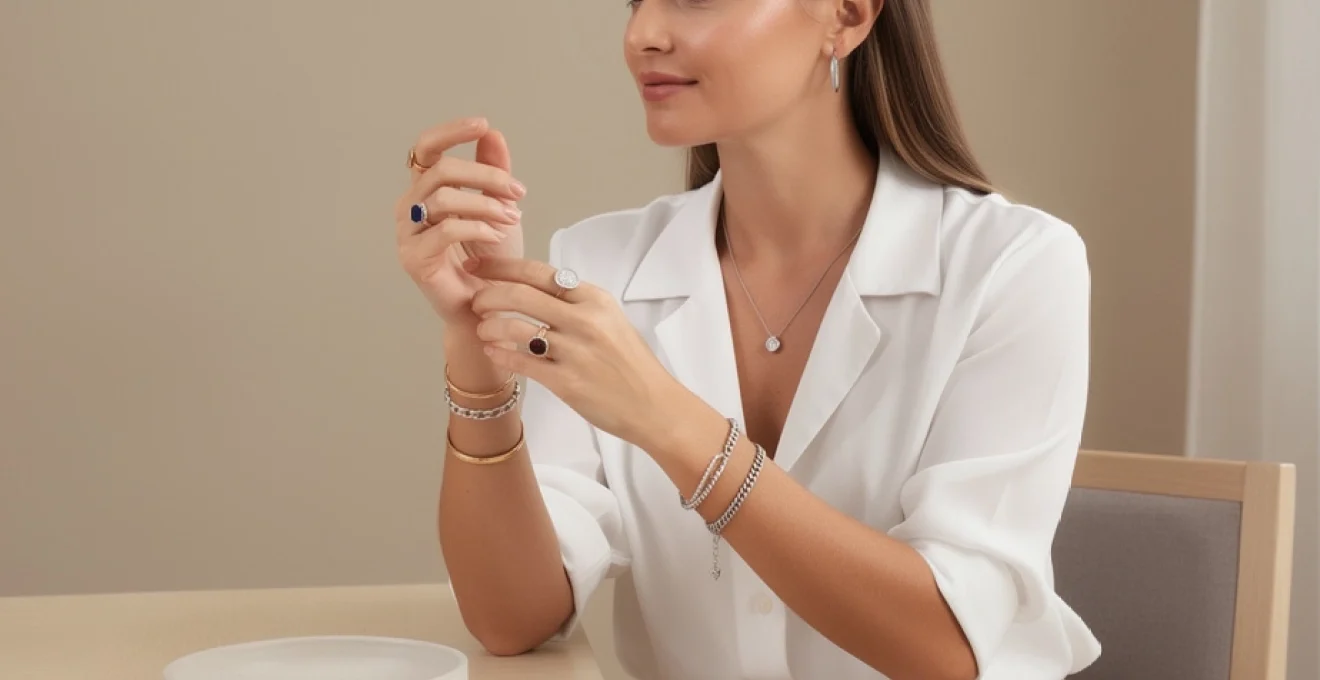
# Jewellery designed for daily wear without compromising elegance
The evolution of modern jewellery design has fundamentally shifted the relationship between luxury and practicality. No longer must you choose between pieces reserved for special occasions and those robust enough for everyday life. Contemporary jewellery engineering now delivers items that seamlessly transition from morning coffee to evening engagements, maintaining their lustre and structural integrity through constant wear. This convergence of durability and sophistication represents a significant advancement in how jewellery serves your lifestyle, offering pieces that become genuine companions rather than occasional accessories.
Understanding the technical foundations behind wearable elegance empowers you to make informed choices. When you invest in jewellery intended for daily use, you’re not simply purchasing an aesthetic object—you’re acquiring a precisely engineered item where material science, ergonomic design, and craftsmanship converge. The considerations extend far beyond visual appeal, encompassing hypoallergenic properties, tarnish resistance, and mechanical durability that ensures your pieces remain beautiful through years of continuous wear.
Material selection for durable everyday jewellery: sterling silver, 14K gold, and platinum alloys
The foundation of any jewellery piece designed for daily wear begins with material selection. Unlike decorative items worn occasionally, everyday jewellery faces constant exposure to environmental factors including moisture, skin oils, cosmetics, and physical contact. The metals chosen must demonstrate exceptional resilience whilst maintaining their aesthetic qualities. Modern metallurgy offers several proven options, each with distinct characteristics that make them suitable for different wearing conditions and personal preferences.
Material composition directly influences not only durability but also how jewellery interacts with your skin throughout extended wear periods. The balance between purity and structural strength requires precise alloying—pure metals often lack the hardness needed for daily use, whilst overly hardened alloys can compromise the lustrous finish that defines quality jewellery. Understanding these material properties helps you select pieces that align with your specific lifestyle requirements and wearing patterns.
Hypoallergenic properties of 925 sterling silver for sensitive skin
Sterling silver, marked as 925, contains 92.5% pure silver alloyed with 7.5% copper or other metals to achieve optimal hardness. This composition delivers the brilliant white lustre associated with silver whilst providing sufficient durability for daily wear. For individuals with sensitive skin, sterling silver represents one of the most reliable hypoallergenic options available. The high silver content minimises allergic reactions, making it particularly suitable if you’ve experienced sensitivity to lower-grade metals or nickel-containing alloys.
The natural antibacterial properties of silver offer an additional advantage for items in constant skin contact, such as rings and bracelets. However, sterling silver does oxidise over time, developing a patina that some find attractive whilst others prefer to remove through gentle polishing. Modern rhodium plating techniques can significantly reduce tarnishing whilst maintaining the hypoallergenic characteristics that make sterling silver desirable. When selecting sterling silver pieces for everyday wear, examine the quality of construction—well-finished edges and smooth surfaces prevent irritation during extended wearing periods.
14K gold composition: balancing durability with lustre retention
Fourteen-karat gold strikes an optimal balance between purity and practicality for daily jewellery. Comprising 58.3% pure gold alloyed with copper, silver, zinc, or palladium, 14K gold offers substantially greater hardness than higher-karat alternatives whilst retaining the warm, characteristic gold colour. This composition resists scratching and deformation far better than 18K or 24K gold, making it particularly appropriate for rings and bracelets subjected to frequent contact with surfaces.
The specific alloy composition determines whether you receive yellow, white, or rose gold variations. Yellow 14K gold typically combines pure gold with copper and silver, creating a warm tone that remains consistent throughout the piece. White gold incorporates palladium or nickel with a rhodium plating for a silvery appearance, though you should verify nickel-free composition if you have metal sensitivities. Rose gold achieves its distinctive pink hue through higher copper content, offering a romantic aesthetic that has surged in popularity for everyday pieces. Each variation maintains the durability advantages of the 14K standard whilst delivering distinct visual characteristics to suit your personal style preferences.
When choosing 14K gold for everyday jewellery, it is worth considering surface finishes as well. High-polish pieces showcase maximum brilliance but reveal scratches more readily, whereas brushed or satin finishes are more forgiving of minor wear. Over time, both finishes can be professionally refinished, restoring their original appearance without compromising the underlying metal. This ability to refresh the surface means a well-chosen 14K gold piece can maintain its elegant presence across many years of daily use.
Platinum 950 and palladium alternatives for tarnish-resistant pieces
For jewellery designed to endure constant wear with minimal maintenance, platinum alloys—particularly Platinum 950—offer exceptional performance. A 950 platinum alloy contains 95% pure platinum and 5% strengthening metals such as ruthenium or iridium, resulting in a dense, naturally white metal that resists corrosion and tarnish even in harsh environments. Unlike white gold, platinum’s colour is inherent, so it does not depend on rhodium plating to maintain its cool, silvery appearance, making it ideal for engagement rings, wedding bands, and everyday bracelets that you prefer not to remove frequently.
Palladium, another member of the platinum group metals, presents a lighter-weight alternative with similar tarnish-resistant properties. Often alloyed at 95% purity, palladium shares platinum’s hypoallergenic nature and stable white tone, yet offers greater comfort for those who prefer jewellery with less perceived weight on the skin. While platinum and palladium sit at a higher price point than sterling silver or 14K gold, their structural integrity and low-maintenance surfaces can make them cost-effective over decades of wear. If you value jewellery you can wear continuously with minimal polishing, these noble metals provide one of the most resilient bases available.
PVD coating technology for enhanced surface protection
Physical Vapour Deposition (PVD) has become a key technology in engineering jewellery for daily wear. In this vacuum-based process, microscopic layers of metal compounds are bonded to the surface of the underlying jewellery at a molecular level, forming a hard, adherent coating. Compared with traditional electroplated finishes, PVD coatings are significantly more resistant to abrasion, fading, and discolouration from sweat or cosmetics. You will see PVD used to create durable gold, rose gold, or black finishes on stainless steel and even on precious metal bases where enhanced scratch resistance is desired.
From a practical perspective, PVD-treated pieces retain their colour and sheen far longer under everyday conditions, which is particularly valuable for rings, bracelets, and watches that are in constant motion against hard surfaces. While no coating is completely impervious to wear, a high-quality PVD layer can extend the visual lifespan of your jewellery by many years, delaying the need for refinishing or replating. When evaluating jewellery marketed as “everyday safe” or “active lifestyle friendly,” it is worth asking whether PVD technology has been used, as this can be a strong indicator of long-term surface performance.
Minimalist design architecture: clean lines and geometric precision
Material science is only one half of the equation; the underlying design language determines how well jewellery integrates into your daily wardrobe. Minimalist design architecture focuses on clean lines, geometric precision, and a reduction of unnecessary ornamentation. Rather than competing with your clothing, these pieces frame and enhance your overall look, allowing you to move seamlessly from casual to formal settings. By stripping away excess detail, minimalist jewellery also reduces snag points and vulnerable elements, which in turn improves durability during everyday use.
This design philosophy aligns with contemporary preferences for quiet luxury—pieces that communicate refinement through proportion, finish, and subtle detail rather than overt branding or scale. You might notice how a well-balanced hoop, a fine bar pendant, or a streamlined cuff feels almost architectural in its simplicity. For jewellery intended for daily wear, this clarity of form means fewer sharp corners, fewer exposed prongs, and fewer elements that can deform, making minimalism not just an aesthetic choice but also a practical strategy for longevity.
Scandinavian-inspired silhouettes in contemporary jewellery
Scandinavian-inspired jewellery design has become synonymous with everyday elegance, and for good reason. Influenced by Nordic principles of functionality and simplicity, these silhouettes prioritise fluid forms, open space, and balanced geometry. You will often find softly rounded rectangles, elongated ovals, and slender arcs that sit close to the body, creating a sense of calm precision rather than visual clutter. Such pieces integrate effortlessly with neutral wardrobes and capsule collections, making them a natural fit for modern, minimal lifestyles.
Beyond aesthetics, Scandinavian-inspired designs often prioritise comfort and wearability. Earrings are scaled to be lightweight yet present, pendants rest at thoughtfully considered lengths, and bracelets follow the natural curvature of the wrist without excessive bulk. This attention to proportion means you can wear these pieces for extended periods—through workdays, travel, and social occasions—without feeling over-accessorised. If you gravitate towards jewellery that feels like a natural extension of your personal style rather than an add-on, these understated silhouettes offer a compelling blueprint.
Solitaire settings and bezel mounting techniques for security
When integrating gemstones into jewellery you plan to wear daily, setting style becomes a critical engineering decision. Solitaire designs, where a single stone forms the focal point, are particularly well-suited to everyday wear when combined with robust setting techniques. The most common approaches are prong (or claw) settings and bezel settings, each with its own trade-offs in terms of light performance and mechanical security. Prong settings maximise the amount of light entering the stone, enhancing brilliance, but expose the girdle and pavilion to potential impacts.
Bezel settings, by contrast, wrap a continuous rim of metal around the stone’s perimeter, shielding the edges from knocks and reducing snagging on fabrics. For rings and pendants intended for constant wear, a low-profile bezel or semi-bezel setting can significantly reduce the risk of stone loss over time. Think of the bezel as a protective frame around a painting—it might slightly alter how you perceive the edges, but it safeguards the artwork itself. When choosing everyday diamond jewellery or coloured stone pieces, asking for bezel or flush-set options is a practical way to combine elegance with structural security.
Streamlined chain construction: cable, box, and rope link analysis
Chains form the backbone of many everyday necklaces and bracelets, and their underlying construction greatly influences both aesthetics and durability. Cable chains, composed of uniform oval or round links, are among the most versatile and widely used for daily wear. Their simple geometry distributes stress evenly and can be easily repaired if a single link fails. Box chains, formed from square links connected in a continuous sequence, offer a sleek, modern profile and excellent tensile strength, making them less prone to stretching under constant tension.
Rope chains, with their twisted, spiral appearance, provide a more textured look while still maintaining strong structural integrity when manufactured with solid links. However, very fine rope chains can be more susceptible to kinks if sharply bent, so proportional sizing is key. When assessing chain suitability for everyday use, you should consider both link thickness and flexibility: a chain that is too delicate for the pendant weight or your activity level may thin out or break over time. A well-selected cable, box, or rope chain in an appropriate gauge feels almost invisible on the neck yet withstands the daily rhythm of wear.
Proportional sizing standards for everyday wearability
Even the most robust materials and refined designs can become impractical if sizing is not carefully considered. Proportional standards help ensure that jewellery remains comfortable, stable, and visually balanced in everyday contexts. For rings, this involves not only finger circumference but also band width and thickness—excessive width on smaller fingers can restrict movement, while ultra-thin bands on larger hands may twist or feel insubstantial. A typical everyday ring band ranges between 1.6 mm and 2.5 mm in thickness, providing sufficient strength without feeling bulky.
Necklaces and bracelets require similar proportional thinking. Common everyday necklace lengths fall between 40 cm and 50 cm, resting either at the base of the neck or just below the collarbone for versatile layering. Bracelets often sit between 16 cm and 19 cm, with a small allowance for movement so they do not bite into the wrist during typing or lifting. Earrings, particularly hoops and huggies, should be scaled so that their diameter and weight complement your lobe size and activity level; smaller profiles in the 8–15 mm range are generally ideal for continuous wear. By aligning dimensions with your body proportions and daily routine, you create a jewellery wardrobe that you barely need to think about once it is on.
Gemstone integration for daily resilience: mohs hardness scale considerations
Integrating gemstones into jewellery designed for continuous wear requires a careful understanding of durability, and the Mohs hardness scale provides a straightforward framework. This scale ranks minerals from 1 (talc) to 10 (diamond) based on their resistance to scratching. Whilst hardness is not the only factor in gemstone longevity, it plays a central role when stones are exposed to everyday contact with surfaces, dust, and other objects. Choosing stones with a Mohs hardness of 7 or higher is generally advisable for rings, bracelets, and pieces that may receive frequent knocks.
However, hardness should be balanced with toughness and proper setting techniques. A gemstone might resist scratching yet remain vulnerable to chipping if it has natural cleavage planes or is cut with sharp, exposed points. This is why you will often see certain stones recommended for pendants or earrings rather than daily-wear rings. By combining high-hardness gemstones with protective settings—and by understanding where each stone sits on the scale—you can curate pieces that retain their clarity and polish long after softer materials would show visible wear.
Diamond and moissanite: superior scratch resistance above 9.0 mohs
Diamonds rank at 10 on the Mohs scale, making them the hardest known natural material and a leading choice for everyday rings and bracelets. Their exceptional scratch resistance ensures that, under typical conditions, very few substances encountered in daily life can mar their surface. This is one reason why diamond engagement rings remain visually crisp even after years of wear. It is worth noting, though, that hardness does not make diamonds indestructible—they can still chip if subjected to sharp, directional impact, especially at exposed corners on fancy cuts.
Moissanite, a lab-created gemstone ranking approximately 9.25 on the Mohs scale, offers a compelling alternative for daily wear. It delivers high brilliance and fire with a hardness that exceeds most natural gemstones, making it resistant to scratching from common materials like quartz dust. As a result, moissanite has become increasingly popular in minimalist, everyday solitaire rings and pendant designs where long-term clarity and shine are important. If you seek a gemstone that combines durability, radiance, and relative affordability, both diamond and moissanite integrate seamlessly into jewellery engineered for continuous use.
Sapphire and ruby applications in everyday ring designs
Sapphires and rubies, both varieties of the mineral corundum, score 9 on the Mohs scale and offer excellent performance in daily-wear jewellery. Their hardness makes them suitable for rings, earrings, and bracelets that are worn almost constantly, while their inherent toughness provides resistance against chipping when properly set. Blue sapphires remain a classic choice for engagement and anniversary rings, whereas rubies deliver a rich, saturated red that pairs beautifully with both yellow and white metals.
Beyond the traditional blue and red, corundum exists in a spectrum of colours—often referred to as “fancy sapphires”—including peach, green, and teal tones that align perfectly with contemporary minimalist aesthetics. These stones work particularly well in bezel or low-profile prong settings, where their durability is further supported by protective metalwork. If you want everyday ring designs that introduce colour without sacrificing resilience, sapphire and ruby provide a balanced combination of beauty and structural reliability.
Conflict-free lab-grown stones: CVD and HPHT production methods
As ethical sourcing has become a priority for many jewellery wearers, conflict-free lab-grown stones have moved from niche to mainstream. Two primary technologies drive the production of lab-grown diamonds: Chemical Vapour Deposition (CVD) and High Pressure High Temperature (HPHT). CVD involves growing diamond crystals in a vacuum chamber from a carbon-rich gas, layer by layer, whereas HPHT replicates the intense heat and pressure conditions found deep within the Earth to form diamond structures. Both methods produce diamonds with the same chemical and physical properties as natural stones.
From an everyday wear perspective, lab-grown diamonds and moissanite offer the same, or in some cases superior, hardness and brilliance as mined equivalents, while allowing you to trace the origin with far greater transparency. They are also typically more accessible in price, making it possible to choose larger stones or higher clarity grades for the same budget. If you value ethical considerations alongside durability and aesthetics, selecting jewellery that clearly specifies CVD or HPHT lab-grown stones is a practical way to align your daily accessories with your personal values.
Ergonomic wearability engineering: comfort-driven construction methods
True everyday jewellery must feel as good as it looks, which is where ergonomic engineering comes into focus. Comfort is not a by-product of design; it is an intentional outcome achieved through precise profiling, weight distribution, and mechanical function. The goal is to create pieces that you forget you are wearing—no pinching, no catching, and no need for constant adjustment. From band profiles to clasp mechanisms, each technical decision contributes to how jewellery interacts with the body over long periods.
We can think of ergonomic jewellery design in the same way we approach a well-fitted garment: properly tailored, it moves with you rather than against you. Rings should glide over the knuckle yet sit securely at the base of the finger, necklaces should drape without pulling at the neck, and bracelets should articulate smoothly with wrist movements. By prioritising comfort-driven construction methods, designers enable you to elevate your everyday appearance without introducing friction into your routine.
D-shape and court profile band designs for all-day comfort
Band profile—the cross-sectional shape of a ring—plays a crucial role in how it feels during extended wear. D-shape bands are flat on the inside and gently curved on the outside, creating a classic silhouette that sits close to the finger without adding excessive bulk between adjacent fingers. This profile works particularly well for stacking rings and wedding bands intended for continuous wear, as the flat interior provides stable contact while the rounded exterior glides past neighbouring digits.
Court profile bands, sometimes called “comfort fit” or “half-round” bands, extend this concept by introducing curvature to both the inner and outer surfaces. The inner curve reduces pressure points by distributing contact more evenly around the finger, which many people find more comfortable for wider bands or heavier rings. If you have ever felt a ring dig into the sides of your finger after a day of typing or gripping, a court profile can be a transformative upgrade. When selecting a band for lifelong daily use, exploring both D-shape and court options allows you to prioritise tactile comfort alongside aesthetic preference.
Spring ring versus lobster clasp mechanisms for necklaces
Clasp mechanisms may seem like small details, but they are central to everyday usability and security. Spring ring clasps utilise a circular body with an internal spring that opens a small segment when you pull back a lever. They are compact and visually discreet, which suits fine chains, yet their small opening and limited surface grip can be challenging for those with reduced dexterity. Lobster clasps, shaped somewhat like their namesake, feature a larger hinged arm that opens and closes with a spring-loaded mechanism, providing a more generous aperture and a stronger connection to jump rings or extender chains.
For necklaces and bracelets you plan to fasten and remove frequently, lobster clasps generally offer better grip, ease of use, and long-term reliability. The elongated form also distributes stress more evenly, reducing the likelihood of mechanical failure at a single point. If you find yourself struggling to secure delicate chains behind your neck, upgrading to pieces with lobster clasps—or having a jeweller retrofit existing items—can significantly improve the daily wearing experience.
Adjustable slider clasps and extension chain integration
Modern everyday jewellery often incorporates flexible sizing solutions to adapt to different outfits and necklines. Adjustable slider clasps use a small, tension-controlled bead or housing that allows the chain to glide through and lock at the desired length, much like adjusting a drawstring. This mechanism lets you transition a necklace from choker length to a longer pendant drop without needing multiple chains, enhancing both versatility and cost-efficiency. It also reduces visual clutter at the back of the neck, as excess chain can hang neatly or be tucked under a collar.
Extension chains offer a more traditional, modular approach, adding several centimetres of extra length through a series of small links at the end of the primary chain. By fastening the clasp at different points along the extender, you can fine-tune how a pendant sits relative to your neckline or other layered pieces. For bracelets and anklets, extenders and sliders accommodate subtle changes in size due to temperature or activity, maintaining comfort throughout the day. Investing in jewellery with integrated adjustability ensures your pieces work with you, rather than dictating how you dress.
Maintenance protocols for longevity: cleaning and storage systems
Even the most robustly engineered jewellery benefits from thoughtful maintenance. Everyday exposure to skin oils, lotions, perfumes, and airborne particles can gradually dull surfaces and lodge residues in crevices. Establishing simple cleaning routines helps preserve both the brilliance and structural integrity of your pieces. As a general rule, a mild solution of warm water and gentle, non-abrasive soap, applied with a soft brush, is appropriate for most metals and high-hardness gemstones. Rinsing thoroughly and drying with a lint-free cloth prevents water spots and mineral deposits.
Storage practices are equally important. Jewellery should be kept in a dry environment, ideally in individual compartments or soft pouches to prevent pieces from abrading each other. Sterling silver benefits from anti-tarnish strips or treated cloths, while pearls and other organic materials should not be stored in airtight plastic, as they require a small amount of ambient moisture to avoid dehydration. For items incorporating mechanical components such as hinges or clasps, periodic professional inspections help identify early signs of wear, such as thinning links or loosened settings, before they result in breakage or loss. By treating maintenance as a consistent, light-touch habit rather than an occasional overhaul, you extend the life of your everyday jewellery substantially.
Versatile styling applications: layering techniques and multi-wear configurations
Engineering jewellery for daily wear does not mean sacrificing creative expression; in fact, well-designed pieces invite versatile styling. Layering necklaces, stacking rings, and combining bracelets allow you to build different visual narratives from a relatively compact collection. The key is to think in terms of scale, texture, and focal points. For example, you might pair a short, fine chain with a small pendant, a mid-length bar necklace, and a longer, minimal drop, creating a tiered effect that feels intentional rather than cluttered. By keeping each individual piece refined, the combined result remains elegant and suitable for day-long wear.
Multi-wear configurations further enhance flexibility. Convertible chains that can be doubled for a choker or worn long, earrings with removable drops that transform into studs, and bracelets that link together to form necklaces all support a more sustainable, capsule-style jewellery wardrobe. This approach mirrors the concept of a modular wardrobe in fashion—fewer, better pieces that work hard across contexts. When you invest in jewellery designed with both technical integrity and styling adaptability in mind, you gain a set of companions that move fluidly with your lifestyle, from the most casual days to your most polished moments.